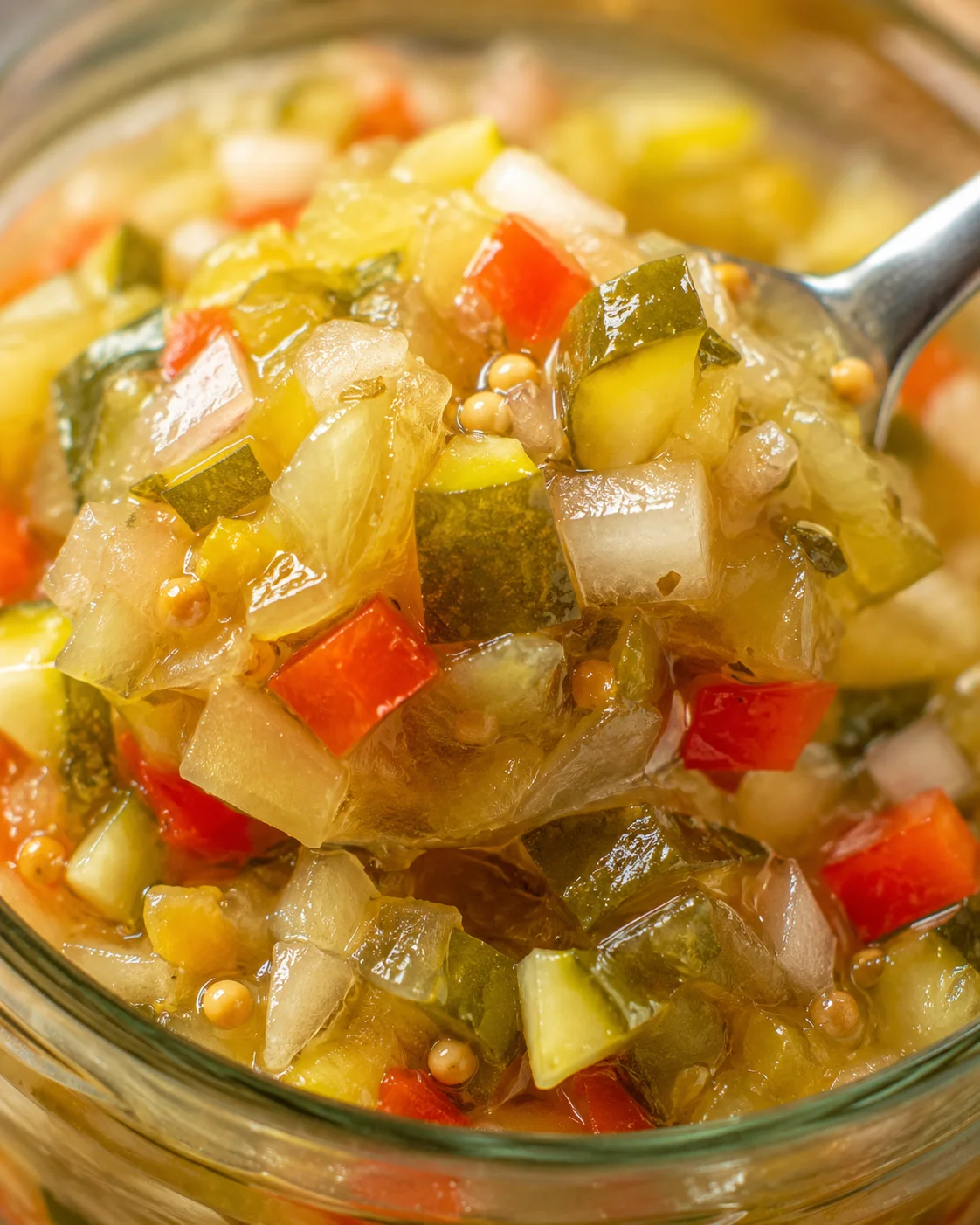
Sweet Zucchini Relish Canning Recipe

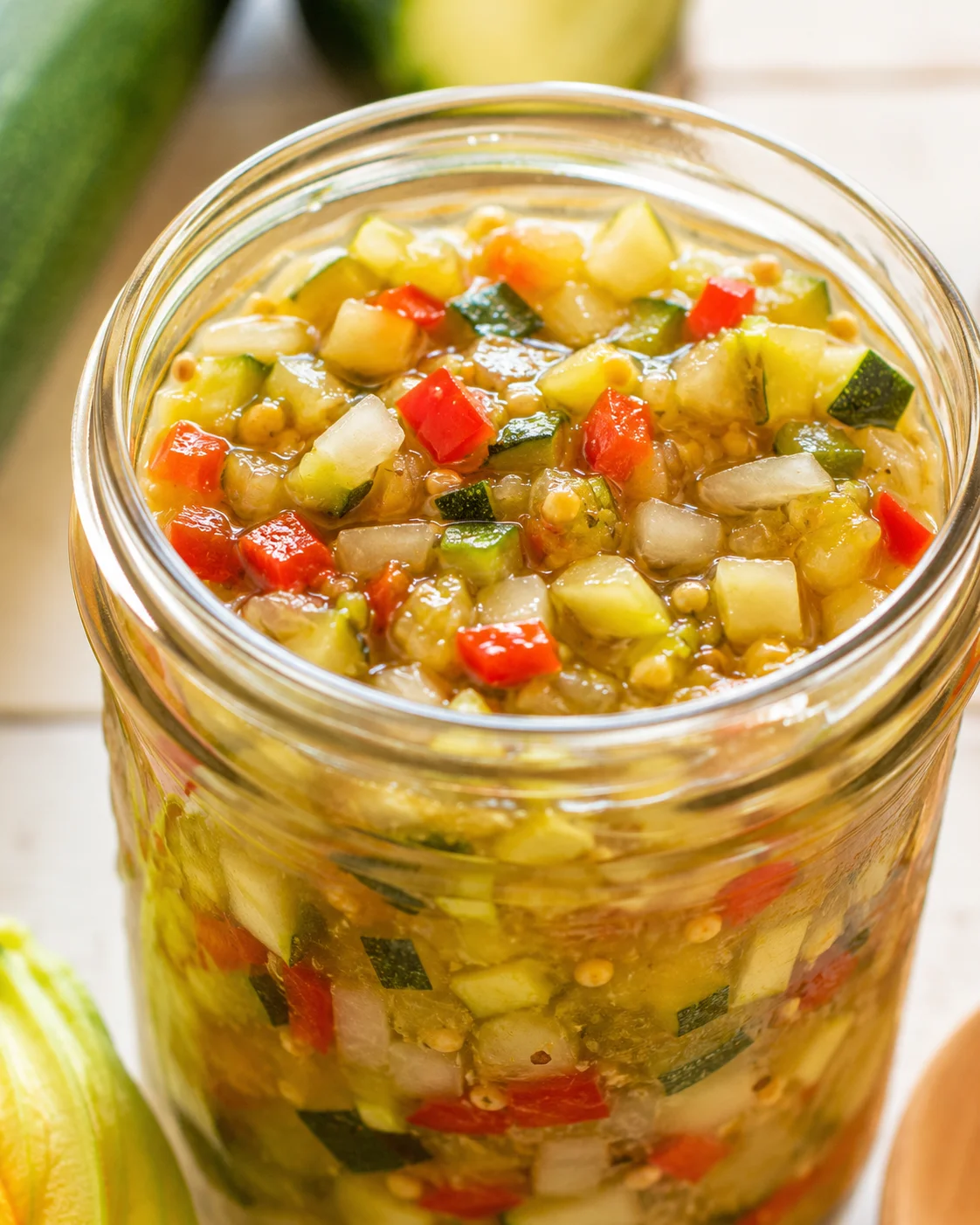
This classic zucchini relish recipe is a fantastic way to save those extra zucchinis from your garden. It’s sweet, tangy, and just right for topping hot dogs, burgers, and sandwiches. With this safe water bath canning method, you can turn fresh zucchinis into a delicious relish to enjoy all year long.
If you have a garden overflowing with zucchini, making zucchini relish is one of the best ways to preserve your harvest. This classic sweet relish blends zucchini, onions, and bell peppers with a slightly tangy kick—perfect for burgers, hot dogs, sandwiches, and even picnic salads.
Like many gardeners, you might find yourself wondering what to do when your summer zucchini are multiplying faster than you can eat them. Some oversized zucchinis might even surprise you overnight! This zucchini relish recipe is just what you need to use those bigger zucchinis and savor their flavor well past summer.
I’ve been whipping up this zucchini relish every summer for years now. It’s a simple, no-fuss recipe that transforms extra zucchini into something tasty and useful. If you crave a bit more heat, check out my Spicy Zucchini Relish with Horseradish — another delicious way to keep your summer harvest exciting.
If your garden is bursting with zucchini, this sweet and tangy zucchini relish recipe is an easy and dependable way to turn all that fresh produce into something you’ll love to have on hand. Made from chopped zucchini, bell peppers, and onions simmered in a sweet vinegar brine with mustard and celery seeds, it’s a classic condiment that brightens up burgers, hot dogs, sandwiches, salads, and more.
Keep reading for a tried-and-true water-bath canning recipe (adapted from the Ball Blue Book) that makes about 8 half-pint jars. Plan on roughly 2½ hours of prep time, a short simmer, and a 10-minute canning process for altitudes below 1,000 feet (see altitude tips). You’ll find clear instructions for chopping and measuring vegetables, soaking them in salted ice water for better texture, safe canning steps, storage advice, and simple flavor tweaks you can try.
- Yield: about 8 half-pint jars; let flavors meld for 2–4 weeks before opening.
- Method: water-bath canning using 5% acidity vinegar and pickling salt for the best results.
- Flavor: sweet, mildly tangy, and family-friendly; optional spicy versions are included.
- Storage: unopened jars last 12–18 months in a cool, dark spot; opened jars keep about one month in the fridge.
What Makes It Special
- Perfect for using up large or surplus zucchinis
- Sweet and mild flavor that kids and adults enjoy
- Simple water bath canning process anyone can follow
- Lasts up to 18 months in your pantry
- Versatile on sandwiches, burgers, sausages, and beyond
- Safe and tested recipe based on the Ball Blue Book Guide to Preserving
Ingredients for About 8 Half-Pints
- 4 cups chopped zucchini
- 2 cups chopped bell peppers
- 2 cups chopped onions
- 1/8 cup pickling salt
- 3 1/2 cups sugar
- 1 tablespoon celery seeds
- 2 teaspoons yellow mustard seeds
- 2 cups apple cider vinegar 5% acidity
How to Can the Relish
- Wash, trim, and chop zucchini; trim 1/4 inch from both ends, scoop seeds from large zucchini, peel thick skin if needed, and measure 4 cups chopped.
- Wash, halve, remove stems, seeds, and ribs from bell peppers, chop and measure 2 cups.
- Peel, chop, and measure 2 cups onions.
- Combine the chopped zucchini, bell peppers, and onions in a large bowl.
- Sprinkle 1/8 cup pickling salt over the vegetables and toss to mix.
- Cover the salted vegetables with crushed ice or ice cubes and enough cold water to cover; let stand 2 hours (or refrigerate overnight).
- Wash jars, lids, bands, and canning tools in hot soapy water, rinse, and set aside to air-dry.
- Place the jar rack in the water bath canner, arrange jars inside, cover with water, heat to a simmer (~180°F) and keep jars warm for 10 minutes before filling.
- Drain the vegetables in a colander and rinse well with cold water to remove excess salt; press or squeeze out as much water as possible.
- In a large pot, stir together 3 1/2 cups sugar, 1 tablespoon celery seeds, 2 teaspoons mustard seeds, and 2 cups 5% vinegar; bring to a gentle simmer.
- Add the drained vegetables to the simmering brine and simmer gently for 10 minutes, keeping the mixture hot.
- Lay a dry kitchen towel on your work surface.
- Use a jar lifter to lift a warm jar from the canner, drain the hot water back into the canner, and place the jar on the towel; keep other jars warm in the canner.
- Set a funnel in the jar and ladle hot relish into the jar, leaving 1/2-inch headspace.
- Run a non-metal utensil or bubble remover down the side of the jar to release trapped air bubbles and adjust headspace if needed.
-
Wipe the jar rim clean, center a lid, and screw on a band until fingertip-tight.
- Return the filled jar to the canner and repeat until all jars are filled.
- Adjust the water level so it covers jars by at least 2 inches, cover the canner, and bring the water to a rolling boil.
- Process half‑pint jars in the boiling water for 10 minutes (for altitudes below 1,000 ft); increase processing time according to altitude guidelines if needed.
- Turn off the heat, remove the canner lid, and let the canner sit uncovered for 5 minutes.
- Use a jar lifter to remove jars and place them on a towel 1–2 inches apart; do not retighten bands or test seals yet.
- Let jars cool undisturbed at room temperature for 12–24 hours.
- Test seals by pressing the center of each lid; refrigerate any unsealed jars and use within one month or reprocess within 24 hours.
- Remove screw bands, wash jars, label and date, and store sealed jars in a cool, dark place.
Canning Safety and Tips
Always measure your vegetables after chopping—they need to be the right volume for safe acidity levels in canning.
Chop veggies evenly for great texture. A food processor helps speed things up but pulse carefully to avoid mush.
Trim zucchini ends and scoop out seedy centers in big zucchinis for firm texture. Peel thick skin if needed.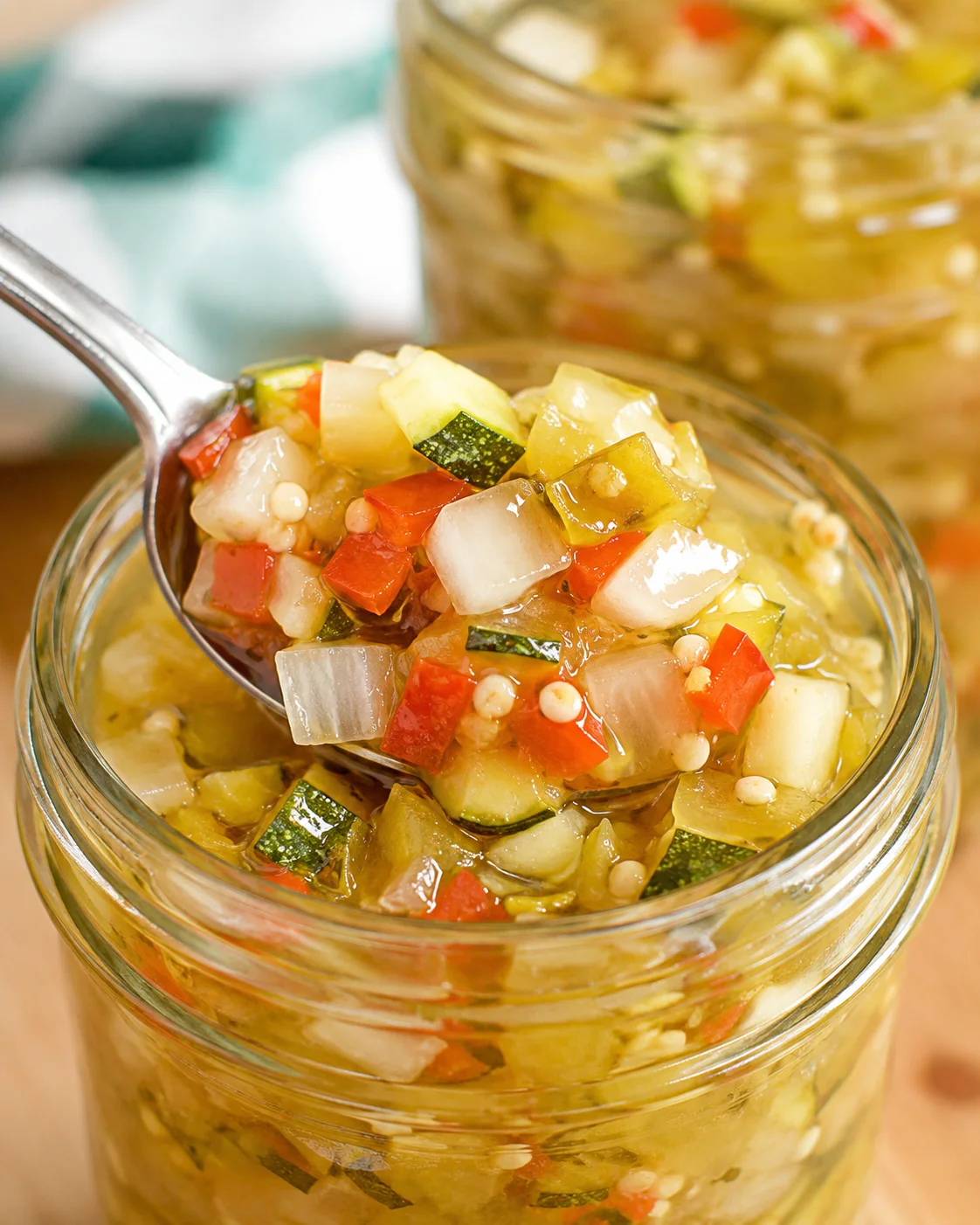
Use pickling salt, never table salt, and vinegar with 5% acidity. Don’t reduce or swap out these critical ingredients to keep the recipe safe.
For brighter color, mix red and green bell peppers. To add a little heat, toss in hot peppers but keep total peppers volume the same and wear gloves!
Keep jars warm during filling, leave a 1/2-inch headspace, remove air bubbles, clean rims, and tighten bands fingertip-tight only.
Give your sealed relish 2–4 weeks in the pantry before opening so flavors have time to mingle beautifully. Label everything clearly with date and contents.
Serving Ideas and Variations
Sweet zucchini relish is so much more than just a topping for hot dogs. Here are some simple, delicious ways to enjoy it:
- Loaded on burgers, hot dogs, sausages, or bratwurst
- Mixed into tuna, chicken, or egg salad for extra zing
- Stirred into mayo for a tasty homemade tartar sauce for fish sticks
- Added to potato or macaroni salads for brightness
- Served alongside grilled meats or roasted veggies
- Spread across a snack board with cheese and crackers
How to Store Your Jars
Sealed jars can be stored in a cool, dark spot (ideally 50–70°F) and will keep their best flavor for 12–18 months. Let the relish rest 2–4 weeks before digging in. Avoid freezing jars or storing where temperatures fluctuate wildly.
Once opened, keep refrigerated and use within one month.
If a jar didn’t seal during processing, store it in the fridge and use it within a month or reprocess within 24 hours with a new lid and the same water bath method.
You can also freeze cooked relish in airtight, freezer-safe containers for 9–12 months if you don’t want to can. The texture will soften a bit when thawed. Never freeze glass canning jars full of relish.
Reheating isn’t usually needed—relish is great right from the jar. If you want it warm, heat some in a saucepan gently. Do not heat sealed jars in the oven or microwave.
Never use relish from jars that show signs of spoilage like bulging lids, strange smells, cloudiness, or mold. When in doubt, toss it out!
Answers to Common Questions
Q: Can I use a vinegar other than apple cider or white?
A: Stick with a vinegar that has at least 5% acidity to keep your relish safe. Apple cider and white vinegar are common, but if you use another commercial vinegar, make sure it’s 5% acidity.
Q: Can I reduce or skip the sugar?
A: Sugar helps flavor and texture. Small reductions are okay, but don’t remove it completely or you might affect the relish’s flavor and texture. Never reduce the vinegar or alter the vegetable-to-vinegar ratio.
Q: Can I use frozen zucchini?
A: Fresh zucchini gives the best texture. Frozen zucchini can become mushy because freezing breaks down the cell walls. If you use frozen, thaw it completely, drain well, and press out moisture—but results won’t be quite the same.
Q: Can I use pint jars instead of half-pints?
A: This recipe is written for half-pint jars. If you want to use a different size, check the USDA or Ball Guide for adjusted processing times for that jar size and your altitude.
Q: Why soak vegetables in salted ice water?
A: This step firms the veggies, improving texture and helps prevent a watery relish after cooking.
Q: Why remove the blossom ends of zucchini?
A: The blossom ends have enzymes that can cause softening in your pickled relish. Removing them helps keep a firmer texture.
Q: One of my jars didn’t seal. What now?
A: Refrigerate unsealed jars and use within a month, or reprocess within 24 hours with a fresh lid and the same water bath process.
Q: Is it safe to change spices or add hot peppers?
A: Small tweaks like adding some hot peppers or altering the spice amounts are usually okay as long as you keep the total vegetable volume and vinegar amount the same. When in doubt, check trusted sources like the Ball Blue Book or USDA guidelines.