Roasted Butternut Squash Soup Recipe

This butternut squash soup recipe turns roasted squash, onion, garlic, maple syrup, and warming spices into a smooth, cozy soup with very little hands-on work. Roasting the squash halves first brings out their natural sweetness and adds a deeper, earthy flavor before anything goes into the blender.

The finished soup is naturally creamy without cream, with a gentle balance of sweet squash, savory onion and garlic, nutmeg, ginger, and black pepper. It makes 4 servings and takes 10 minutes to prepare, 1 hour to cook, and 1 hour 10 minutes total. Serve it as a light meal, a warm first course, or an easy make-ahead lunch.
Why You’ll Love This Butternut Squash Soup Recipe
- Roasting does the flavor-building. The squash cooks cut-side down until tender, allowing its natural sweetness to deepen and its flavor to become more rounded than it would be in a quick stovetop-only soup.
- The texture is silky and naturally rich. Once the roasted flesh is blended with broth, the squash creates a creamy base without requiring cream. You can leave the base dairy-free or choose one of the optional creaminess additions below.
- The seasoning stays balanced. A small amount of maple syrup highlights the squash, while onion, garlic, nutmeg, ginger, salt, and pepper keep the soup savory and warmly spiced rather than overly sweet.
- The method is straightforward. There is no need to peel and cube several pounds of squash. Roast the halves, add the onion partway through, scoop out the cooked flesh, and blend.
- It works well for a flexible table. The base made with vegetable broth is vegetarian, vegan, and gluten-free. Garnishes and optional dairy or dairy-free additions can be chosen at serving time.
Butternut Squash Soup Ingredients
The quantities below make 4 servings. Gather a large baking sheet, a spoon for scraping the squash, and a high-powered blender. An immersion blender is also an option if you prefer to blend in a pot.

- 3 1/2 pounds butternut squash: Choose one large squash or weigh several smaller ones so the total amount is close to the recipe quantity. The squash is roasted in halves, which keeps the preparation simpler than cutting it into cubes.
- 1 tablespoon avocado oil: Use it to coat and season the squash, and to rub onto the cut side of the onion before it joins the pan.
- 1 small yellow onion, halved: Roasting the onion cut-side down softens it and gives the soup a deeper savory flavor.
- 1 small garlic clove, peeled: Raw garlic gives the soup a noticeable aromatic bite. If you are sensitive to that pungency, see the roasted-garlic tip below.
- 1/2 tablespoon maple syrup: This small amount complements the squash’s natural sweetness. The finished soup should still taste savory.
- 1 teaspoon salt and freshly ground black pepper to taste: Some of the salt seasons the squash before roasting, while the final blend can be adjusted to taste.
- 1/4 teaspoon ground nutmeg and 1/4 teaspoon ground ginger: These warming spices add fragrance and gentle heat without covering up the roasted squash.
- 3 to 4 cups vegetable broth: Start blending with 3 cups, then add more if you prefer a thinner soup. Vegetable broth keeps the base vegetarian. Chicken broth can be used if vegetarian preparation is not needed.
- Optional garnish: Finish the bowls with pepitas, parsley, and freshly ground black pepper. Other topping ideas include thyme, sage, chives, toasted almonds, bacon bits, roasted chickpeas, or crispy shallots; use them only if they suit your meal.
How to Make Butternut Squash Soup
- Heat the oven and prepare the squash. Preheat the oven to 425°F (220°C). Slice the ends off the butternut squash. Stand the squash upright on its bulb end, then carefully slice it in half lengthwise. Use a spoon to scoop out the seeds and membrane. If the squash is especially firm or difficult to cut, microwave it for 2 to 3 minutes first to soften it slightly. Let it cool enough to handle safely before cutting if it is hot.

- Season the squash. Place the squash halves on a baking sheet with the cut sides facing up. Coat them with the avocado oil and sprinkle with salt and pepper. Turn the halves over so the cut sides face down. This cut-side-down position is how the squash roasts for the full cooking time.

- Roast for 30 minutes before adding the onion. Put the baking sheet in the oven and roast the squash for 30 minutes. While it cooks, rub a little oil on the cut side of the halved yellow onion. When the first 30 minutes are complete, place the onion on the same baking sheet cut-side down.

- Finish roasting. Continue roasting the squash and onion for another 30 minutes, for 60 minutes of total roasting time. Remove the baking sheet from the oven. The squash should be tender enough to scoop, and the onion should be softened from roasting.
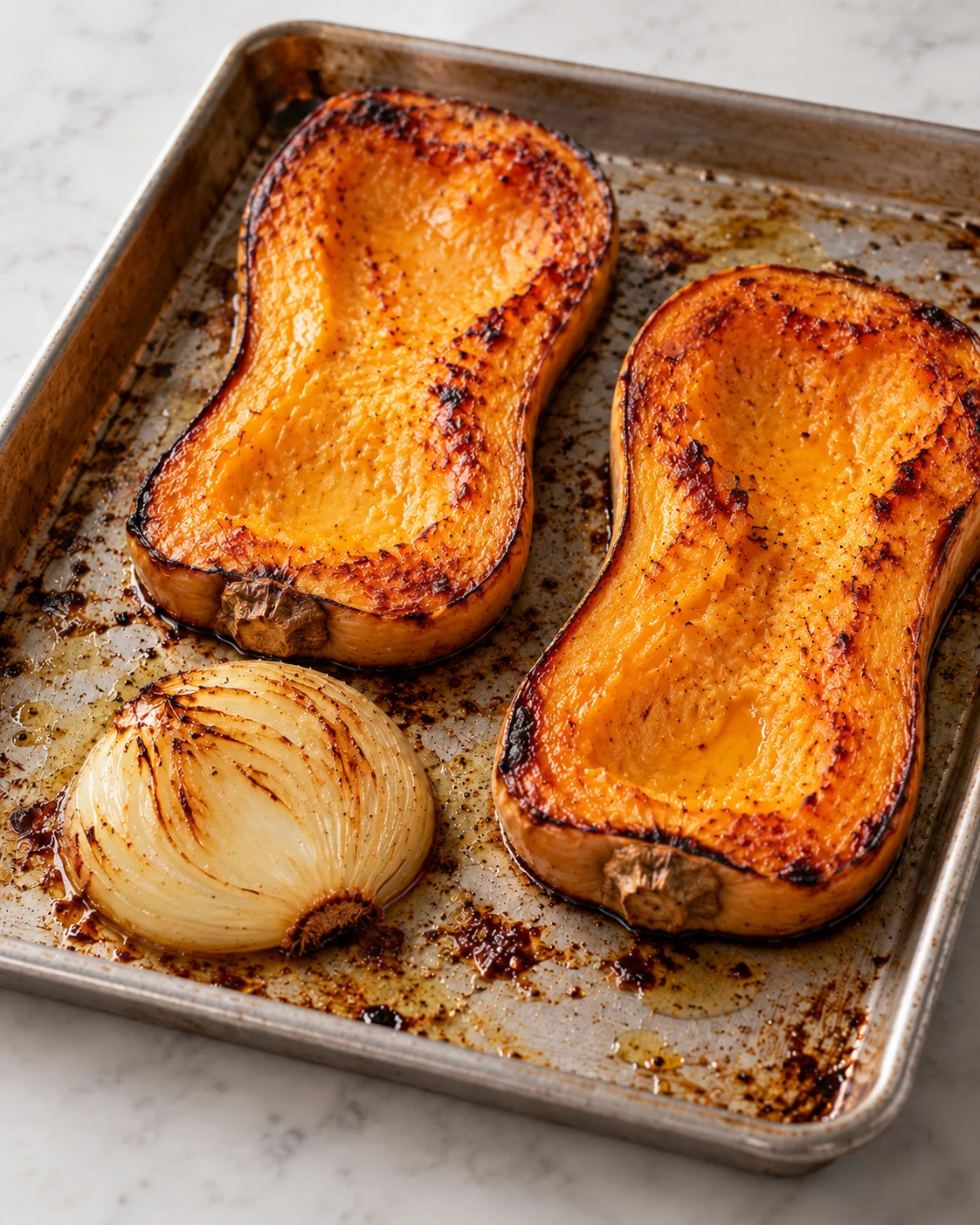
- Scoop and blend. Once the squash is cool enough to handle, use a large spoon to scoop the flesh away from the skin and transfer it to a high-powered blender. Remove the outer layer from the roasted onion and add the onion to the blender. Add the garlic, maple syrup, remaining salt, nutmeg, ginger, and 3 cups of vegetable broth.
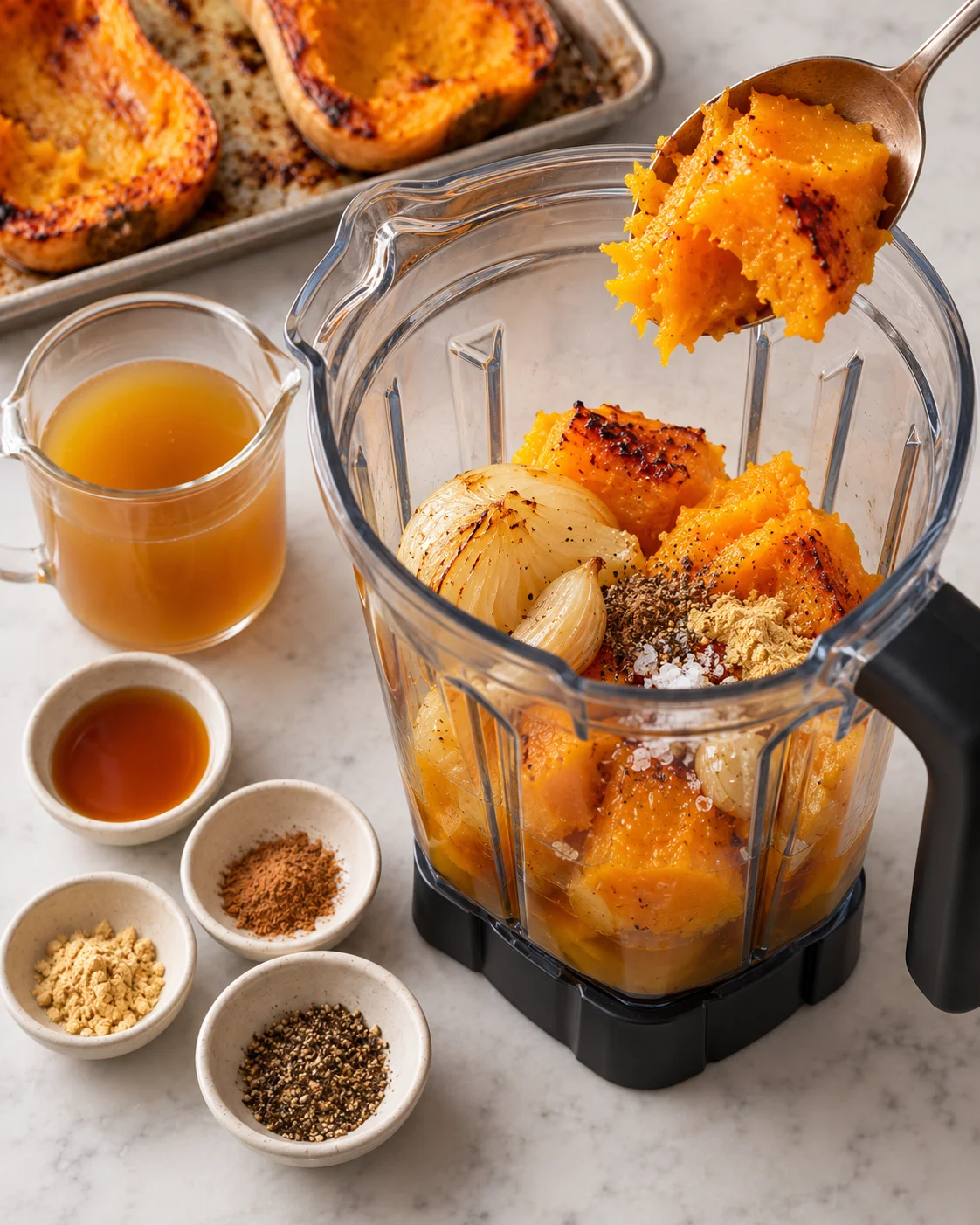
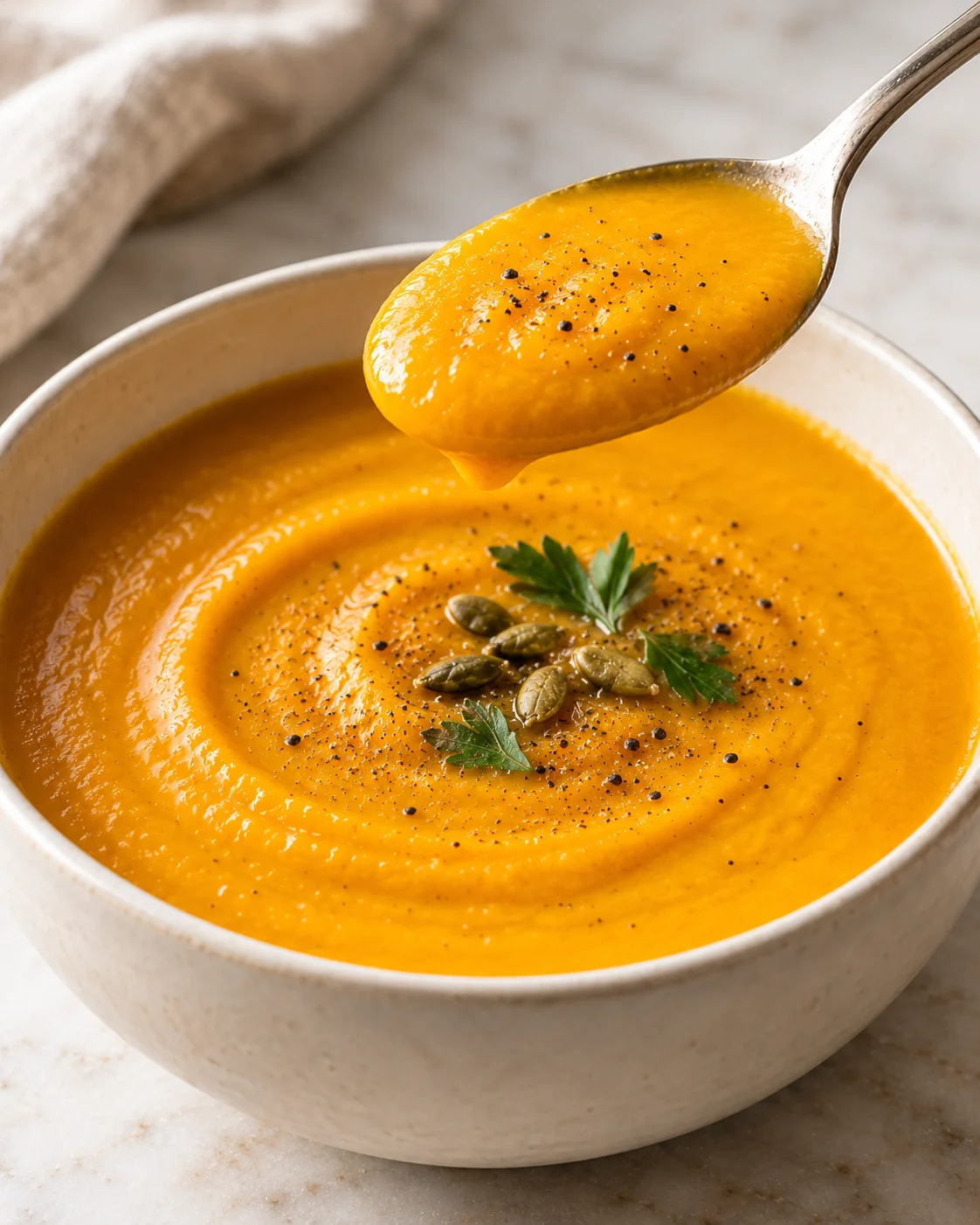
- Blend until creamy. Start the blender carefully and blend on high for 1 to 2 minutes, until the soup is smooth and creamy. Add more broth a little at a time to reach the consistency you like. Taste the soup and add more salt or pepper if needed.

- Serve warm. Pour the soup into bowls. Add pepitas, parsley, and freshly ground black pepper if desired. The toppings are optional, but a little crunch or fresh color gives the smooth soup a pleasing contrast.
Tips for Success
Make the squash easier to cut
Butternut squash can be awkward to slice because of its shape and firm flesh. Microwave the whole squash for 2 to 3 minutes before cutting to lightly soften it and make the lengthwise cut easier. Stand it securely on the bulb end, keep your hand clear of the knife’s path, and scoop out the seeds after the halves are separated.
Use a sturdy baking sheet
A heavy-duty baking sheet is useful for roasting vegetables because it is less likely to bend or warp in the oven. Leave the squash cut-side down after seasoning, and place the onion on the same sheet only after the first 30 minutes. Adding it at that point keeps the onion’s roasting time aligned with the recipe rather than leaving it in the oven for the full hour.
Start with less broth
Three cups of broth is the starting point for blending, not an instruction to use all 4 cups automatically. The amount you need depends on how thick you want the soup. Blend for the full 1 to 2 minutes first, then add more broth to loosen the texture. Taste after thinning because extra broth can change the seasoning balance.
Pay attention to the garlic
High-powered blenders can make raw garlic taste more pungent because of the speed and force of the blades. If you enjoy a stronger garlic flavor, use the small raw clove. If raw garlic tends to taste too sharp to you, wrap the clove in aluminum foil and roast it on the baking sheet with the onion. Roasted garlic has a softer, less pungent flavor while still adding its characteristic savoriness.
Use an immersion blender if needed
The recipe is written for a high-powered blender, but an immersion blender is another option. Put the roasted squash flesh, peeled roasted onion, garlic, maple syrup, spices, and broth into a suitable pot, then blend there until smooth. Work carefully with the warm ingredients and adjust the broth and seasoning after blending. The final texture may vary with the appliance, so use the visual cue of a smooth, creamy soup.
Variations and Substitutions
Keep the base dairy-free
The roasted squash already gives this soup an ultra-creamy texture, so cream is not required. For a dairy-free version, blend the soup with the roasted squash, onion, garlic, maple syrup, salt, nutmeg, ginger, and vegetable broth. For extra creaminess without dairy, add coconut milk or 1/4 cup soaked raw cashews. These are optional additions; use them according to your taste and preferred texture.
Add dairy for extra richness
If you tolerate dairy, blend in 1 to 2 tablespoons of heavy cream or butter for extra richness. This is an optional finishing adjustment, not a replacement for the broth. Add it during blending, then taste the soup again before serving.
Choose a broth
Use vegetable broth to keep the soup vegetarian. Chicken broth can be substituted if that better fits the meal. Either way, start with 3 cups and add more, up to 4 cups, for the consistency you prefer.
Change the finish, not the core method
Start with pepitas, parsley, and black pepper for a simple optional garnish. Fresh thyme, sage, or chives can also add a herbal finish. For more crunch, try toasted almonds, roasted chickpeas, crispy shallots, or bacon bits. These topping ideas are optional and do not require changing the roasted squash, onion, spice, or blending steps.
Storage, Make-Ahead, and Freezing
Let the soup cool to room temperature, then transfer it to an airtight container. Refrigerated leftovers keep for 4 to 5 days, making the soup useful for a quick reheatable meal during the week.
For longer storage, pour the soup into freezer-safe containers or silicone molds. Single-serving portions are convenient when you want to thaw only what you need, and the soup can be frozen for up to 3 months.
When you are ready to eat frozen soup, thaw it in the refrigerator overnight. Reheat it gently on the stovetop or in the microwave. If the texture has thickened during chilling or freezing, add a splash of broth or water to loosen it, then taste and adjust the seasoning before serving.
Serving Suggestions
Serve this soup warm in bowls with pepitas, parsley, and black pepper for a simple finish. The roasted squash flavor works as a starter or as the center of a light lunch. Fresh thyme, sage, or chives can bring a different herbal note, and toasted almonds, roasted chickpeas, crispy shallots, or bacon bits can add crunch if those toppings fit your preferences.
For a holiday or cool-weather menu, finish each bowl with the garnishes you prefer. The soup is naturally creamy without dairy; for extra richness, blend in 1 to 2 tablespoons of heavy cream or butter, or use coconut milk or 1/4 cup soaked raw cashews for a dairy-free option.
Frequently Asked Questions
Can I cut the squash into cubes instead?
This method is designed around roasting squash halves. Halves require less cutting and make it easy to scoop out the cooked flesh after roasting. Cutting a large winter squash into cubes would change the preparation and roasting approach, so follow the half-squash method for the stated 60-minute timing.
Why is the onion added after 30 minutes?
The squash roasts for 60 minutes total, while the halved onion joins the baking sheet after the first 30 minutes and roasts for the remaining 30 minutes. This gives the onion enough time to soften and develop roasted flavor without asking it to stay in the oven for the entire squash cook time.
How much broth should I use?
Begin with 3 cups of vegetable broth in the blender. After blending for 1 to 2 minutes, add more broth as needed, up to 4 cups total, to reach your preferred consistency. A smaller amount produces a thicker soup, while more broth makes it looser. Taste after adjusting because the broth also affects the final seasoning.
Can I use an immersion blender?
Yes. An immersion blender is an option for blending in a pot. Transfer the roasted squash flesh, peeled onion, garlic, maple syrup, seasonings, and broth to a suitable pot, then blend until creamy. Check the texture and seasoning after blending, just as you would with a countertop blender.
How can I make the soup creamier?
The squash makes the soup creamy on its own. For a dairy option, add 1 to 2 tablespoons of heavy cream or butter during blending. For a dairy-free option, add coconut milk or 1/4 cup soaked raw cashews. These are optional additions, so choose one based on the flavor and texture you want.
How long does butternut squash soup last?
Cool the soup to room temperature before moving it to an airtight container. It keeps in the refrigerator for 4 to 5 days and can be frozen for up to 3 months. Thaw it overnight in the refrigerator and reheat gently, adding broth or water if it needs loosening.
Nutrition
Per serving: 292 calories, 54 grams carbohydrates, 4 grams protein, 9 grams fat, 4 grams saturated fat, 15 milligrams cholesterol, 1,589 milligrams sodium, 1,437 milligrams potassium, 8 grams fiber, 13 grams sugar, 42,870 IU vitamin A, 85.6 milligrams vitamin C, 200 milligrams calcium, and 2.8 milligrams iron.


