Homemade Elderberry Syrup Recipe

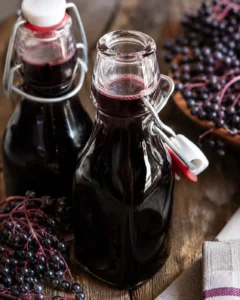
This homemade elderberry syrup recipe is a gently spiced, honey-sweetened way to prepare dried elderberries on the stovetop. Ginger, cinnamon, cloves, rosehips, astragalus, and a small amount of black pepper give the finished syrup a deep, warming flavor, while a long steep and thorough straining make the liquid smooth enough to spoon or stir into a drink.
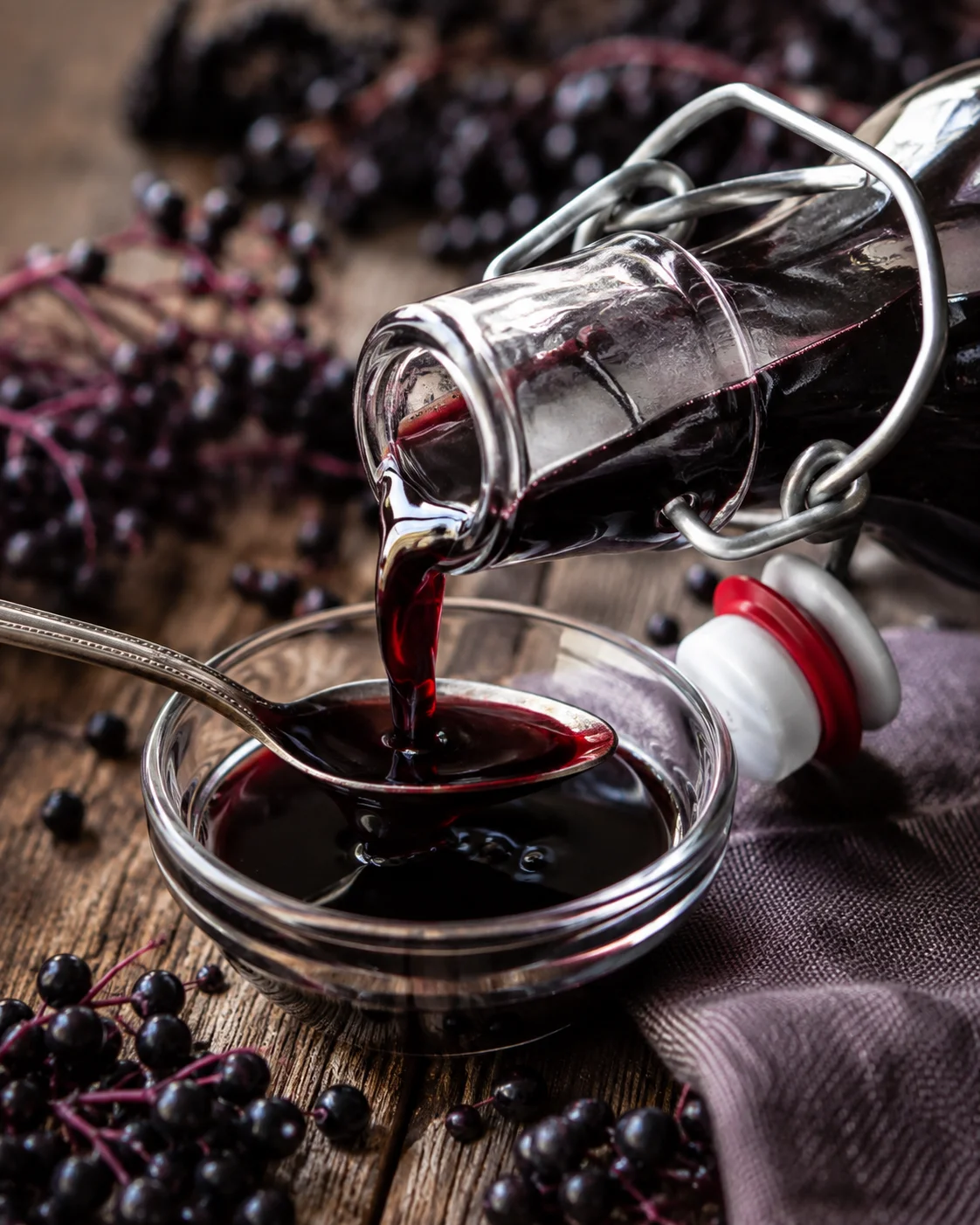
The method is intentionally simple: simmer the berries and herbs over low heat, let the mixture steep, strain it when it has cooled to almost room temperature, and sweeten the measured liquid with half as much honey. The result is a thinner syrup unless you reduce it further, so you can stop at a pourable consistency or cook it down for something more concentrated and syrupy.
Because elderberries and herbal ingredients are not interchangeable with medical care, treat this as a food recipe rather than a treatment. Read the cautions before serving it, especially if children, pregnancy, chronic conditions, allergies, or medications are involved.
Why You Will Love This
This elderberry syrup recipe gives you a flexible base with a lot of room for personal preference. You can use the full blend of spices and herbs for a mulled-cider-like flavor, or leave out any optional additions you do not want to use. The exact honey amount is determined after straining, which makes it possible to control the sweetness and final texture instead of guessing how much liquid will remain in the saucepan.
Low, gentle heat is the heart of the method. A hard boil can make the berries boil away quickly and can leave you with less liquid than intended. The low simmer allows the water to take on the color and flavor of the elderberries and spices over 30 minutes. If you prefer a thicker syrup, you can continue simmering until the liquid has reduced by about half before you steep and strain it.
The finished syrup is fragrant and dark, with a sweet-tart berry flavor followed by cinnamon, clove, and ginger. It is delicious by the spoonful, but it is also useful in the kitchen: stir it into hot water for a spicy, sweet tea, spoon it over ice cream, or swirl a little into yogurt or oatmeal. Since the syrup is stored in the refrigerator, it is also a practical make-ahead preparation when you want a flavorful herbal pantry item ready to use.
What to Know Before You Start
Dried elderberries are the most practical choice for this recipe because they are commonly available when fresh berries are out of season. Many dried elderberries sold commercially are Sambucus nigra. Fresh local elderberries may be a different species, including Sambucus canadensis, so accurate identification matters if you forage. Do not use unidentified berries, and take care to remove stems and leaves before cooking. Small pieces of stem or twig can turn up in bags of dried berries, so spread the berries out and pick through them before they go into the saucepan.
Fresh and dried elderberries are not handled in exactly the same way. Fresh berries need to be destemmed carefully. A separate fresh-berry method appears in the variations section, but it produces more of a juice than a long-cooked syrup and may not keep as long. If you freeze a surplus of fresh berries, keep in mind that the qualities associated with elderberries can change during longer freezer storage.
Some cooks use a pressure cooker or slow cooker for elderberry preparations. This recipe stays with the stovetop because it gives you direct control over the heat and the reduction. A pressure cooker reaches a higher temperature, while a slow cooker may not become hot enough for the intended preparation. The low stovetop simmer is easy to watch and does not require special equipment.
The herbs also have distinct flavor roles. Fresh ginger is bright and warming; dried ginger is more concentrated and earthy. Cinnamon rounds out the berry flavor, cloves add a strong aromatic note, rosehips contribute tartness, astragalus brings an earthy root flavor, and black pepper is used in a very small amount. The pepper should not make the syrup taste peppery at this quantity.
Ingredients
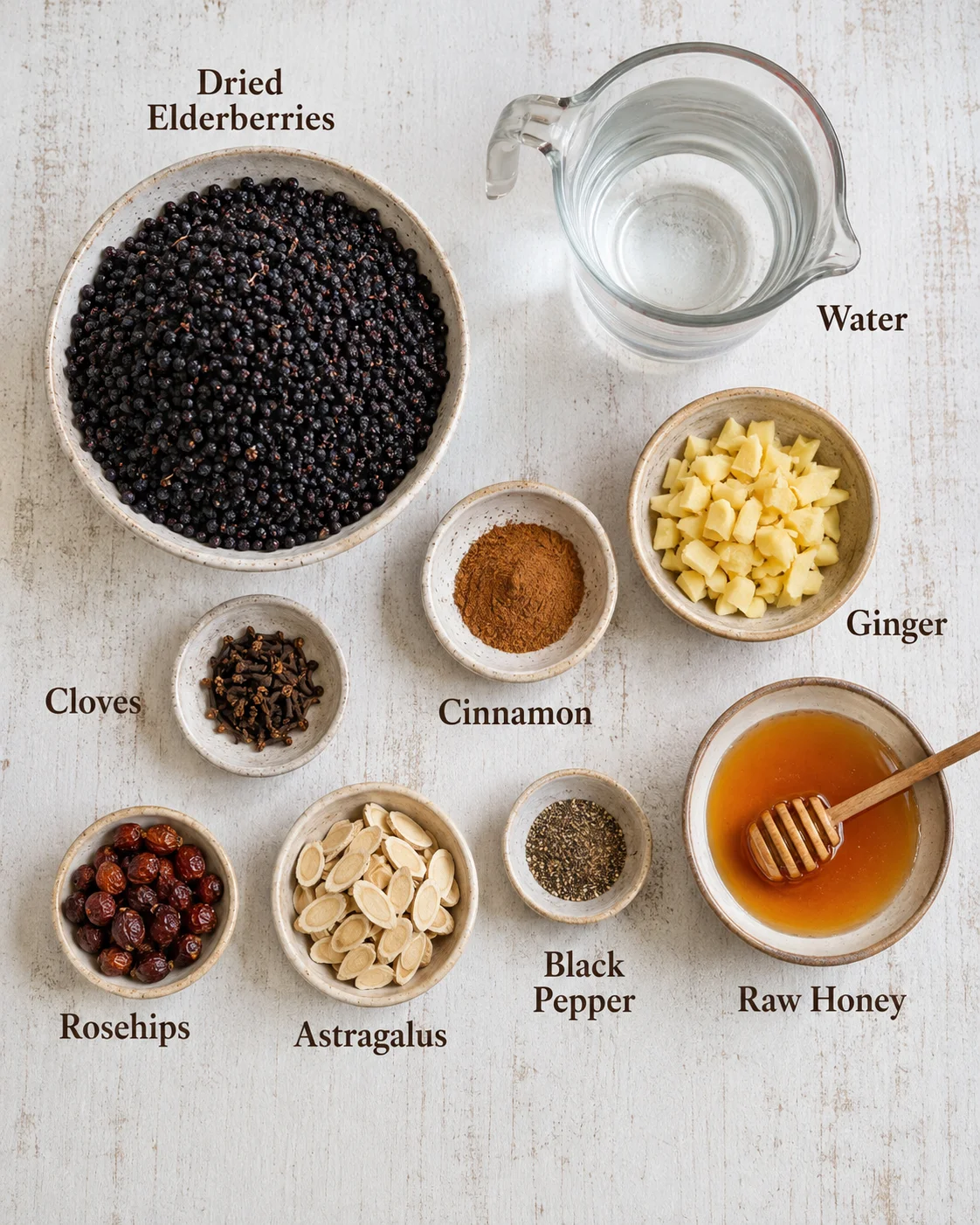
- ½ cup dried elderberries: Pick through them first and remove any stems, twigs, or leaves.
- 2 cups filtered water: This is the starting amount for the stovetop infusion.
- 1 tablespoon fresh ginger, peeled and chopped or ¼ teaspoon dried ginger: Use whichever form you have available.
- ½ teaspoon ground cinnamon: Cassia and Ceylon cinnamon can both be used in this kind of spiced preparation. If you use cassia often, keep overall consumption moderate because it contains more coumarin than Ceylon cinnamon.
- ¼ teaspoon ground cloves: Cloves have a bold flavor, so the small quantity is enough to perfume the syrup.
- ¼ cup rosehips: These add a lightly tart, fruity note to the berry mixture.
- 1 tablespoon astragalus: The root contributes an earthy herbal character. If you find that flavor strong, you can use less in a future batch.
- ¼ teaspoon black pepper: This small amount is included with the simmering ingredients and should stay in the background.
- ½ cup raw honey: This is the listed starting formula, but the working amount is based on the liquid left after straining. Add half as much honey as you have liquid.
You will also need a saucepan, a spoon, a heat-safe measuring cup, and a fine strainer or cheesecloth. Choose an airtight refrigerator container before you begin so the syrup can be transferred promptly after it is finished. A container with a narrow opening can make pouring easier, while a wide-mouth jar is convenient if you plan to spoon out small amounts.
Instructions
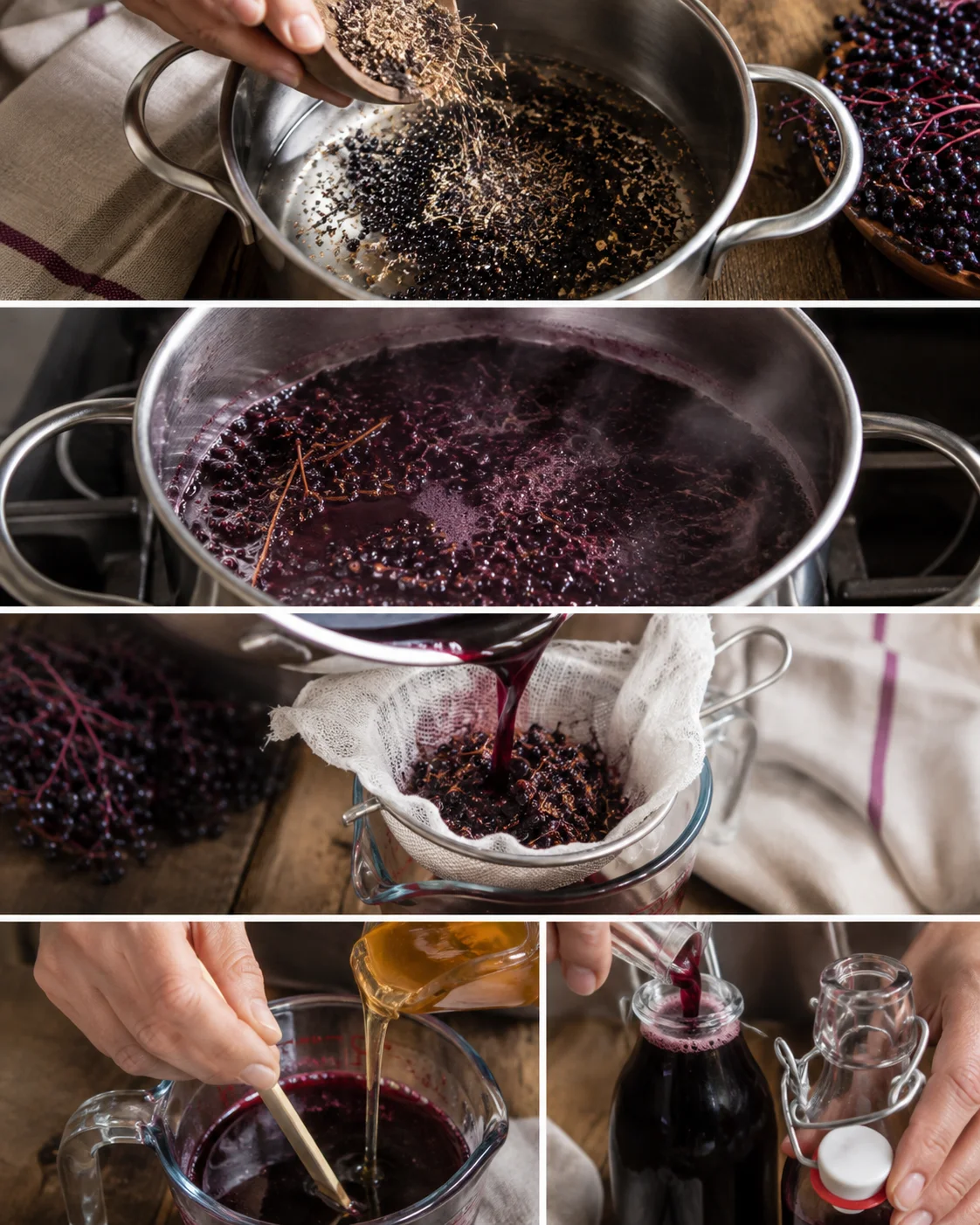
- Inspect the berries. Look carefully through the dried elderberries and remove any pieces of stem, twig, or leaf. If you are using fresh berries instead, destem them as carefully as possible. This step is easy to rush, but it is important because the finished liquid will be strained and small solids can be difficult to spot once everything is in the pot.
- Combine the simmering ingredients. Add the elderberries, filtered water, ginger, cinnamon, cloves, rosehips, astragalus, and black pepper to a saucepan. Keep the honey out of the pan; it is added only after the liquid has been strained and cooled.
- Simmer over low heat for 30 minutes. Bring the mixture to a gentle simmer, then maintain low heat for 30 minutes. The liquid should move quietly rather than boil aggressively. Stir occasionally if needed, and adjust the heat so the berries and herbs remain covered as much as possible. A slow reduction gives you more control over the final amount of syrup.
- Reduce further if you want a thicker syrup. For a more concentrated, syrupy texture, continue simmering over low heat until the liquid has reduced by about half. If you prefer a thinner, more pourable liquid, continue to the steeping step after the initial 30-minute simmer.
- Steep for at least 1 hour. Remove the saucepan from the heat and allow the mixture to steep for at least an hour. This resting time lets the liquid continue taking on flavor while the temperature drops. Do not hurry to strain it while it is still piping hot.
- Cool and strain. When the mixture has cooled to almost room temperature, strain it thoroughly into a heat-safe measuring cup or bowl. Press or squeeze the solids as appropriate for your strainer so you recover the usable liquid, but make sure no gritty pieces or plant solids remain. Reserve the strained berries instead of discarding them; they can be simmered again for a weaker tea.
- Measure the liquid. The amount left after simmering and straining will vary, which is why the honey is measured now. If you have ⅔ cup of liquid, add ⅓ cup of honey. If you have 1 cup of liquid, add ½ cup of honey. In each case, the rule is the same: use half as much honey as strained liquid.
- Stir in the honey. Add the honey to the cooled liquid and stir until it is fully incorporated. The mixture should look even, with no honey settling at the bottom. If the liquid is still very hot, wait a little longer before adding honey so it can blend smoothly without unnecessary heat.
- Transfer and chill. Pour the finished syrup into an airtight container. Label it with the date, then refrigerate it. Keep it refrigerated and use it within up to 3 months.
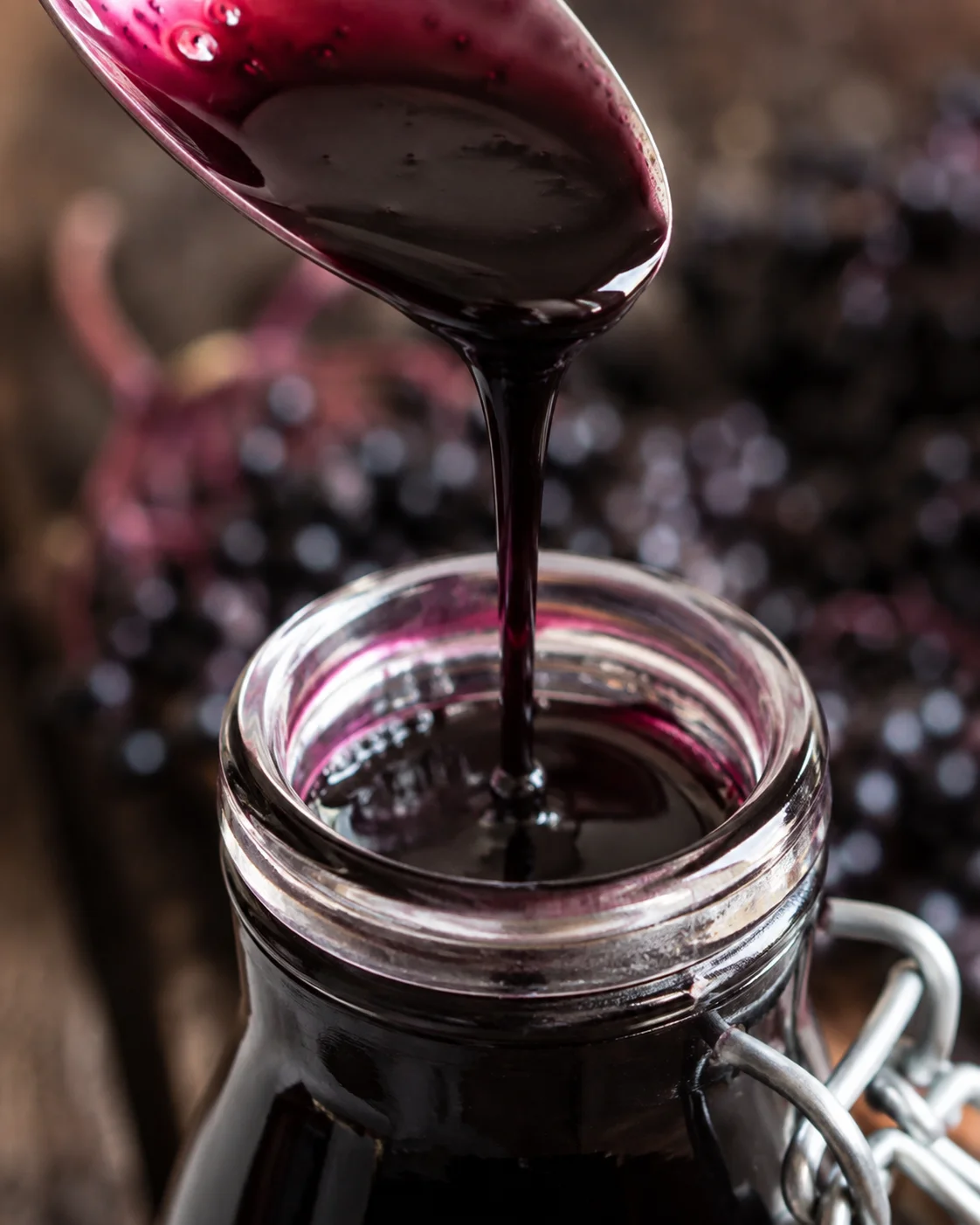
The final consistency is easiest to judge after the syrup has cooled. A thinner liquid is not a mistake; this formula naturally produces a more fluid syrup unless you reduce it further. If you want a thicker batch next time, start with 1½ cups of water instead of 2 cups, or simmer longer before straining. You can also use arrowroot starch as a thickener, but add it cautiously because the amount is not specified in this formula and too much can make the texture pasty.
Tips
Keep the heat gentle
A low simmer is easier to manage than a rolling boil. High heat can reduce the liquid too quickly, scorch the bottom of the pan, or make it harder to know how much honey to add later. Watch for small, steady movement in the liquid rather than vigorous bubbling. If the level falls faster than expected, lower the heat and continue with the amount that remains; the honey calculation will still be based on the strained liquid.
Strain carefully
Thorough straining matters for both texture and the quality of the finished syrup. Let the mixture cool to almost room temperature before straining, then give the liquid time to pass through the strainer. The berries, rosehips, and roots hold onto liquid, so press them gently to recover more of the infusion. If you are using a loose mesh strainer, a second pass through cheesecloth can help remove fine particles.
Use the honey calculation, not a fixed guess
The recipe lists ½ cup raw honey, but the actual sweetener amount depends on how much liquid is left. The two examples make the ratio clear: ⅔ cup of liquid takes ⅓ cup honey, and 1 cup of liquid takes ½ cup honey. This approach also makes it easier to choose a less-sweet style. A thinner batch with less honey should be used more quickly than a sweeter batch, because the honey ratio affects keeping quality.
Adjust the flavor in a thoughtful way
The full blend creates a warming, spiced profile. If you do not enjoy the earthy flavor of astragalus, use less of it in a future batch. You can also choose only some of the additional herbs rather than using every one. Keep the listed quantities as your starting point, especially for cloves and black pepper, whose flavors can quickly dominate a small amount of syrup.
Do not cook plant debris
Inspect dried berries before cooking and remove stems, twigs, and leaves. When using fresh berries, take the same care while destemming. It is much easier to remove debris before the berries are wet and simmering. This is also a good reason not to pour the contents of a bag directly into the saucepan without looking at them first.
Know when the texture is right for you
There are three natural texture points to choose from. The initial 30-minute simmer gives a thinner syrup. Continuing until the liquid is reduced by about half gives a stronger, thicker texture. Adding arrowroot starch gives another possible route to thickness, though the amount will need to be determined according to the texture you want. Whichever option you choose, strain first and calculate the honey from the final liquid amount.
Variations
Make it less sweet
The listed method uses half as much honey as strained liquid. For a less-sweet preparation, some people prefer a 1:3 or 1:4 honey-to-elderberry ratio instead. That change produces a less sweet syrup, but it should be used more quickly than a preparation made with more sweetener. Keep the container refrigerated and do not assume the lower-sugar version will last as long.
Choose the additional herbs
You can use all the additions in the ingredient list or pick and choose the ones that suit your pantry and palate. Ginger, cinnamon, cloves, rosehips, astragalus, and black pepper are suggestions for a more layered herbal syrup, not a requirement for the basic elderberry-and-honey preparation. If you leave some out, keep the elderberries, water, and honey ratio as the foundation and expect the flavor to be simpler.
Fresh ginger is the preferred form in the listed variation when you have it, but ¼ teaspoon dried ginger can stand in for the 1 tablespoon fresh ginger. The two forms do not taste identical: fresh ginger is brighter and more aromatic, while dried ginger gives a concentrated, rounded warmth.
Prepare syrup from fresh berries
To use fresh elderberries, freeze the berries first, then heat them in a pot over very low heat with a very small amount of water to release their juice. Strain out the solids and measure the liquid. Add half as much honey as you have liquid, just as you do with the dried-berry method. Because the berries are not cooked for a long time, the result will be more like a juice and may not keep as long as the dried-berry syrup.
Fresh berries can be a good seasonal option when you have a correctly identified, carefully destemmed supply. If you have a large amount in the fall, you may choose to preserve the juice or syrup using your preferred preservation method. Surplus berries can also be frozen, but longer freezer storage can affect the qualities you may be trying to preserve, so do not treat frozen berries as an indefinite supply.
Make a plain base
The syrup can be made with only elderberries, water, and honey. The extra herbs add flavor and are included in the recipe as optional additions, so a plain batch is a reasonable choice if you want a simpler taste. A plain base also works well when you expect to use the syrup in foods where cinnamon and cloves might compete with the other ingredients.
Use alcohol or extra honey for preservation
Brandy is a traditional choice when alcohol is used as a preservative. The suggested proportion is 1 part brandy to 4 parts syrup, or approximately 1 cup brandy to 1 quart syrup. Adding twice as much honey can also extend shelf life, but it makes an extremely sweet syrup. These changes alter the flavor and concentration, so refrigerate the finished mixture and use a clean container even when choosing one of these options.
Try water-bath canning with care
Water-bath canning is another preservation option for people who want to keep jars longer, but the high heat may affect the properties that make the preparation appealing. Use a reliable canning method appropriate for the actual formula rather than improvising a processing time. This recipe does not provide a canning schedule, so refrigeration is the straightforward storage method described here.
Storage
Pour the cooled syrup into an airtight container and store it in the refrigerator for up to 3 months. The refrigerator is part of the storage plan, not an optional extra. Write the preparation date on the container so you can keep track of the storage window, and use clean utensils whenever you spoon out syrup.
A less-sweet batch made with a 1:3 or 1:4 honey-to-elderberry ratio should be used more quickly. A decoction made without any sweetener keeps for only a few days in the refrigerator, so it is not a direct substitute for the longer-storing syrup. You can freeze a decoction in ice cubes if you like, but plan to use them within a couple of months because the qualities associated with elderberries can diminish during freezer storage.
If you want to make the syrup ahead, prepare it through the straining and honey-stirring steps, then chill it in the airtight container. For a larger seasonal batch, fresh berries can be preserved with a method suited to your kitchen, but the fresh-berry liquid may not keep as long because it is closer to juice. Do not rely on the storage time for the dried-berry syrup when using fresh berries.
The strained dried berries can be simmered again in water to make a weaker brew for tea. Some people simmer the berries a third time for one final, weak batch. Each subsequent brew will be lighter, so treat it as a flavorful tea rather than expecting the same strength or texture as the syrup.
Serving Suggestions
The simplest way to enjoy this spiced syrup is by the spoonful, when its berry, honey, ginger, cinnamon, and clove flavors are most concentrated. For a warm drink, stir it into hot water to make a spicy, sweet tea. Let the tea cool to a comfortable drinking temperature before serving.
The mulled-cider character of the spices works especially well with creamy or gently flavored foods. Drizzle the syrup over ice cream, swirl it into yogurt, or spoon it over oatmeal. It can also be stirred into a smoothie, although the cinnamon-and-clove flavor will be noticeable. If you want a more neutral berry flavor for a recipe, make the plain elderberry-water-honey version rather than the full spiced blend.
A small jar of the dry ingredients can make a thoughtful homemade gift. Combine dried elderberries with the dried herbs you want to include in a pretty glass jar and tie it with a ribbon. Add a jar of local honey if you like, and include the cooking directions so the recipient knows how to simmer, steep, strain, and sweeten the mixture. This gift works best when the recipient also receives the cautions and storage instructions, not just the ingredient jar.
For a simple pantry plan, keep dried elderberries and the shelf-stable spices together, then add fresh ginger and honey when you are ready to cook. Dried berries can become harder to find later in winter, so buying them when they are available may be useful. Look for clearly labeled culinary or herbal products from a reputable seller, and inspect the berries at home before using them.
FAQ
Can I make this elderberry syrup recipe without the extra herbs?
Yes. The basic preparation can use elderberries, water, and honey alone. Ginger, cinnamon, cloves, rosehips, astragalus, and black pepper create the layered spiced flavor in the full recipe, but you can pick and choose among them. If you change the ingredients, keep the elderberry-and-water base and calculate honey from the amount of liquid left after straining.
Why is my elderberry syrup thinner than expected?
This formula naturally makes a thinner liquid unless you cook it down. For a thicker syrup, continue simmering over low heat until the liquid is reduced by about half. Another option is to begin with 1½ cups of water instead of 2 cups. You can also use arrowroot starch, but the amount is not specified here, so add it cautiously and judge the texture as you go. Always strain and measure the liquid before adding honey.
How much honey should I add?
Add half as much honey as the amount of strained liquid. For example, ⅔ cup liquid takes ⅓ cup honey, while 1 cup liquid takes ½ cup honey. The listed ½ cup raw honey corresponds to a particular final volume, but the ratio is more useful because simmering and straining can leave different amounts in different kitchens.
Can I use fresh ginger instead of dried ginger?
Yes. Use 1 tablespoon fresh ginger that has been peeled and chopped, or use ¼ teaspoon dried ginger. Fresh ginger gives a brighter, sharper aroma; dried ginger has a more concentrated, earthy warmth. Both are included at the beginning with the other simmering ingredients.
Can I use fresh elderberries?
Yes, but use a different method. Freeze the fresh berries, then warm them over very low heat with a very small amount of water to release their juice. Strain the solids, measure the liquid, and add half as much honey. Fresh berries need to be correctly identified and carefully destemmed. The resulting liquid is more like a juice and may not keep as long as the dried-berry version.
How long does homemade elderberry syrup last?
Keep the dried-berry syrup in an airtight container in the refrigerator for up to 3 months. A less-sweet version should be used more quickly, and an unsweetened decoction lasts only a few days in the refrigerator. Fresh-berry juice may not keep as long, so do not use the 3-month guideline for it. When in doubt about a batch’s appearance, aroma, or storage history, discard it rather than trying to extend its use.
What should I do with the strained berries?
Simmer them again to make a weaker brew that can be enjoyed as tea. You may be able to make a third, even weaker batch. The later brews will not have the same concentration as the original syrup, but they can still provide a pleasant berry flavor and warm drink.
Are there cautions for serving elderberry syrup?
Use herbs thoughtfully, especially the first time you try them. Start with a small amount if you are unsure how you will respond, and do not assume that every additional herb is appropriate for every person. Children need age-appropriate guidance, and not all of the added herbs are necessarily suitable for children. Honey must not be given to babies under 1 year old; maple syrup or brown rice syrup can be used instead if you are preparing a sweetened mixture for an infant, but discuss the ingredients with the child’s clinician first.
Elderberry and herbal ingredients may not be appropriate with some medical conditions or medications. In particular, people with autoimmune diseases or those taking immunosuppressants should ask a doctor before consuming an elderberry preparation. Anyone taking corticosteroids, diuretics, laxatives, diabetes medications, or theophylline—a respiratory medication used for asthma and COPD—should also seek professional guidance. This recipe is not a substitute for individualized medical advice.
Nutrition Information
If you are planning the batch for a particular use, decide on the texture and sweetness before you begin. A spoonable, reduced syrup is useful as a topping, while a thinner version blends more easily into hot water, yogurt, or oatmeal. The serving size below is tied to the listed yield, not to a required way of using the syrup. You can portion it by the teaspoon, pour it into a measuring spoon, or use a small amount in a recipe.
The listed nutrition information is based on a yield of 48 servings with a serving size of 1 teaspoon. Each serving is listed as 22 calories, 0 g total fat, 0 g saturated fat, 0 g trans fat, 0 g unsaturated fat, 0 mg cholesterol, 1 mg sodium, 6 g carbohydrates, 0 g fiber, 6 g sugar, and 0 g protein.
Actual nutrition can vary with the amount of liquid reduced, the exact ingredients used, and the final quantity of honey added. For the most accurate estimate for your batch, calculate the ingredients and amounts you actually use with a nutrition calculator.
Store the finished elderberry syrup in the refrigerator, use clean utensils, and enjoy it as a warmly spiced kitchen preparation in drinks, breakfast foods, and desserts.
PrintA gently spiced, honey-sweetened elderberry syrup made by simmering dried elderberries with ginger, cinnamon, cloves, rosehips, astragalus, and black pepper, then steeping, straining, and sweetening the liquid with honey.
- Total Time: 1 hour 50 minutes (includes simmering, steeping for at least 1 hour, cooling, straining)
- Yield: Approximately 48 teaspoons (about 16 tablespoons) 1x
Ingredients
- 1/2 cup dried elderberries (picked through to remove stems, twigs, leaves)
- 2 cups filtered water
- 1 tablespoon fresh ginger, peeled and chopped OR 1/4 teaspoon dried ginger
- 1/2 teaspoon ground cinnamon
- 1/4 teaspoon ground cloves
- 1/4 cup rosehips
- 1 tablespoon astragalus root
- 1/4 teaspoon black pepper
- Honey (amount depends on strained liquid; start with up to 1/2 cup raw honey)
Instructions
- Inspect the dried elderberries carefully to remove any stems, twigs, or leaves.
- In a saucepan, combine the elderberries, filtered water, fresh or dried ginger, ground cinnamon, ground cloves, rosehips, astragalus root, and black pepper. Do not add honey yet.
- Bring the mixture to a gentle simmer over low heat and maintain this low simmer for 30 minutes, stirring occasionally and ensuring the berries and herbs stay covered by liquid.
- If desired for a thicker syrup, continue simmering until liquid reduces by about half before steeping.
- Remove the saucepan from heat and let the mixture steep for at least 1 hour, allowing flavors to deepen as it cools to nearly room temperature.
- Strain the mixture thoroughly through a fine strainer or cheesecloth into a heat-safe measuring cup or bowl. Press gently to extract liquid but avoid grit or solids.
- Measure the strained liquid volume; add half as much raw honey as the volume of liquid (e.g., 2/3 cup liquid = 1/3 cup honey). Stir honey into the cooled liquid until fully incorporated.
- Transfer the finished syrup to an airtight container. Label with preparation date and refrigerate. Use within 3 months.
Notes
The syrup will be naturally thinner unless reduced further by simmering or thickened cautiously with arrowroot starch (amount not specified)., Honey amount varies depending on the final strained liquid volume for desired sweetness and shelf life., Low, gentle simmer preserves liquid amount and flavor better than boiling., The recipe is flexible; optional herbs can be omitted or adjusted for flavor preferences., Do not consume the syrup as medical treatment; consult a healthcare provider for conditions or medications that may interact., Honey is not safe for infants under 1 year; alternatives like maple syrup or brown rice syrup may be used cautiously with clinical guidance., Strained elderberries can be reused to make a weaker tea by simmering again., Fresh elderberries require different preparation (freeze first, then heat with little water) and produce a juice-like syrup with shorter shelf life.
- Prep Time: 10 minutes (includes prep of ingredients and picking through elderberries)
- Cook Time: 30 to 60 minutes (30 minutes simmer plus optional reduction time)
- Category: Syrup
Nutrition
- Serving Size: 1 teaspoon
- Calories: 22 calories per teaspoon serving
- Fat: 0 g per serving
- Carbohydrates: 6 g per serving
- Protein: 0 g per serving