Best French Vanilla Cake Recipe

Best French Vanilla Cake Recipe
I absolutely love this French vanilla cake recipe because it’s like a warm hug from the past, filled with all the cozy memories of a home kitchen and that dreamy vanilla flavor that’s just irresistible. Making this cake feels like a little moment of calm and joy — mixing creamy ingredients with a touch of sweetness that leaves me excited for that first, perfect bite.
What I truly love about this French vanilla cake recipe is how it champions simple, good-quality ingredients without any fuss. It calls for 2 1/2 cups of all-purpose flour and 2 1/2 teaspoons of baking powder, while 1 cup of softened, unsalted butter brings everything together into a wonderfully tender cake.
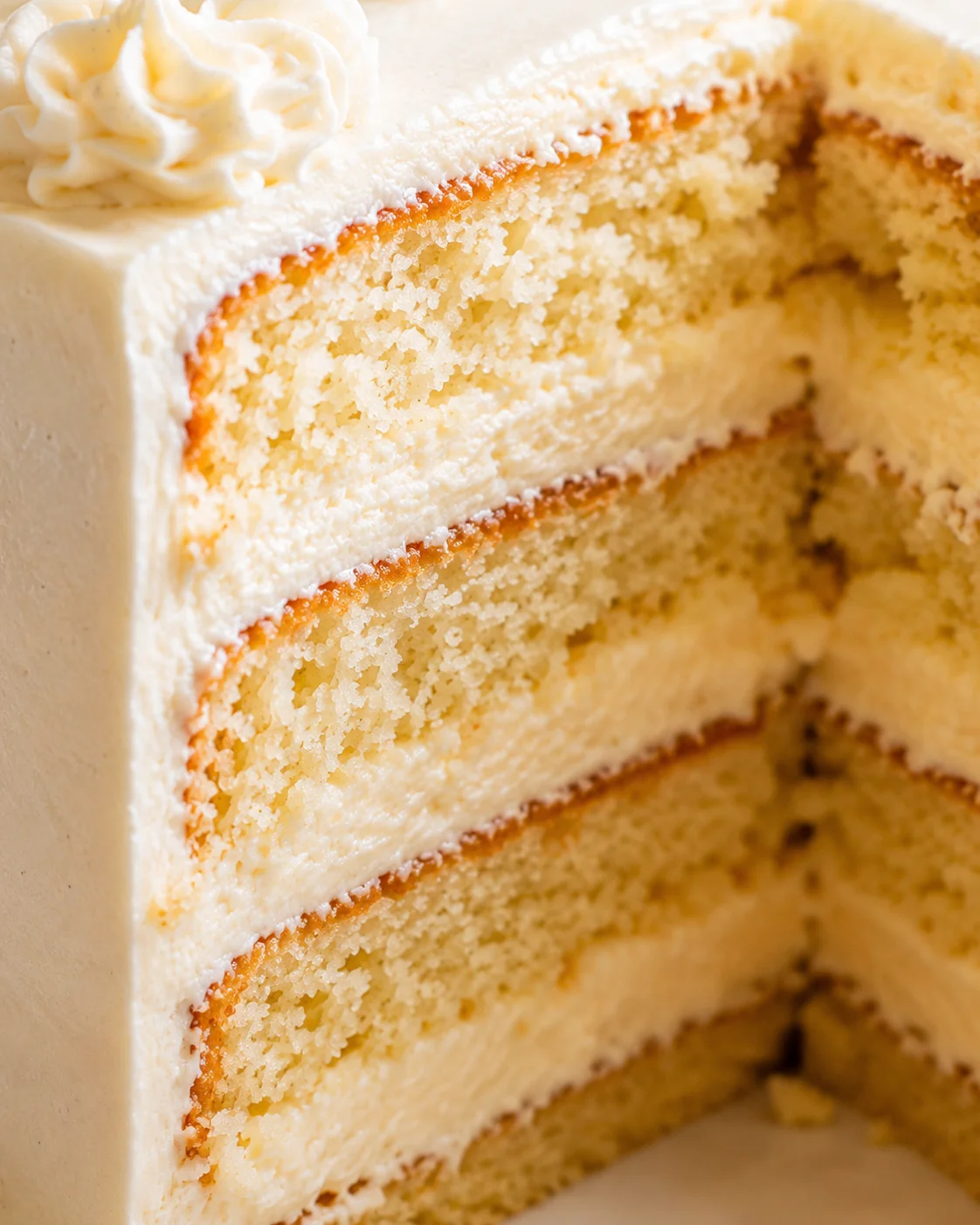
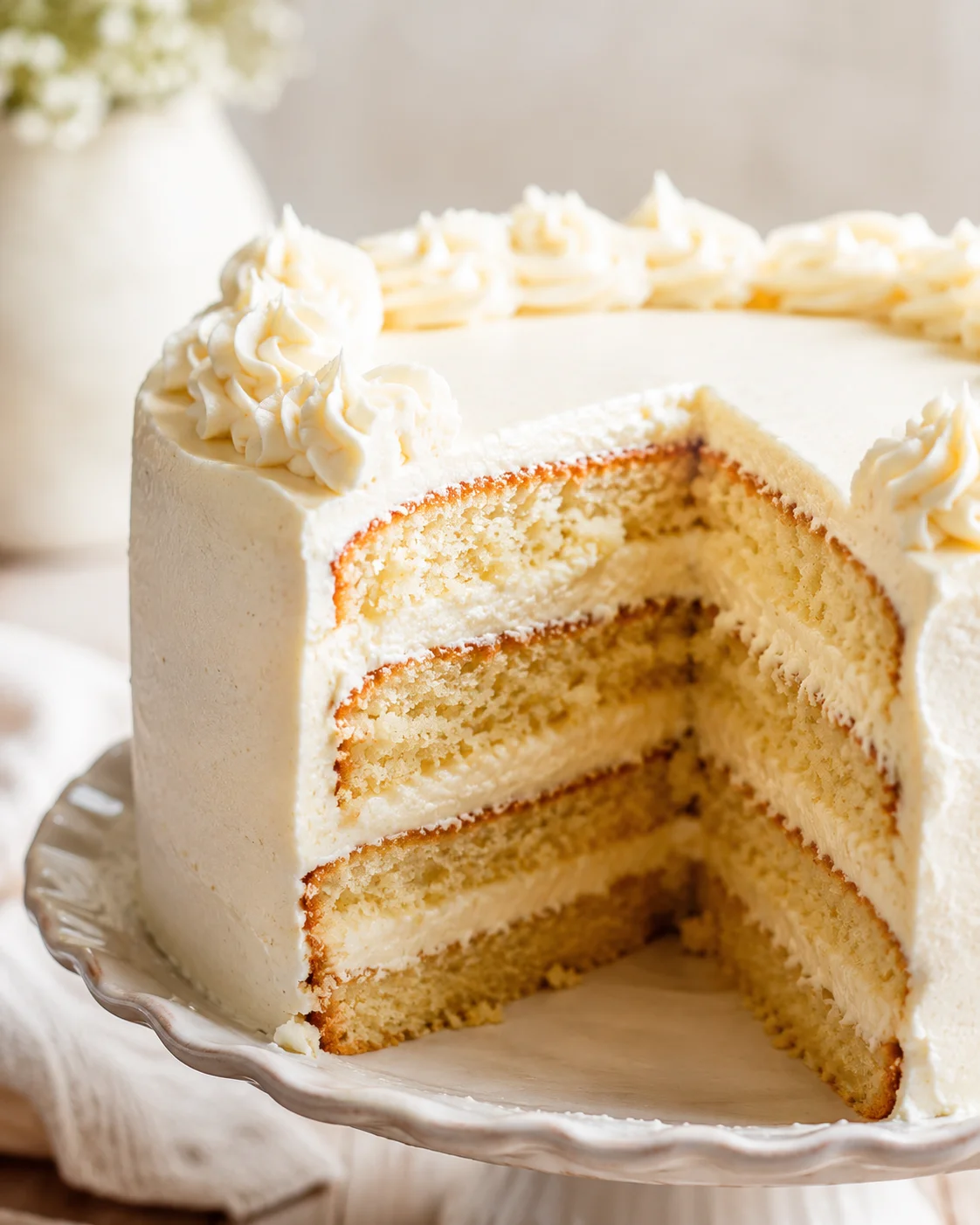
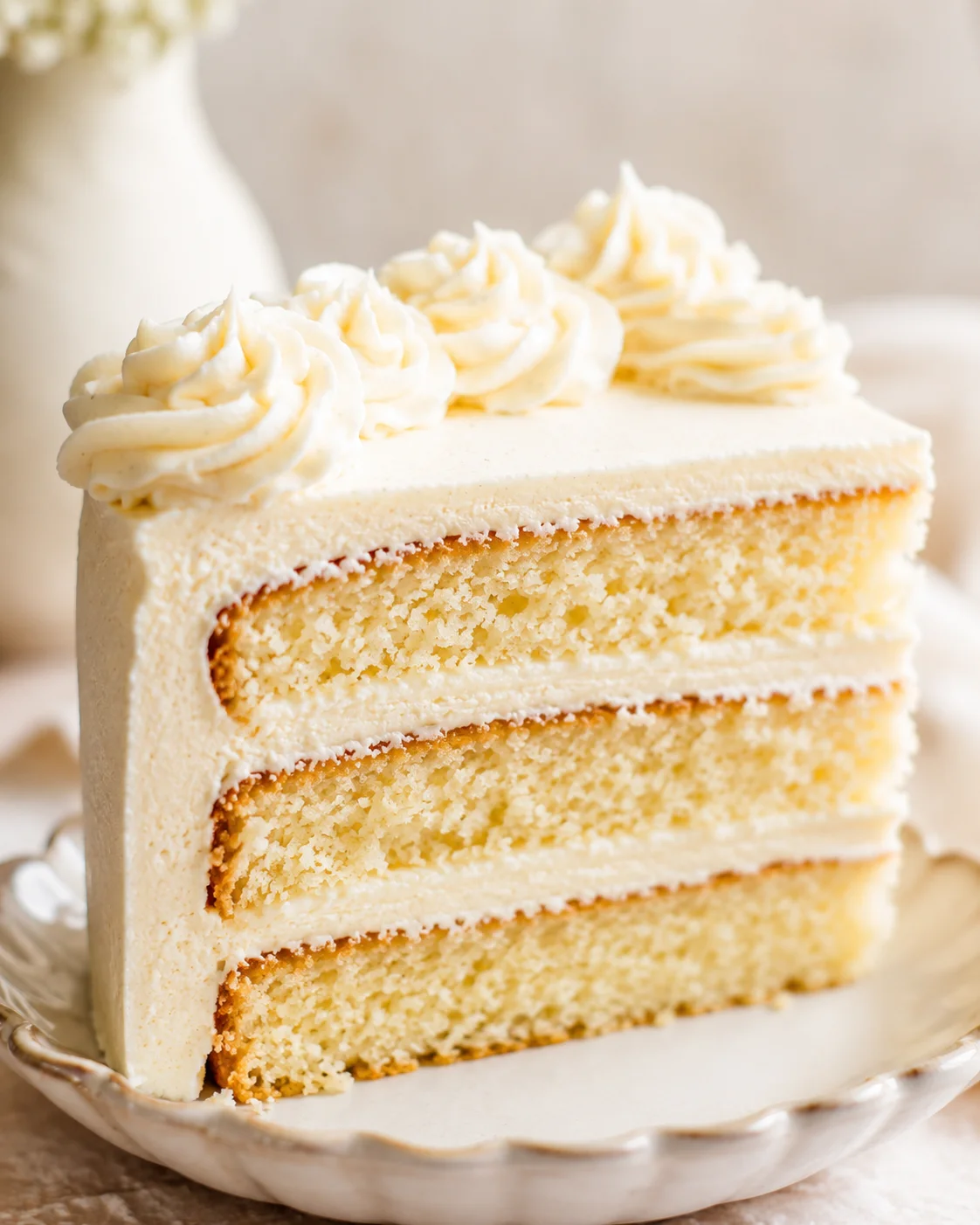
This cake has such a perfect balance — it’s fluffy, soft, and just melts in your mouth with a delicate crumb structure.
The secret that really takes it up a notch is the generous splash of pure vanilla extract in the batter. Honestly, once you try it, your taste buds will agree this is pure vanilla cake magic.
And if you still need more to be convinced, just wait until you add a beautiful frosting on top. This cake instantly becomes party-worthy, perfect for birthdays or any celebration you want to make extra special.
Equipment Needed:
1. Oven
2. Two 9-inch round cake pans
3. Pastry brush or paper towels for greasing pans
4. Flour sifter or fine-mesh sieve
5. Medium mixing bowl
6. Large mixing bowl
7. Electric mixer
8. Measuring cups
9. Measuring spoons
10. Spatula
11. Cooling racks
12. Toothpick
I always say the best cakes are simple and comforting, and this French vanilla cake recipe fits that bill perfectly. It’s buttery, tender, and packed with vanilla flavor — the kind that makes you think of lazy afternoons in the kitchen with family. Plus, it’s made from pantry basics you probably already have, so no need to make extra trips to the store.
This post gives you everything you need: from a detailed ingredient list and equipment suggestions (think two 9-inch pans and a mixer) to step-by-step instructions that anyone can follow. I’ll also share tricks for a smooth baking experience, frosting ideas ranging from classic buttercream to spun-sugar magic, plus handy substitutions, storage tips, make-ahead advice, and answers to your most common questions.
Whether it’s a simple weeknight dessert or a grand celebration, this cake delivers a reliably tender crumb and deep vanilla taste — with a straightforward process that’s perfect even if you’re still building your baking confidence. Ready to dive in? Scroll down for the recipe or stick around for some extra tips and variations you’ll love.
Why This Cake Shines
This French vanilla cake recipe is a keeper because it gives you classic flavor without complicated steps. The crumb is soft and fluffy, thanks to creamed butter and eggs mixed just right. But here’s the real kicker — the bold vanilla flavor shines through beautifully with plenty of pure vanilla extract added in, making every bite taste like a little bit of heaven.
Plus, here are some more reasons to make it your go-to:
- Uses basic ingredients you almost certainly have in your pantry: flour, butter, sugar, eggs, milk, and of course, vanilla.
- Gives you a reliable texture — the mixing order and room-temp ingredients work together to create an even rise and tender cake.
- Super versatile: it’s easy to frost for birthdays or just dust with powdered sugar for a casual treat.
- Adaptable: you can swap cake flour, buttermilk, or non-dairy milk to change texture or suit your pantry without losing that delicious vanilla taste.
What You’ll Need
- 2 1/2 cups all-purpose flour
- 2 1/2 teaspoons baking powder
- 1/2 teaspoon salt
- 1 cup unsalted butter, softened
- 2 cups granulated sugar
- 4 large eggs
- 1 tablespoon pure vanilla extract
- 1 1/4 cups whole milk
Step-by-Step Baking Method
- Bring butter, eggs, and milk to room temperature for about 30 minutes before starting.
- Preheat oven to 350°F (175°C).
- Grease and flour two 9-inch round cake pans.
- Measure flour using the spoon-and-level method to avoid packing.
- Sift together 2 1/2 cups all-purpose flour, 2 1/2 teaspoons baking powder, and 1/2 teaspoon salt; set aside.
- In a large bowl, use an electric mixer on medium speed to cream 1 cup softened unsalted butter and 2 cups granulated sugar until light and fluffy, about 3–4 minutes.
- Add 4 large eggs one at a time, beating each in fully before adding the next, then stir in 1 tablespoon pure vanilla extract.
- Gradually add the dry mixture and 1 1/4 cups whole milk to the wet ingredients, alternating between them, starting and ending with the dry ingredients; mix just until combined (add dry in three parts and milk in two).
-
Divide the batter evenly between the prepared pans.
- Bake for 25–30 minutes, testing doneness by inserting a toothpick into the center — it should come out clean or with a few crumbs; the center should spring back lightly.
- Let the cakes cool in the pans for about 10 minutes, then turn them out onto wire racks to cool completely.
- Frost the cooled cakes with your desired frosting.
Baker’s Tips for Success
1. Bring Ingredients to Room Temperature: Make sure your butter, eggs, and milk sit out for about 30 minutes before you start. This helps everything blend together smoothly, so your cake will have a light, even texture.
2. Cream Butter and Sugar Well: Beat them together until pale and fluffy. This step traps air that helps the cake rise and stay tender.
3. Measure Flour Right: Use the spoon-and-level method instead of scooping directly from the bag to avoid packing in too much flour, which can make the cake dense.
4. Test for Doneness: Use a toothpick to check the cake and gently press the center — it should spring back lightly.
5. Let the Cake Cool Fully: Cool your layers completely before frosting to avoid melting the icing or sliding layers. If short on time, pop them in the fridge for a quicker chill.
Flavor Swaps and Substitutions
Looking to switch things up or adjust based on what you have? No problem! This French vanilla cake recipe is quite flexible.
Try swapping all-purpose flour for cake flour in the same amount for an even lighter texture — this works great if you want a delicate crumb. But be mindful: cake flour softens structure, so stick with all-purpose if you want a sturdier cake, like for layered cakes where you want extra support.
If you don’t have baking powder, you can replace it with 1/2 teaspoon baking soda plus 1 cup plain yogurt. Because baking soda needs acid to react and rise, yogurt works perfectly here. If that’s too much yogurt for you, try 1/2 teaspoon baking soda with a mix of 1/2 cup yogurt and 1/2 cup buttermilk — both acids that will help your cake lift nicely.
You can swap unsalted butter for equal parts margarine or vegetable shortening if needed.
For sugar, try replacing 2 cups granulated sugar with 1 3/4 cups honey, but reduce the milk by 1/4 cup to keep the texture just right.
And milk can be swapped with buttermilk or a cream-and-water mix (2 parts cream to 1 part water) to add tang or richness — perfect to tweak the flavor to suit your family’s tastes.
Storage and Make-Ahead Advice
How you store your French vanilla cake depends on whether it’s frosted and how soon you plan to enjoy it.
- Unfrosted cake layers: After cooling completely, wrap tightly in plastic wrap or place in an airtight container. You can keep them at room temperature for up to 3 days, which is super handy for quick dessert prep.
- Frosted cake: If you’re using buttercream or an all-butter frosting, you can keep the cake at room temperature in a cool spot for 1–2 days. For longer storage — like 3 to 5 days — pop the cake in the fridge. Just remember to bring it back to room temp for half an hour before serving so the frosting softens up and tastes its best.
- Spun sugar or delicate sugar decorations: These don’t like humidity. Store your cake without the spun sugar in the fridge and add the spun sugar right before serving to keep it crisp and pretty.
- Freezing: For longer storage, freeze the cooled unfrosted layers wrapped tightly in plastic wrap, then foil or airtight bags, for up to 2 months. Thaw in the fridge overnight, then bring to room temperature before frosting.
Reheating: If you want a warm slice, microwave for 10–20 seconds on low power or warm in a 300°F (150°C) oven for 8–12 minutes. Be careful not to overheat or your cake might dry out.
Make-ahead tips: It’s best to bake the cake layers fresh, as the batter rises best immediately after mixing. But you can bake layers a day or two ahead and store them as above, or freeze layers for even longer. Frost and decorate on the day you plan to serve — especially if you’re using delicate or spun-sugar garnishes.
Common Questions Answered
- Can I use salted butter instead of unsalted butter? Yes, but reduce the added salt a bit to keep the flavor balanced.
- What type of vanilla extract should I use? Pure vanilla extract gives the best flavor. For even more vanilla punch, try vanilla bean paste.
- Can I use non-dairy milk instead of whole milk? Absolutely! Almond, soy, or oat milk all work, though the texture may be slightly different.
- How should I store the cake after baking? Once cooled, wrap tightly with plastic wrap or keep in an airtight container at room temperature for up to 3 days.
- Can I make the batter ahead of time? It’s best to bake the cake right after mixing the batter for the best rise and texture.
- How can I tell when the cake is done? Insert a toothpick into the center. If it comes out clean or with a few moist crumbs, your cake is perfectly baked.
- Is cake flour a good substitute for all-purpose flour? Yes! Use 2 3/4 cups of cake flour to that 2 1/2 cups all-purpose flour measurement, as cake flour is lighter and will give a softer crumb.