Italian Herbs and Cheese Sourdough Bread Recipe

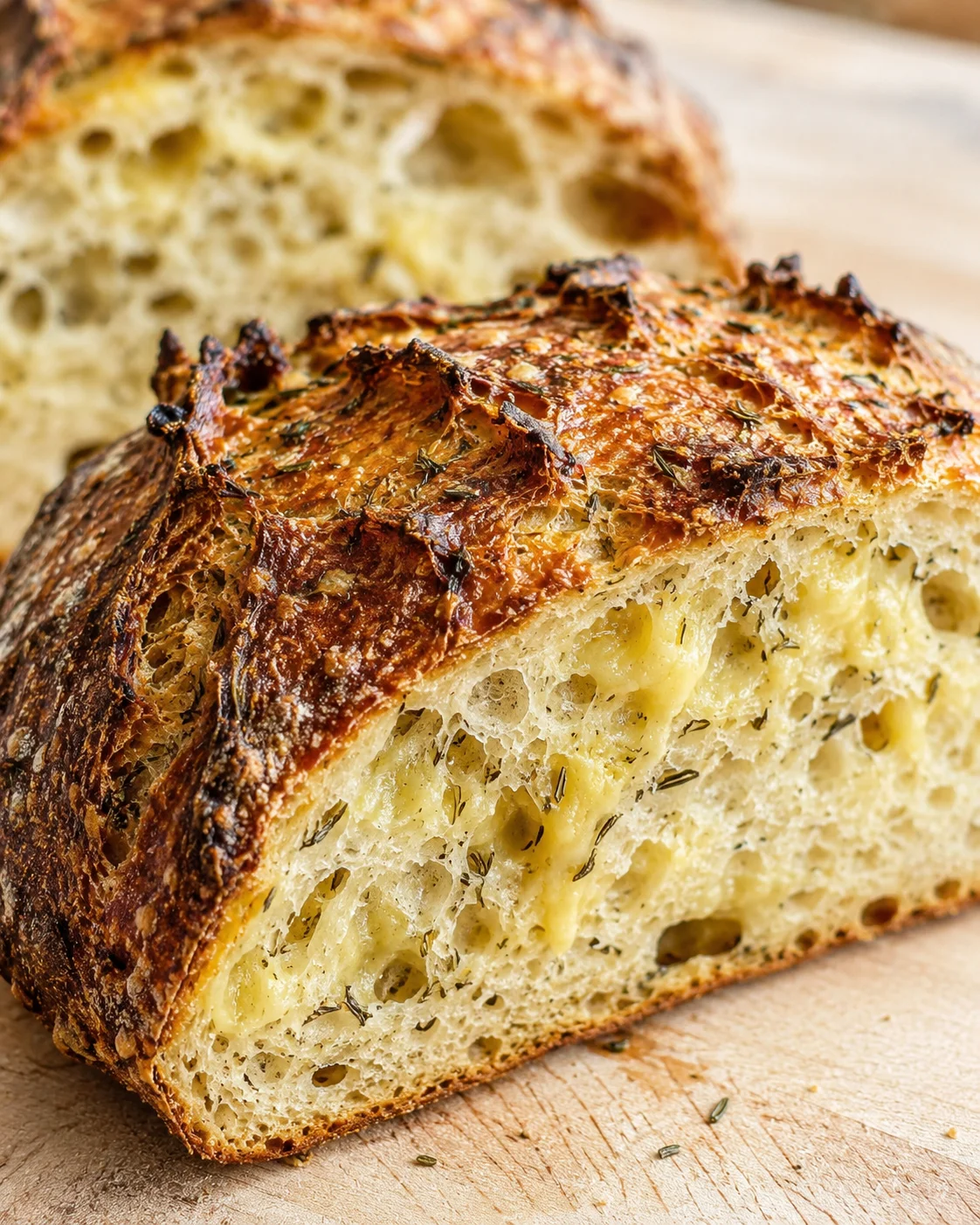
There’s something truly delightful about biting into a warm, freshly baked loaf packed with Italian herbs and rich cheese flavors. This Italian herbs and cheese sourdough bread recipe blends rustic tradition with a touch of indulgence—ideal for anyone craving that cozy, artisanal bread right in their kitchen. I adore how the crust crisps to a beautiful golden hue while the inside crumb stays soft, tender, and full of tasty surprises.
Every step of this recipe is enjoyable, especially when your kitchen fills with those inviting aromas as the dough rises and bakes. Believe me, after trying this recipe, it’ll quickly become your go-to loaf for weekend baking, family dinners, or just special moments when you want something comforting and homemade.
★ Key Reasons to Try It
- Simple Steps: See how easy it is to make this flavorful bread.
- Luxurious Flavor: Enjoy rich, memorable tastes in every bite.
- Perfect for Gatherings: Ideal for sharing at celebrations and family meals.
- Prep-Friendly: Learn how make-ahead and storage options make your life easier.
This Italian herbs and cheese artisan sourdough bread brings together the tangy charm of homemade sourdough with fragrant Italian herbs and melting cheeses. A blend of unbleached bread flour and whole wheat flour meets a lively sourdough starter, while Colby Jack and Parmigiano Reggiano shred into the dough with Italian seasoning and dried basil. Slow fermentation builds complex flavors, and baking in a Dutch oven delivers a crisp crust with a soft crumb—perfect for sandwiches or as a delicious side at any meal.
- Prep Time: 15 minutes (plus overnight starter feeding and resting)
- Cook Time: 50 minutes
- Total Time: About 10 hours (including bulk fermentation and overnight cold proof)
- Yield: 1 artisan loaf (around 1.2 kg / 2.6 lbs)
- Category: Bread
- Method: Baking
- Cuisine: Italian
Why You’ll Love This Loaf
Give this loaf a try and you’ll see why it becomes a favorite. It delivers bakery-style bread with little fuss, and every slice bursts with comforting, savory notes from cheeses and Italian herbs.
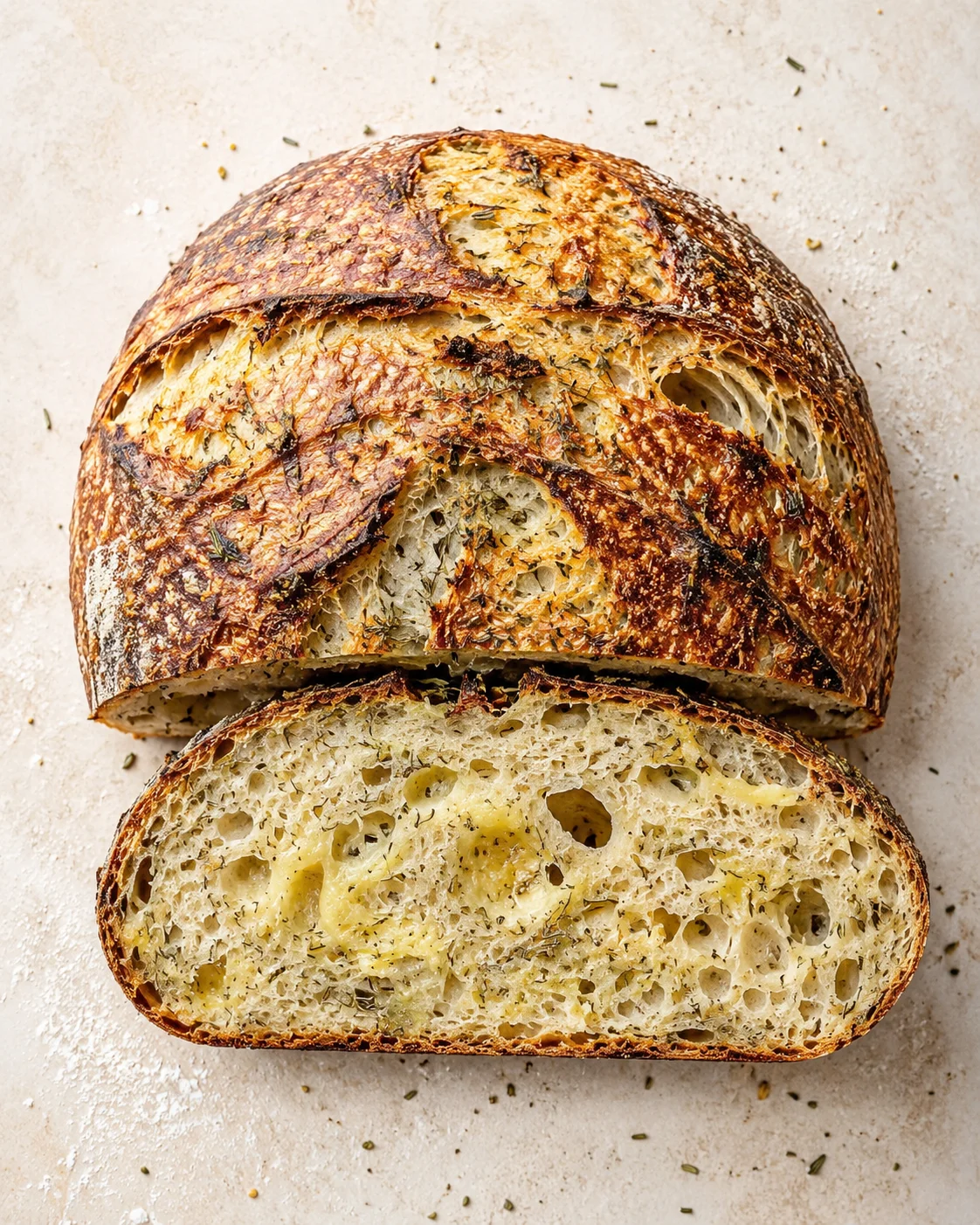
- Bakery-quality texture: The slow fermentation combined with baking in a hot Dutch oven creates a golden, crunchy crust and airy, soft crumb—perfect oven spring and bite without any complicated steps.
- Rich, layered flavor: Creamy pockets of melted Colby Jack and Parmigiano Reggiano mingle with fragrant Italian seasoning and basil to deliver indulgent yet balanced slices.
- Simple, forgiving method: The process is straightforward—mix, stretch and folds, bulk ferment, overnight cold proof—so even beginner bakers get artisan-like results with easy tactile cues rather than needing exact timing.
- Schedule-friendly: Cold proofing helps you bake on your own timetable. Shape the loaf one day, bake the next, or freeze shaped dough for later baking. It’s perfect for busy weekends, family dinners, or hosting surprises.
- Versatile and shareable: Ideal for sandwiches (try it in a Swiss mushroom melt sandwich), soups, cheese boards, or as a thoughtful homemade gift. This 1.2 kg loaf stretches nicely at the table.
- Works with what you have: Use active or discard starter and swap cheeses or herbs depending on your pantry—this recipe adapts without losing its deliciousness.
- Easy to store and revive: Keep the baked loaf at room temp for 2-3 days or freeze slices. A quick toast or broil refreshes the crust and melts cheese back to gooey perfection.
If you’re dreaming about rustic, herb-filled, cheesy bread that’s impressive yet doable, this recipe will become your cozy favorite—time and again. For another savory spin, check out Caramelized Onion Sourdough Bread with Gouda, or try my Sourdough Herb & Garlic Twist Loaf.
Ingredients and Mix-Ins
- 12 g sourdough starter (active or discard)
- 60 g water
- 60 g bread flour (unbleached, King Arthur)
- 325 g water
- 450 g bread flour (unbleached, King Arthur)
- 50 g whole wheat flour (Sunrise Flour Mills)
- 120 g active sourdough starter (from above)
- 25 g water
- 10 g sea salt (Redmonds)
- 3 g Italian seasoning blend
- 4 g lightly dried basil
- 110 g Colby Jack cheese, shredded
- 15 g Parmigiano Reggiano, shredded
Make the Dough and Bake
- Feed starter: mix 12 g sourdough starter with 60 g water and 60 g bread flour the night before and let sit at room temperature 10–12 hours until bubbly.
- (Optional autolyse) Mix 450 g bread flour and 50 g whole wheat flour with 325 g water and rest 30 minutes to overnight, then add 120 g active starter.
- Make the dough: combine 450 g bread flour, 50 g whole wheat flour, 120 g active starter, and 325 g water (if not autolysed) and stir until a shaggy dough forms; cover and rest about 1 hour.
- Add salt and water: add 10 g sea salt and 25 g water, press and fold to incorporate until dough feels stretchy and elastic.
- Slap-and-fold: transfer to a dampened surface and perform slap-and-folds 2–4 minutes until smooth; cover and rest 30 minutes.
- Add inclusions: sprinkle 3 g Italian seasoning, 4 g dried basil, 110 g shredded Colby Jack, and 15 g shredded Parmigiano Reggiano over the dough and gently stretch-and-fold to distribute; cover and rest 30 minutes.
- Stretch-and-fold series: perform one stretch-and-fold, rest 30 minutes, do a coil fold, rest 30 minutes, then repeat a second coil fold and rest 30 minutes.
- Bulk ferment: let dough ferment at room temperature until puffed, bubbly at the edges, and jiggly when shaken (timing will vary; about 7–8 hours at ~70–72°F).
-
Pre-shape and final shape: turn dough onto the counter, pre-shape and form a tight round using a bench scraper and caddy-clasp method, place seam-side up in a floured banneton, pinch the seam closed, optionally rest 10 minutes and stitch the top for surface tension; cover.
- Cold proof: refrigerate the shaped dough overnight for a slow cold fermentation.
- Preheat and score: preheat oven to 450°F (230°C) with a Dutch oven inside; remove dough from fridge, score the top with a sharp blade.
- Bake covered: place scored dough into the hot Dutch oven, cover, and bake 30 minutes.
- Finish baking uncovered: remove the lid, lower oven to 425°F (220°C), and bake uncovered 15–20 minutes until crust is deep golden and internal temperature reaches 205–210°F (96–99°C).
- Cool completely: remove loaf from oven and cool on a wire rack about 2 hours before slicing.
Baker’s Tips and Troubleshooting
- Starter readiness: Be sure your starter is bubbly and active for the best oven spring. If using discard, feeding a small build the night before keeps it lively.
- Trust feel over time: Bulk fermentation timing shifts with temperature; watch for bubbly, domed dough that jiggles to know it’s ready, not just the clock.
- Hydration handling: Keep your surface lightly misted with water for slap and folds to prevent sticking without toughening the dough with extra flour.
- Even inclusions: Add the cheeses and herbs when the dough has softened from resting and use gentle stretch and folds to keep the air pockets intact—the same approach works when folding chopped pickles into this Tangy Dill Pickle Sourdough Bread.
- Preheat and steam: Get your Dutch oven blazing hot before baking so it traps steam to welcome the dough and create a crisp crust with great rise.
- Scoring: Use a sharp blade and make swift cuts with confidence. Gentle, shallow slashes won’t bloom well and can hurt that prized oven spring.
- Doneness check: Aim for 205–210°F (96–99°C) internal temperature for a fully baked, tender crumb. No thermometer? Tap the bottom—the sound should be hollow.
- Cooling: Let your loaf cool fully for about two hours—this finishes setting the crumb and keeps slices from turning gummy.
- Storage & reheating: Store at room temp in a linen bag or wrapped for 2–3 days, or freeze slices tightly wrapped. Reheat briefly in a toaster oven or under the broiler to revive crust and melt cheese again.
- Avoid overproofing: If the dough collapses or spreads when shaped, it’s likely overproofed—try shortening bulk fermentation or chilling earlier next time, especially with loaded loaves like this Pepperoni Pizza Sourdough Bread.
Swaps, Mix-Ins, and Flavor Twists
- Cheese swaps: Swap Colby Jack with smoked gouda, aged cheddar, fontina, or mozzarella for different melting qualities and flavors.
- Herb swaps: Switch the Italian seasoning for fresh or dried rosemary, thyme, or oregano for your preferred herb profile.
- Savory add-ins: Fold in sun-dried tomatoes, caramelized onions, roasted garlic, or chopped olives for extra savory notes. Cut chunks small so they disperse evenly.
- Spicy kick: Stir in a teaspoon of red pepper flakes or a pinch of black pepper for a subtle heat boost, or fold in finely diced jalapeños and cheddar for a loaf in the spirit of jalapeño cheddar sourdough with a spicy, cheesy crust.
- Seeded crust: Brush your loaf with water or an egg wash then press on sesame seeds, poppy seeds, or coarse sea salt before baking for added texture.
- Shape & bake options: Form a batard or boule if preferred. No Dutch oven? Use a baking stone with a pan of boiling water to create steam in your oven.
- Lighter loaf: Cut cheese by 20–30% and add more fresh herbs for a lighter, herb-forward taste.
- Whole-grain adjustment: Increase whole wheat flour up to 100 g and add 10–20 g more water to keep hydration balanced if you want a heartier loaf.
How to Serve and Store
This Italian herbs and cheese sourdough bread recipe really shines when shared around the table. Whether it’s toasted for breakfast, paired with a cozy soup, part of a beautiful cheese board, or served alongside basil pesto chicken—or piled into a Chicken Avocado Melt Sandwich—this loaf brings warm, homey charm to any meal.
♡ Serving & Storage Ideas
- Perfect Pairings: Dip in good olive oil, enjoy with tomato basil soup or a bowl of Tasty Orzo with Mushrooms, pair with Creamy Garlic Shrimp to mop up the sauce, or sip a crisp white wine to complement the herbal and cheesy notes.
- Plating Touch: Sprinkle extra Parmesan or fresh basil leaves for an inviting, rustic presentation.
- Leftover Bliss: Wrap any leftover bread tightly and keep it at room temperature for up to two days or freeze for later. Gently warm in the oven to bring back that fresh-baked feel.
- Holiday Flair: Add dried rosemary or sun-dried tomatoes to your dough for a festive twist during holidays.
Creative Twists with Italian Herbs and Cheese Sourdough Bread Recipe
- Add bursts of sweet-savory flavor with sun-dried tomatoes or caramelized onions mixed in.
- Swap Italian seasoning for fresh rosemary or thyme to fine-tune your loaf’s herbal character.
- Try smoky gouda or aged cheddar instead of Colby Jack for an extra rich cheese flavor.
- Sprinkle in a teaspoon of garlic powder for an added savory punch.
- Lighten it up by reducing cheese and using more fresh herbs.
- Experiment with gluten-free flours, adjusting water to keep dough manageable.
Make-Ahead & Keep Fresh
- Refrigerate shaped dough overnight to develop deeper flavor and keep your baking flexible.
- Store baked bread wrapped in linen or paper bag at room temperature for 2-3 days to maintain its crisp crust.
- Freeze sliced bread tightly wrapped in plastic and foil; thaw slices as needed for convenience.
- Refresh slices with a short toast or broil to revive crust crunch and melty cheese.
Common Questions Answered
- Can I use discard starter? Absolutely! This recipe works great with discard or active starter—just be sure to refresh it so it’s bubbly and ready.
- What if I don’t have a Dutch oven? Use a heavy covered pot or bake your bread on a baking stone with a pan of boiling water nearby to create steam for crust.
- How can I tell when the dough is done fermenting? Look for a puffy, bubbly surface and a jiggle like jelly when you shake the bowl gently. Those signs mean it’s ready.
- Can I freeze the dough before baking? Yes! After shaping, refrigerate overnight or freeze for up to a week. Bake directly from frozen, adding a few extra minutes to baking time.
- Can I swap the cheeses? Feel free to play with any melting cheese you like, such as mozzarella, fontina, or gruyere.
Notes
- Feeding starter the night before guarantees it’s bubbly and active for the perfect rise.
- Autolyse boosts gluten and dough softness but is optional.
- Multiple stretch and folds strengthen the dough and distribute herbs and cheese evenly.
- Visual and touch cues during fermentation beat relying only on time.
- Cold proof in the fridge overnight for better flavor and easier handling.
- Baking in a Dutch oven traps steam for a crisp crust and great oven spring.
- Always cool bread fully before slicing for best texture.
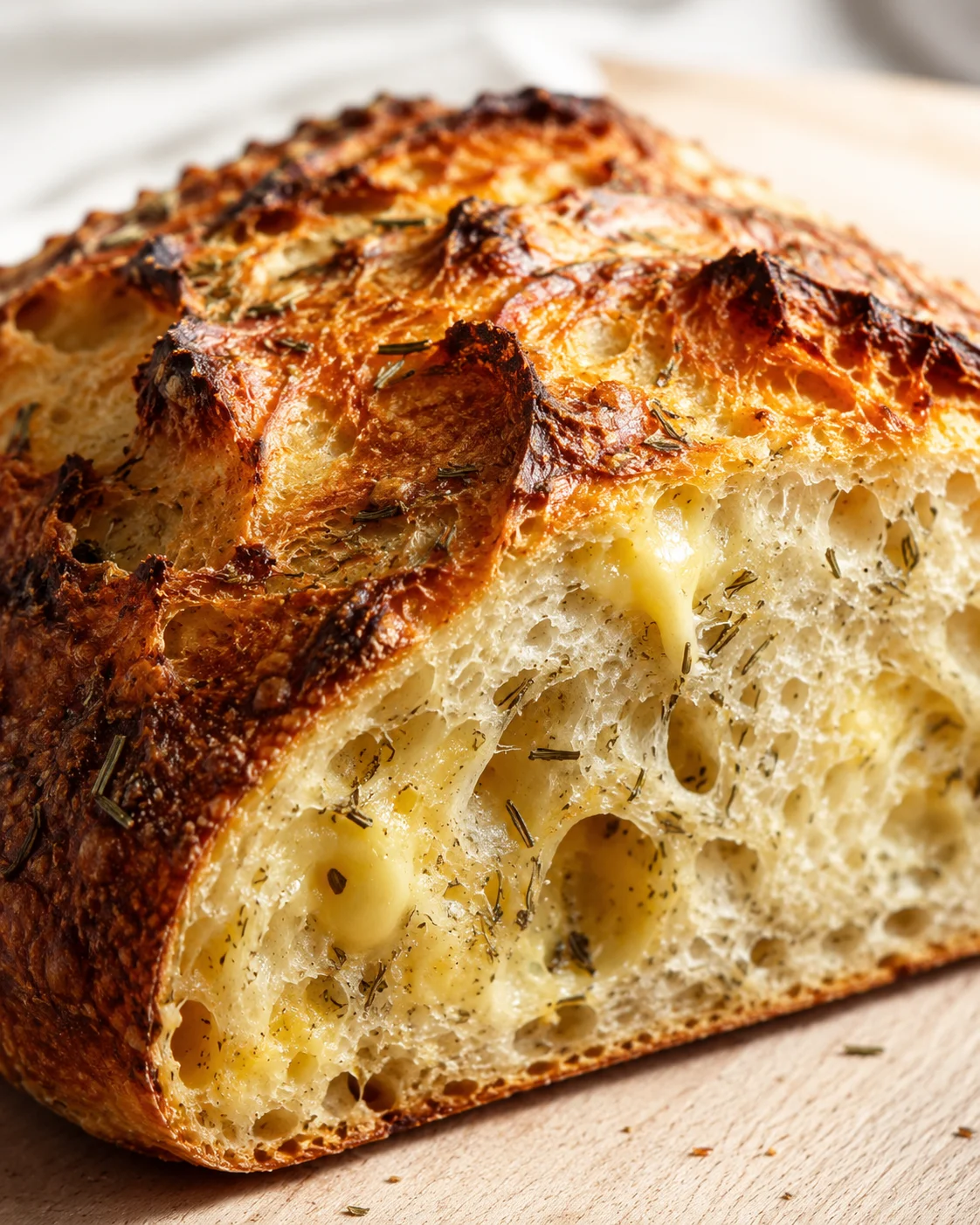
Artisan sourdough bread featuring Italian herbs and rich cheeses baked in a Dutch oven for a crisp crust and soft crumb.
- Prep Time: 15 minutes plus overnight starter feeding and resting
- Cook Time: 50 minutes
- Total Time: About 10 hours (including bulk fermentation and overnight cold proof)
- Yield: 1 artisan loaf (approximately 1.2 kg / 2.6 lbs) 1x
- Category: Bread
- Cuisine: Italian
Ingredients
- 12 g sourdough starter (active or discard)
- 60 g water (for starter feeding)
- 60 g bread flour (unbleached, King Arthur) (for starter feeding)
- 450 g bread flour (unbleached, King Arthur)
- 50 g whole wheat flour (Sunrise Flour Mills)
- 325 g water (for dough)
- 120 g active sourdough starter (fed overnight)
- 25 g water (added with salt)
- 10 g sea salt (Redmonds)
- 3 g Italian seasoning blend
- 4 g lightly dried basil
- 110 g Colby Jack cheese, shredded
- 15 g Parmigiano Reggiano, shredded
Instructions
- Feed starter: mix 12 g sourdough starter with 60 g water and 60 g bread flour the night before and let sit at room temperature 10–12 hours until bubbly.
- (Optional autolyse) Mix 450 g bread flour and 50 g whole wheat flour with 325 g water and rest 30 minutes to overnight, then add 120 g active starter.
- Make the dough: combine 450 g bread flour, 50 g whole wheat flour, 120 g active starter, and 325 g water if not autolysed; stir until shaggy dough forms; cover and rest about 1 hour.
- Add salt and water: add 10 g sea salt and 25 g water, press and fold until dough is stretchy and elastic.
- Slap-and-fold: on dampened surface, slap-and-fold dough 2–4 minutes until smooth; cover and rest 30 minutes.
- Add inclusions: sprinkle 3 g Italian seasoning, 4 g dried basil, 110 g shredded Colby Jack, and 15 g shredded Parmigiano Reggiano; gently stretch-and-fold to distribute; cover and rest 30 minutes.
- Perform stretch-and-fold series: 1 stretch-and-fold, rest 30 minutes, 1 coil fold, rest 30 minutes, 2nd coil fold, rest 30 minutes.
- Bulk ferment: let dough ferment at room temperature until puffed, bubbly at edges, and jiggly when shaken (about 7–8 hours at 70–72°F).
- Pre-shape and final shape dough into tight round using bench scraper and caddy-clasp method; place seam-side up in floured banneton; pinch seam closed; optionally rest 10 minutes and stitch top; cover.
- Cold proof: refrigerate shaped dough overnight for slow cold fermentation.
- Preheat oven to 450°F (230°C) with Dutch oven inside.
- Remove dough from fridge; score top with sharp blade.
- Bake covered: place scored dough into hot Dutch oven, cover, bake 30 minutes.
- Finish baking uncovered: remove lid, reduce oven to 425°F (220°C), bake 15–20 minutes until crust is deep golden and internal temperature reaches 205–210°F (96–99°C).
- Cool loaf completely on wire rack about 2 hours before slicing.
Notes
Feeding the starter the night before ensures a bubbly, active starter for rise., Autolyse step is optional but improves gluten development and softness., Multiple stretch-and-folds strengthen dough and evenly distribute herbs and cheese., Trust visual and tactile cues over exact timing during fermentation., Cold proofing overnight enhances flavor and ease of handling., Baking in a preheated Dutch oven traps steam, creating a crisp crust and great oven spring., Letting bread cool fully prevents gummy crumb and improves texture., Store baked bread at room temperature for 2-3 days in linen or paper bag, or freeze slices tightly wrapped., To refresh baked bread, toast or broil briefly to revive crust and melt cheese., Avoid overproofing to prevent dough collapse; adjust fermentation time or chilling as needed.
Nutrition
- Serving Size: 1 slice (approximate)
- Calories: Approximately 210 kcal per 100 g serving (estimated)
- Fat: Approximately 5 g per 100 g serving (estimated)
- Carbohydrates: Approximately 40 g per 100 g serving (estimated)
- Protein: Approximately 8 g per 100 g serving (estimated)