Easy Dutch Oven Pork Loin Recipe

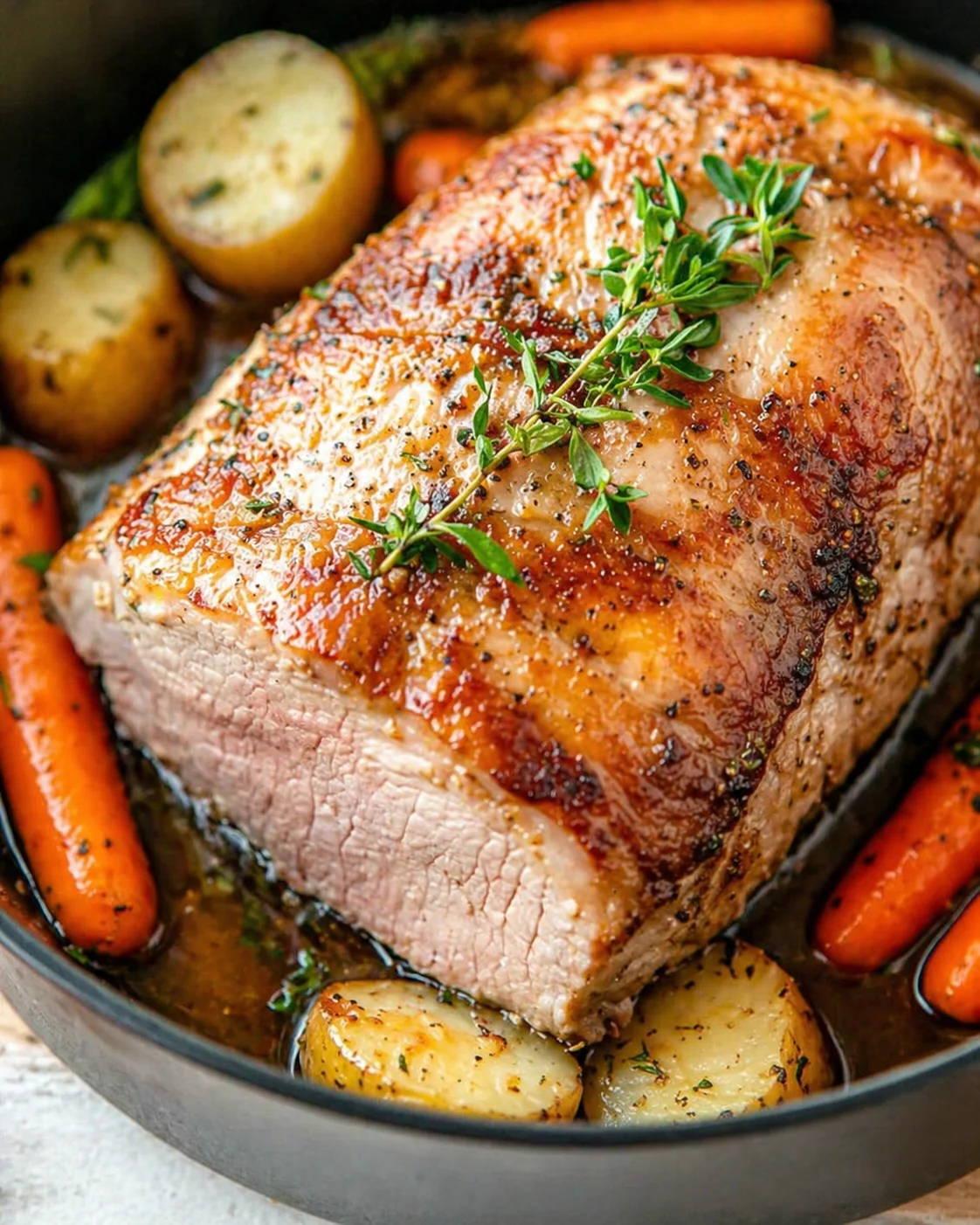
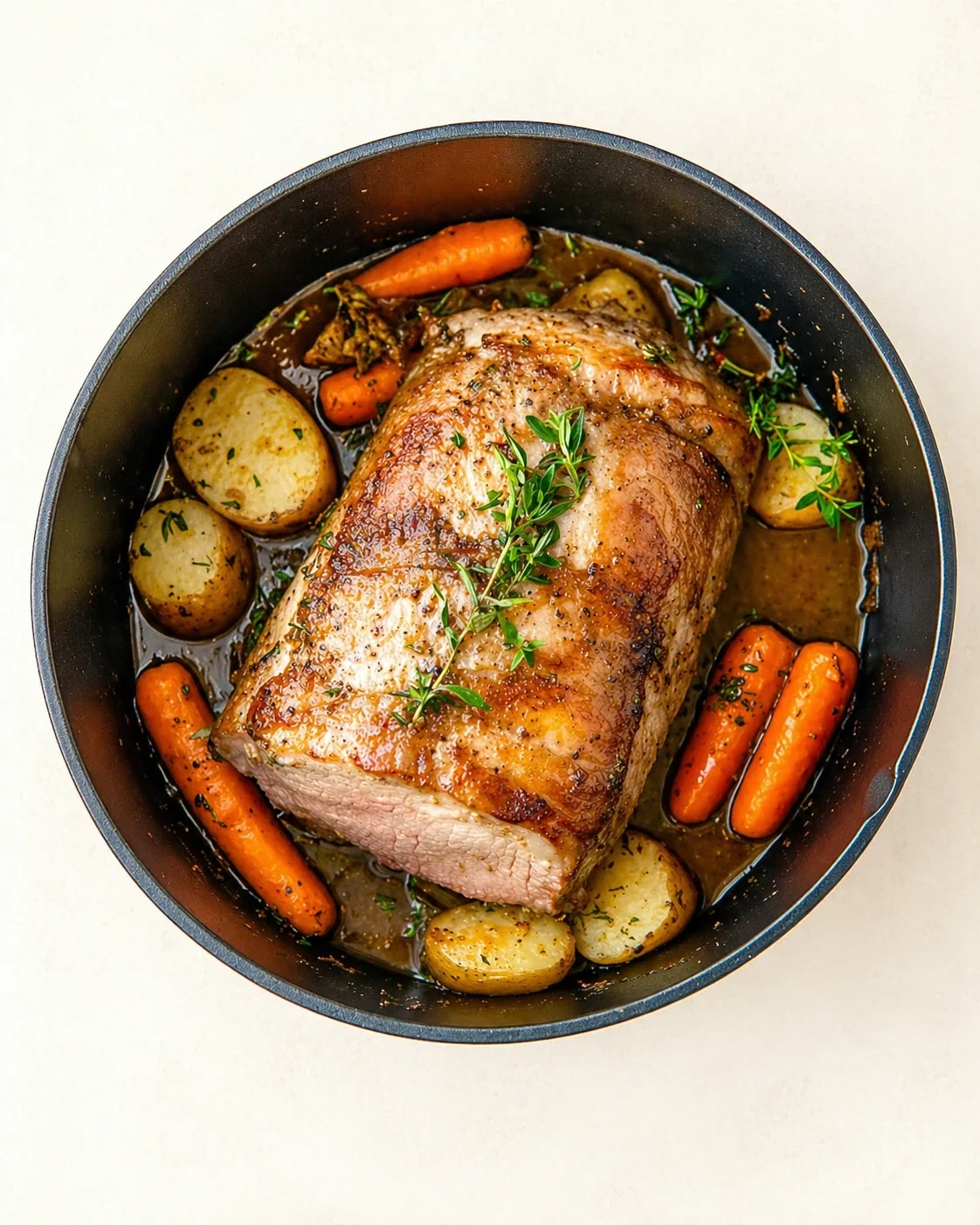
What could be better than your usual pork roast? A Dutch oven pork loin that turns out tender and juicy every single time – no exceptions!
This easy-going recipe takes all the guesswork out of roasting pork loin. The magic of the Dutch oven lies in locking in moisture, so your pork cooks evenly and stays juicy from edge to edge. Whether it’s a cozy Sunday dinner with the family or meal prep for the busy week ahead, this pork loin is a winner. Trust me, once you try cooking pork this way, you’ll never want to cook it any other way again.
If you want a pork roast that’s tender, juicy, and hands-off, this Dutch oven pork loin recipe is just what you need. The covered Dutch oven traps steam and keeps everything moist, while a quick sear forms a savory crust that seals in flavor. You get perfectly cooked meat and a rich pan sauce without hovering over the stove.
This recipe walks you through every step clearly: seasoning the pork with a flour dredge, searing it on all sides, deglazing the pan, layering veggies underneath, and baking slowly until you hit that perfect 145°F temp (plus a nice rest time). You’ll also learn when to add the potatoes, how to make gravy from the pan drippings, and how to time everything so your dinner lands just right.
- Full ingredient list and a simple one-pot approach.
- Clear cook times and internal temp guidelines (145°F) to make sure your pork stays juicy, never dry.
- Helpful tips for searing, deglazing, adding veggies, and finishing the gravy smoothly.
- Easy swaps, smart storage and reheating ideas, plus answers to your common questions.
Keep scrolling for the complete ingredient list and step-by-step instructions — this roast is reliable, easy, and something you’ll want to make again and again.
Why This Method Delivers Tender Pork
This Dutch oven pork loin is all about consistent, tender, juicy meat with zero hassle. The covered pot traps steam that keeps the roast moist, and the initial sear creates a beautiful crust packed with flavor. Plus, the one-pot cooking lets the veggies and potatoes soak up all those savory juices, which means a flavor-packed meal and fewer dishes to wash — winning for weeknights or lazy Sunday dinners!
- Perfectly tender results every time thanks to slow baking in a covered Dutch oven.
- Simple steps: sear, deglaze, add aromatics, and bake—no fancy techniques needed.
- One-pan meal: veggies and potatoes cook right alongside your pork, adding more flavor while saving time.
- Flexible recipe: options for gluten-free, low-carb, and other dietary swaps are included.
Pork Loin Ingredients and Seasonings
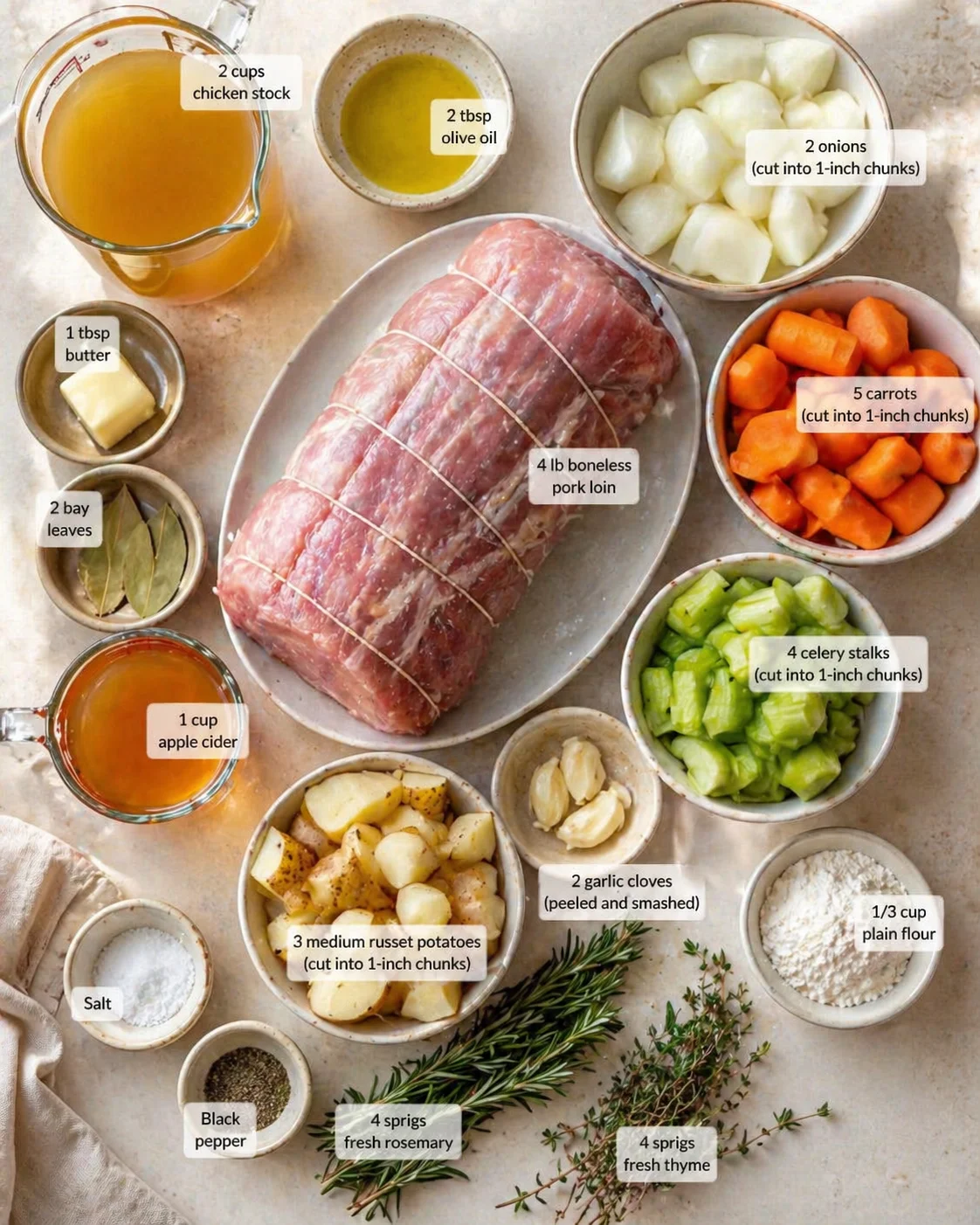
- 2 bay leaves
- Salt
- 2 cups chicken stock (I usually go with Swanson’s chicken stock)
- 2 tbsp olive oil (or any neutral oil like avocado works great)
- 4 sprigs fresh rosemary
- 2 raw onions (cut into 1-inch chunks)
- 4 lb boneless pork loin (tied with kitchen twine for even cooking)
- 1 tbsp butter
- 5 raw carrots (cut into 1-inch chunks)
- 1 cup apple cider
- 4 large celery stalks (cut into 1-inch chunks)
- 4 sprigs fresh thyme
- Black pepper
- 1/3 cup plain flour (I prefer King Arthur all-purpose flour)
- 2 garlic cloves (peeled and smashed)
- 3 medium russet potatoes (cut into 1-inch chunks)
- 2 tbsp plain flour
- 1 to 1.5 cups broth from the pot
- 2 tbsp butter
Roasting and Searing Instructions
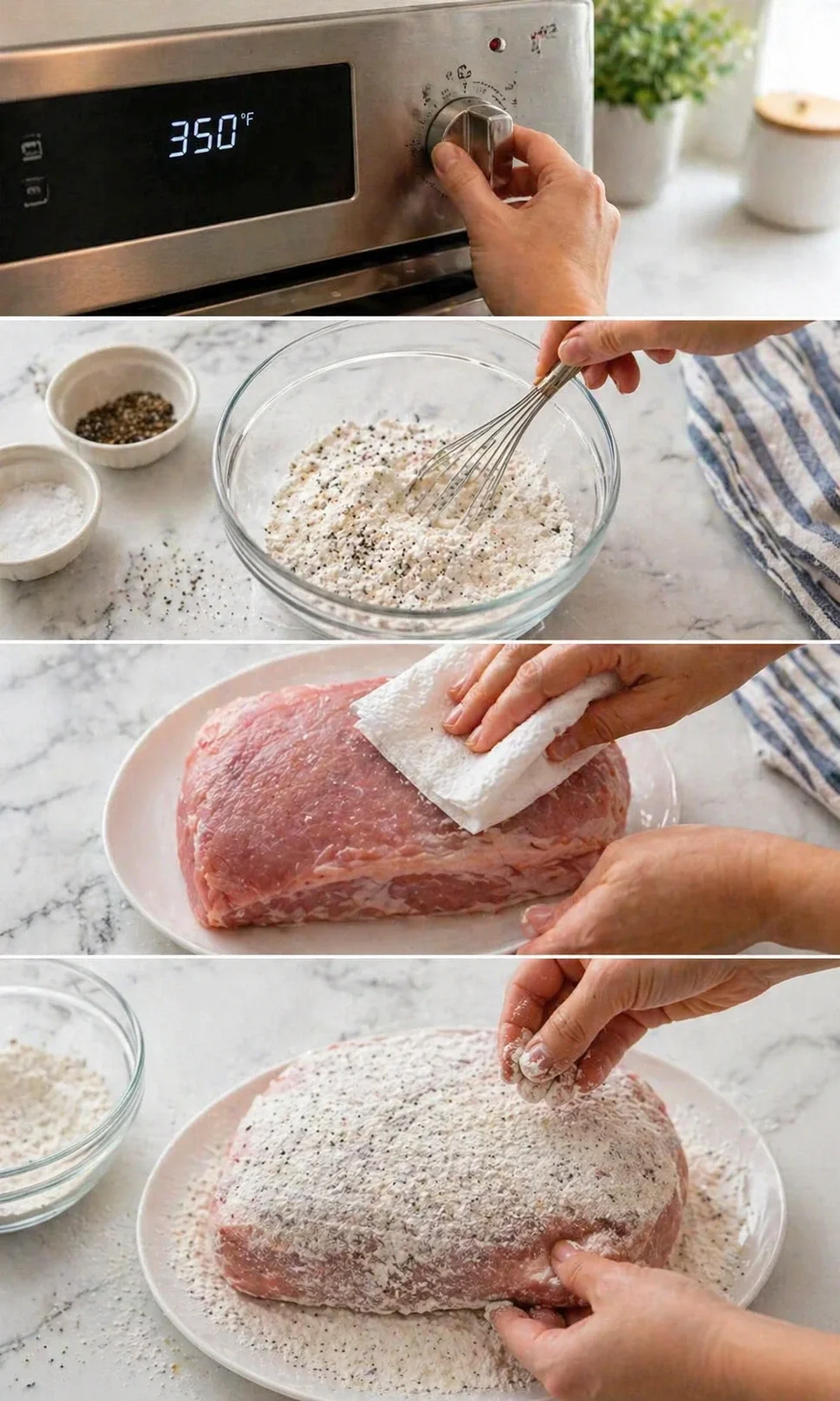
- Preheat oven to 350°F.
- On a sheet of waxed paper, combine 1/3 cup flour with a generous pinch of salt and black pepper.
- Pat the pork loin dry with paper towels.
-
Coat the pork all over with the seasoned flour mixture.
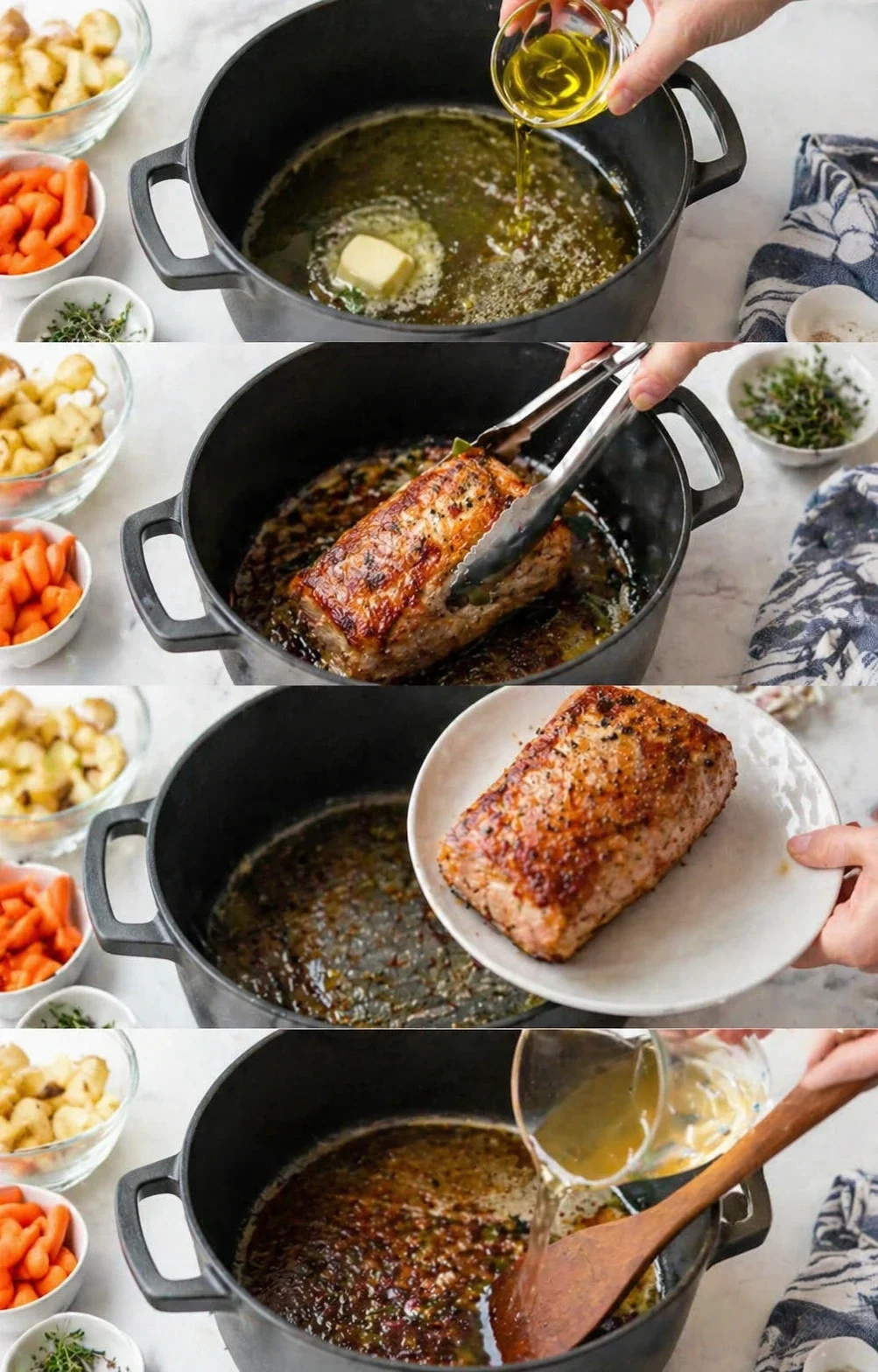
- Heat 1 tbsp butter and 2 tbsp olive oil in a large Dutch oven over medium-high heat until hot but not smoking.
- Place the pork in the pot and sear on all four sides, about 4–6 minutes per side, until golden-brown and the meat releases easily.
- Remove the pork from the pot and set aside.
-
Turn heat to medium and pour in 1 cup chicken stock, scraping up browned bits from the bottom with a wooden spoon to deglaze.
- Add carrots, onions, celery, and smashed garlic to the pot and cook, stirring occasionally, until the onions are translucent (about 10 minutes).
- Lay the seared pork on top of the vegetables in the Dutch oven.
- Pour in the remaining 1 cup chicken stock and 1 cup apple cider, then tuck in thyme, rosemary, and 2 bay leaves.
-
Season well with salt and black pepper.
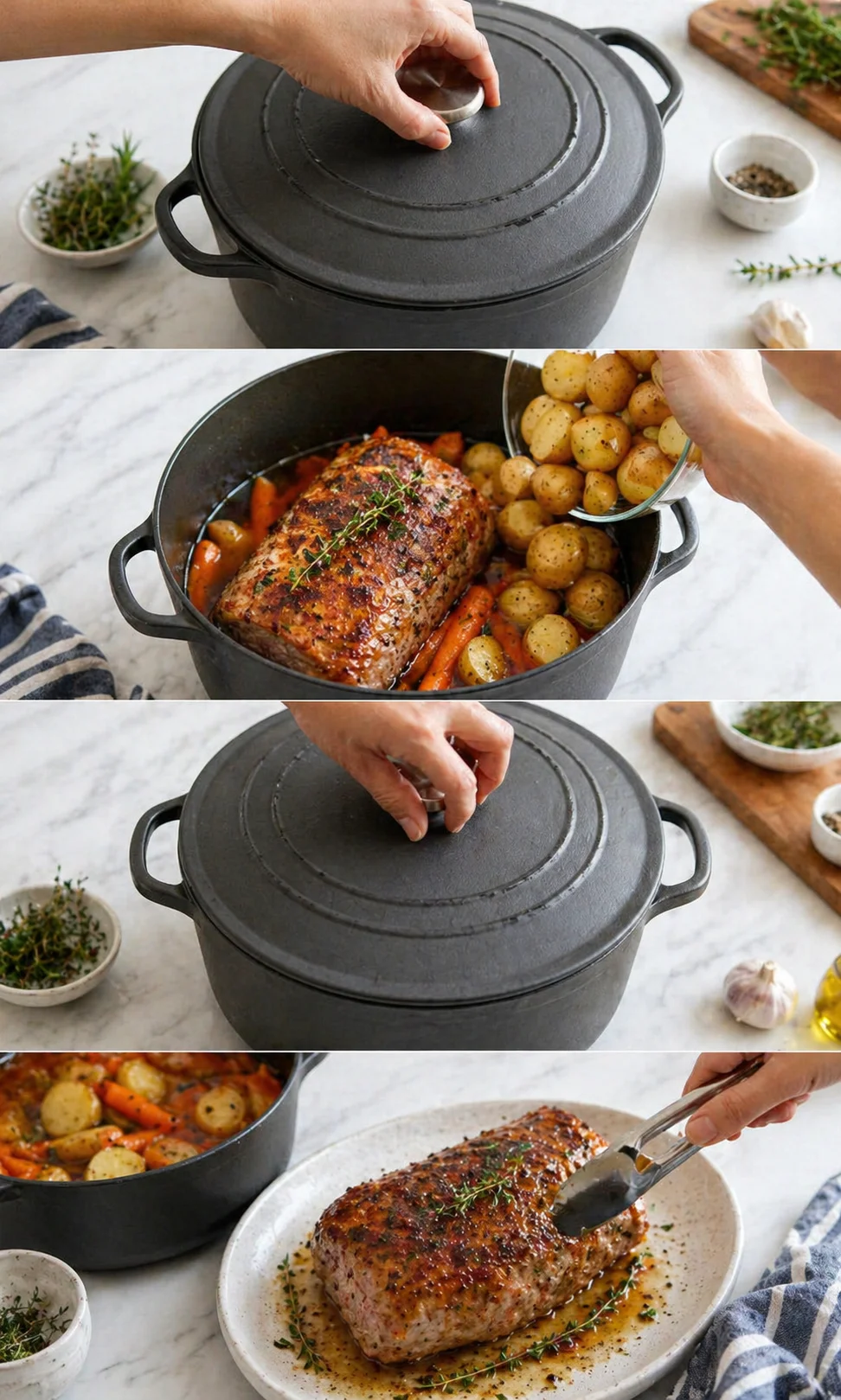
- Cover the Dutch oven and bake at 350°F for about 70–80 minutes (approximately 20 minutes per pound).
- About 40–45 minutes before the pork is done, add the potatoes to the pot and stir gently into the liquid.
- Replace the lid and continue baking until the potatoes are tender and the pork reaches an internal temperature of 145°F.
-
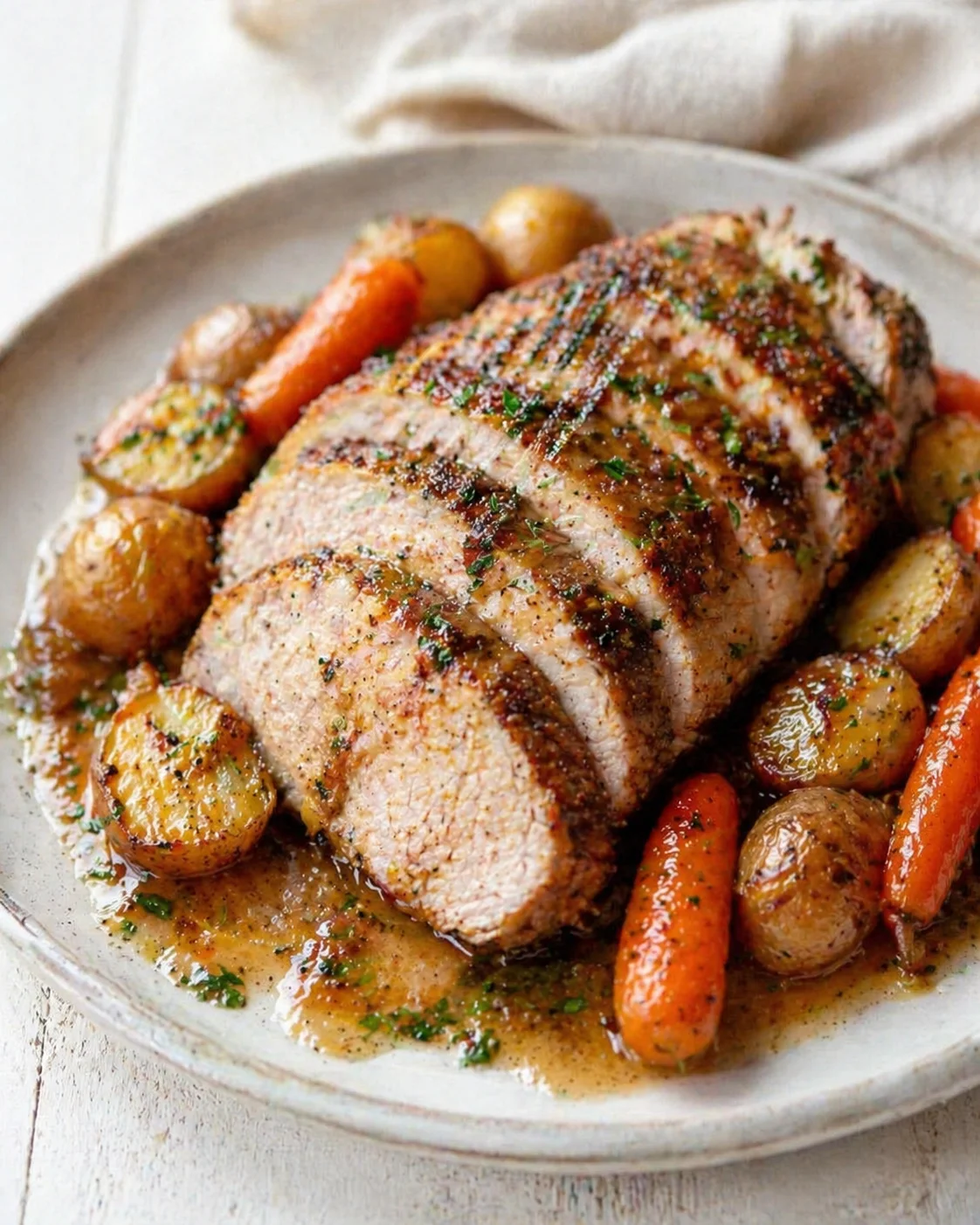
Remove the pork from the oven and let it rest 10–15 minutes before slicing.
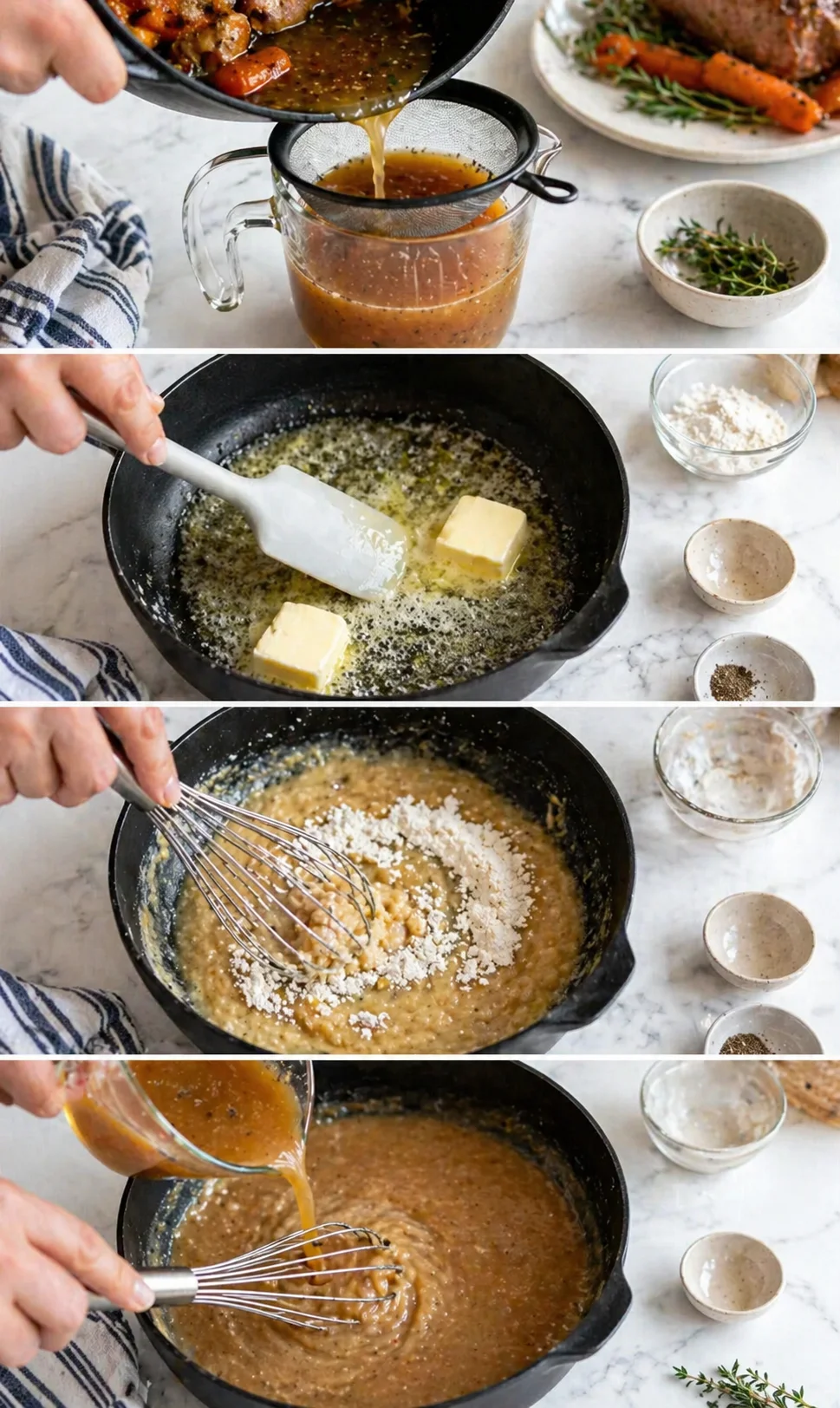
- Strain the cooking juices and drippings into a measuring cup or bowl for the gravy.
- Melt 2 tbsp butter in a skillet over medium heat.
- Whisk in 2 tbsp flour and cook about 30 seconds to eliminate the raw flour taste.
-
Slowly whisk in the strained juices, stirring constantly until the gravy is smooth and thickened.
-
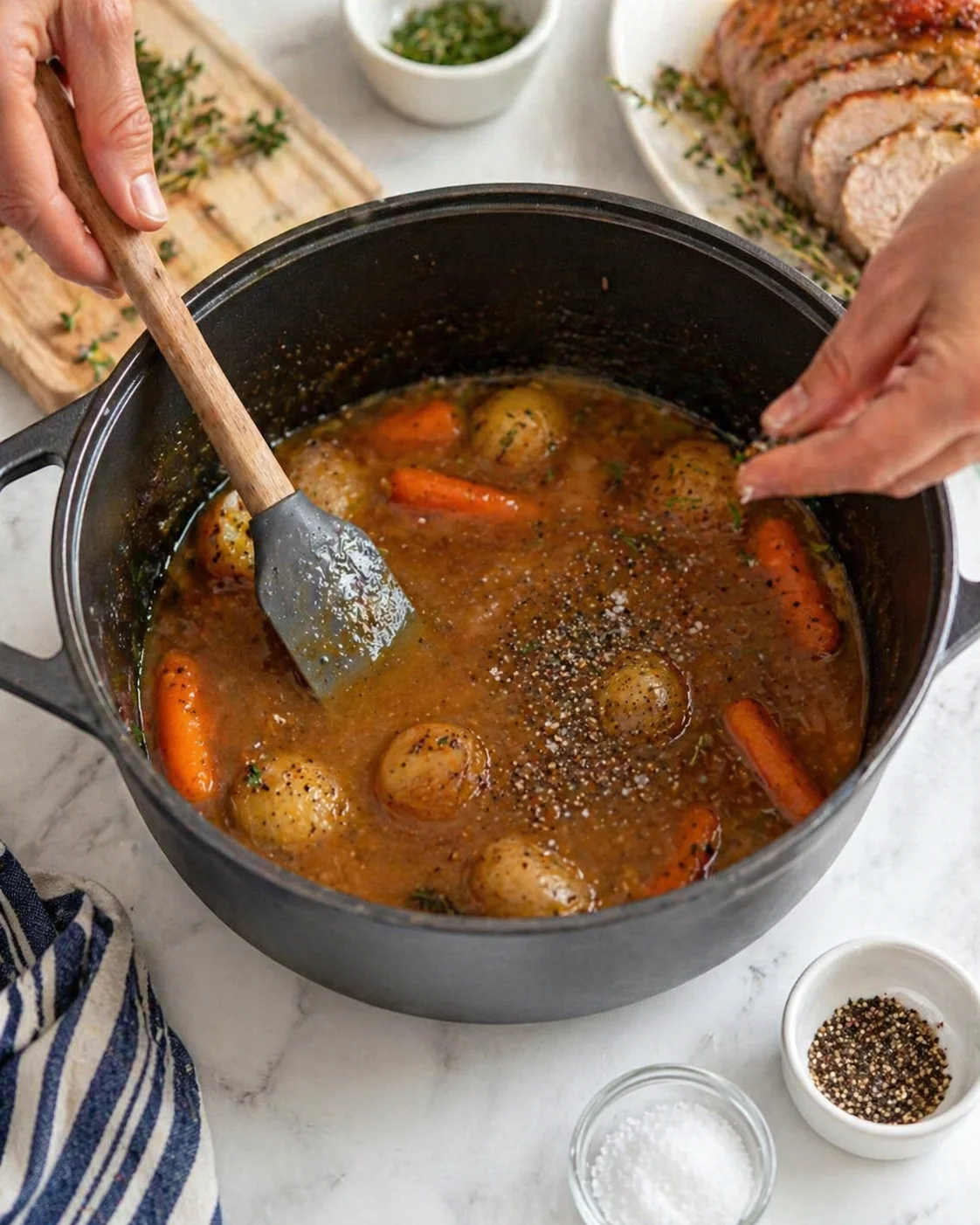
Simmer the gravy 1–2 minutes while stirring, then taste and adjust seasoning with salt and pepper.
Cooking Tips for Perfect Pork
- Use an instant-read thermometer to pull the roast at 145°F, then let it rest 10–15 minutes. The carryover heat will finish it perfectly, with a slight pink glow that means juicy pork.
- Always pat your pork dry before coating it with flour. This simple step helps the crust brown nicely and stops the meat from steaming while searing.
- Sear your pork on medium-high heat until it naturally releases from the pan and boasts a rich golden-brown color. This step adds depth and flavor to both the meat and your gravy.
- After searing, deglaze the pot with a cup of broth to lift up those delicious browned bits stuck to the bottom—that’s your gravy’s flavor goldmine.
- Add potatoes 40–45 minutes before the end of cooking so they soften just right, without turning mushy.
- If your roast isn’t tied super evenly, rotate it once during cooking to ensure all sides cook evenly and brown nicely.
- For a silky smooth gravy, mix flour into melted butter off the heat shortly before gradually whisking in the strained juices, then simmer gently till thickened.
- Don’t overcook! Pork loin dries out quickly past 145°F. If you like it a touch more done, check temps often once you near the target.
Flavor Variations and Substitutions
If you need to make this gluten-free, swap out plain flour for cornstarch or arrowroot powder. Use about half the amount since these thickeners are stronger. You can swap chicken stock for vegetable broth if you want a vegetarian-friendly option—this won’t compromise flavor much. For a lower-carb side, trade russet potatoes for turnips or radishes. These veggies soak up the dish’s yummy flavors while offering a similar texture. Just keep an eye on cooking times, as they cook a bit faster. When you make these swaps, watch the liquid levels and seasoning closely, tweaking small amounts to balance flavor and consistency perfectly.
Preparation Time 15-20 minutes Cooking Time 70-80 minutes Total Time 85-100 minutes Level of Difficulty Medium
Storing, Freezing, and Reheating
Once your roast has cooled, pop leftovers into an airtight container and keep them in the fridge for 3–4 days. If you have leftover gravy, store it separately for best results.
If you want to freeze, slice the pork first and spread the slices out on a baking sheet to flash-freeze. Then transfer the frozen slices to a freezer-safe bag or container. This keeps the pork good for 2–3 months. Freeze gravy separately in a sealed container.
To reheat, try one of these easy ways:
- Oven: Place sliced pork in a covered baking dish, add a splash of broth or reserved pan juices to keep it moist, and warm at 300°F until heated through—about 15–25 minutes depending on thickness. Warm the gravy gently on the stove, whisking and adding broth if it’s too thick.
- Stovetop: Heat slices in a skillet with a little broth over medium-low heat, covered, until warm.
- Microwave: Reheat in short bursts on medium power, adding a splash of liquid and covering the dish to keep the meat from drying out. Flip or stir halfway through to heat evenly.
Answers to Common Pork Questions
- Q: What’s the ideal internal temperature for cooking pork? A: Take the pork loin out once it hits 145°F, then let it rest 10–15 minutes before slicing. This ensures a juicy, safe, perfectly cooked roast.
- Q: Can I use a bone-in pork loin or pork shoulder? A: Absolutely! A bone-in loin will take a bit longer, so keep an eye on temperature. Pork shoulder is fattier and needs longer, slower cooking for fork-tender results—it won’t be sliceable like a loin, but it’s delicious braised.
- Q: How about making this in a slow cooker or Instant Pot? A: You can! For slow cooker, sear the pork first, then add liquids and cook on low 6–8 hours. With Instant Pot, sear on sauté mode, then pressure cook 20–30 minutes depending on size, followed by a natural release. Add potatoes later if you want them to hold their shape.
- Q: How do I make the recipe gluten-free? A: Swap the flour for cornstarch or arrowroot powder as mentioned in swaps. For gravy, mix a slurry of cornstarch and cold liquid, then whisk it in gradually until it thickens just right.
- Q: My gravy is too thin or too thick — what can I do? A: If too thin, whisk in a little cornstarch slurry (about 1 tsp cornstarch mixed with 1 tbsp cold water), then simmer to thicken. If too thick, whisk in extra warm broth bit by bit until you get the perfect consistency.
- Q: What should I serve with this pork loin? A: The veggies cooked with the roast and potatoes are classic. Add bright green sides like sautéed green beans, steamed broccoli, or a crisp salad for a fresh balance.
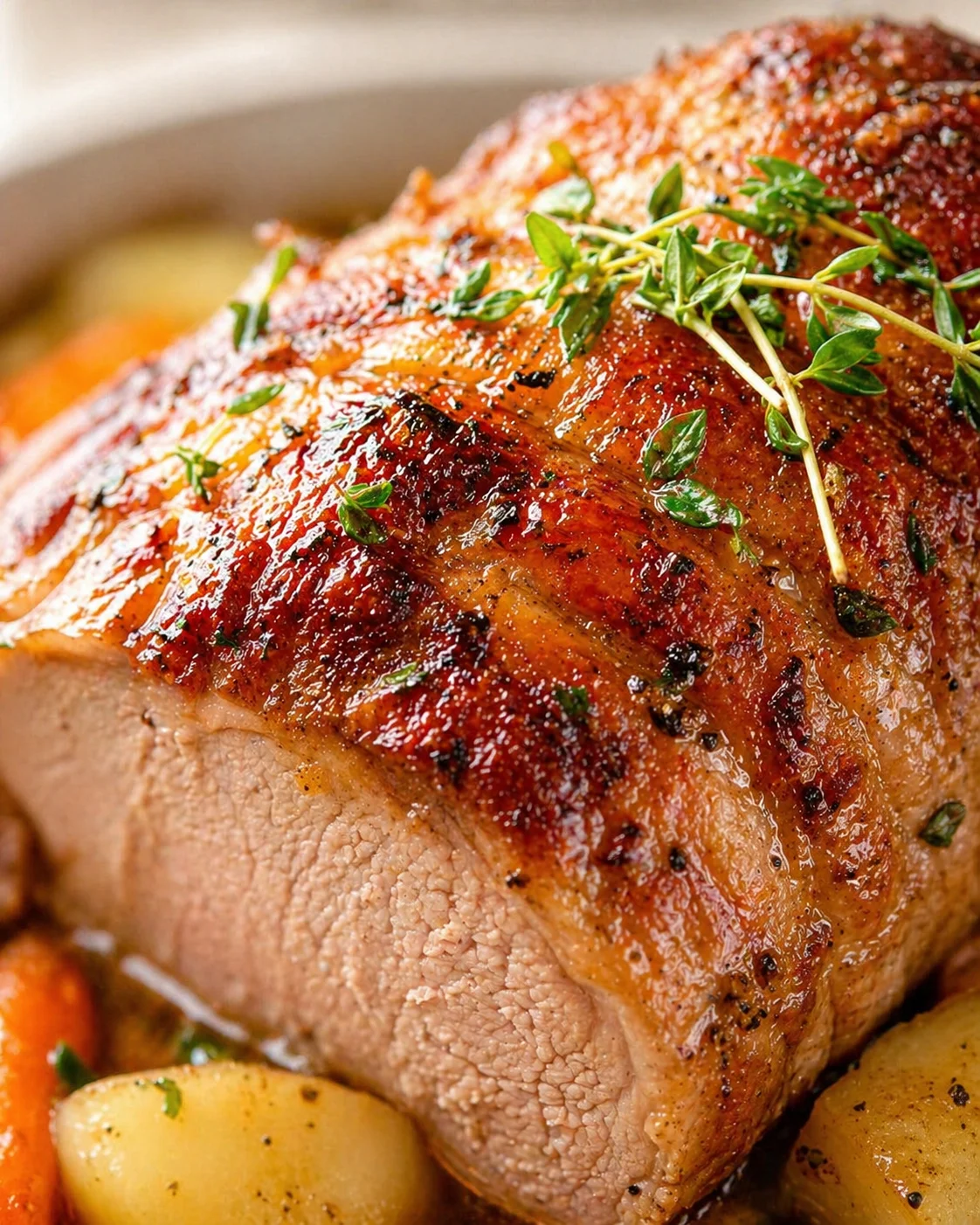
A tender and juicy pork loin roasted in a Dutch oven with vegetables, finished with a rich pan gravy. The covered Dutch oven traps steam for moist, evenly cooked meat and the initial searing adds a savory crust.
- Total Time: 85-100 minutes
- Yield: 6-8 servings 1x
Ingredients
- 4 lb boneless pork loin tied with kitchen twine
- 1/3 cup plain flour (King Arthur all-purpose flour preferred)
- Salt (generous pinch)
- Black pepper (generous pinch)
- 2 tbsp olive oil (or any neutral oil like avocado oil)
- 1 tbsp butter (plus 2 tbsp butter for gravy)
- 2 cups chicken stock (divided, Swanson’s chicken stock preferred)
- 1 cup apple cider
- 5 raw carrots, cut into 1-inch chunks
- 2 raw onions, cut into 1-inch chunks
- 4 large celery stalks, cut into 1-inch chunks
- 3 medium russet potatoes, cut into 1-inch chunks
- 2 bay leaves
- 4 sprigs fresh rosemary
- 4 sprigs fresh thyme
- 2 garlic cloves, peeled and smashed
- 2 tbsp plain flour for gravy
Instructions
- Preheat oven to 350°F (175°C).
- On a sheet of waxed paper, combine 1/3 cup flour with a generous pinch of salt and black pepper.
- Pat the pork loin dry with paper towels, then coat it all over with the seasoned flour mixture.
- In a large Dutch oven, heat 1 tbsp butter and 2 tbsp olive oil over medium-high heat until hot but not smoking.
- Place the pork loin in the Dutch oven and sear on all four sides for about 4–6 minutes per side, until golden brown and the meat releases easily from the pan.
- Remove the pork loin from the pot and set aside.
- Turn heat to medium, pour in 1 cup chicken stock, and scrape up browned bits from the bottom with a wooden spoon to deglaze the pot.
- Add carrots, onions, celery, and smashed garlic to the pot and cook, stirring occasionally, until onions are translucent (about 10 minutes).
- Lay the seared pork loin on top of the vegetables in the Dutch oven.
- Pour in the remaining 1 cup chicken stock and 1 cup apple cider, then tuck in the thyme, rosemary, and bay leaves.
- Season with salt and black pepper to taste.
- Cover the Dutch oven and bake at 350°F for about 70–80 minutes (approximately 20 minutes per pound).
- About 40–45 minutes before the pork is done, add the potatoes to the pot and stir gently into the liquid.
- Replace the lid and continue baking until the potatoes are tender and the pork reaches an internal temperature of 145°F.
- Remove the pork from the oven and let it rest for 10–15 minutes before slicing.
- Strain the cooking juices and drippings into a measuring cup or bowl to prepare the gravy.
- In a skillet over medium heat, melt 2 tbsp butter.
- Whisk in 2 tbsp flour and cook about 30 seconds to eliminate the raw flour taste.
- Slowly whisk in the strained cooking juices, stirring constantly until the gravy is smooth and thickened.
- Simmer the gravy for 1–2 minutes while stirring, then taste and adjust seasoning with salt and pepper if needed.
Notes
Use an instant-read thermometer to ensure the pork is removed from the oven exactly at 145°F and allowed to rest for 10–15 minutes to achieve juicy, perfectly cooked meat., Pat pork dry before coating with flour to achieve a better sear and flavorful crust., When searing, cook until the pork naturally releases from the pan to avoid tearing the crust., Deglazing the pot with broth captures browned bits that add depth to the pan sauce., Add potatoes 40–45 minutes before the end of cooking to ensure they cook properly without becoming mushy., Rotate pork once during baking if it is not tied evenly for even cooking., For gluten-free variation, substitute flour with cornstarch or arrowroot powder using about half the amount; monitor liquid and seasoning., Leftover pork keeps in the fridge 3–4 days; slice and freeze for 2–3 months., Reheat pork gently in oven, stovetop, or microwave with added broth to retain moisture.
- Prep Time: 15-20 minutes
- Cook Time: 70-80 minutes
- Category: Main Course
- Cuisine: American
Nutrition
- Serving Size: Approximately 6 oz pork loin per serving plus vegetables and gravy
- Calories: Approximately 350-400 calories per serving (including pork, vegetables, and gravy)
- Fat: Approximately 20g per serving including cooking fats and pork fat content
- Carbohydrates: Approximately 20g per serving from vegetables and gravy
- Protein: Approximately 35g per serving