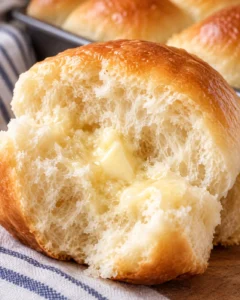
Glazed Lemon Scones Recipe

These glazed lemon scones have a crisp, lightly crunchy outside and a moist, fluffy center, with bright lemon flavor running through the dough and the fresh glaze on top. They are buttery without being heavy, and the sweet-tart finish makes them a natural companion for hot tea or coffee.

This lemon scones recipe makes 8 scones. The hands-on preparation includes time to chill the butter, and the scones bake in 12 to 14 minutes at 425°F. Plan on about 1 hour of prep time and 14 minutes of cook time. The result is a tender, citrusy bake that is especially good the day it is made.
Why You Will Love This Lemon Scones Recipe
- Bright lemon flavor: Lemon zest goes into the dough and the glaze, while fresh lemon juice gives the icing its lively citrus flavor.
- Flaky, buttery texture: Cold, cubed unsalted butter creates small pockets throughout the dough, helping the baked scones stay light and layered.
- A crisp edge and soft center: A hot 425°F oven helps the outside turn golden while the inside remains moist and fluffy.
- Easy to finish: Once the scones cool, whisk together a simple powdered-sugar glaze and dip the tops to coat them.
- Flexible flavor direction: The vanilla flavor can stay classic, or you can use one of the vanilla-and-lemon extract or vanilla bean paste combinations described below.
Ingredients
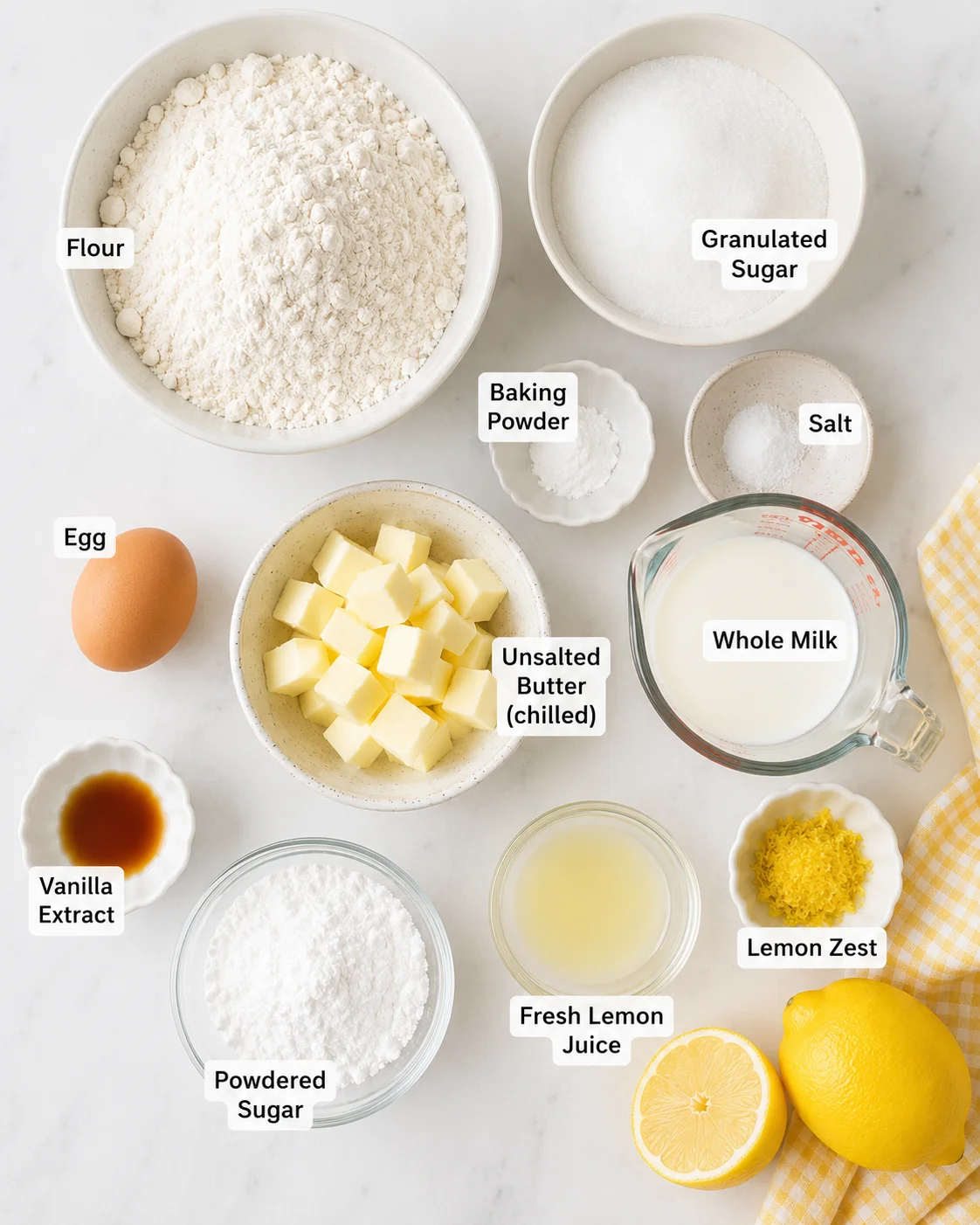
Gather the ingredients before you begin. The lemon zest is divided between the scone dough and the glaze, so measure it with that split in mind.
For the scones
- 2 ½ cups unbleached flour: The flour base for the dough.
- ⅓ cup granulated sugar: Adds sweetness without making the scones overly sweet.
- 1 tablespoon baking powder: Helps the scones rise. Aluminum-free baking powder is recommended here to avoid a bitter taste; Rumford is one named option and contains no added aluminum.
- ½ teaspoon salt: Enhances the flavor and balances the sweetness.
- 1 large egg: Helps bind and moisten the dough.
- 12 tablespoons unsalted butter, chilled and cubed: The cold butter forms buttery pockets in the dough. If you like, freeze the butter for at least 1 hour before carefully cubing it.
- ½ cup whole milk: Adds moisture to the dough.
- ½ teaspoon lemon zest: Brings lemon flavor into the scones.
- 1 tablespoon vanilla extract: Rounds out the flavor. Vanilla bean paste can be used instead of the extract when desired.
For the lemon glaze
- 1 cup powdered sugar
- 3 tablespoons fresh lemon juice
- ¼ teaspoon lemon zest
Equipment
You will need a lemon zester, cutting board, chef’s knife, measuring cups and spoons, a large baking sheet, parchment paper or a nonstick baking mat, a baking rack, a medium bowl, and a whisk. A stand mixer with a paddle attachment and a rubber spatula make the dough straightforward to mix. A KitchenAid-style stand mixer is one option, but you can also mix with a spoon and knead by hand. Use a pastry wheel or a large pizza cutter to divide the dough into triangles.
Instructions
Keep the oven rack in the center position so the scones bake evenly. The dough should come together into a ball, then be shaped into a circle before it is divided.
- Chill the butter and prepare the pan. If you are freezing the butter, freeze it for at least 1 hour, then cube it carefully. Preheat the oven to 425°F with the rack in the center position. Line a large baking sheet with parchment paper or a nonstick baking mat.
- Combine the dry ingredients. Attach the paddle to a stand mixer. Add the flour, salt, baking powder, and granulated sugar to the mixing bowl. Beat on low speed until the dry ingredients are combined.
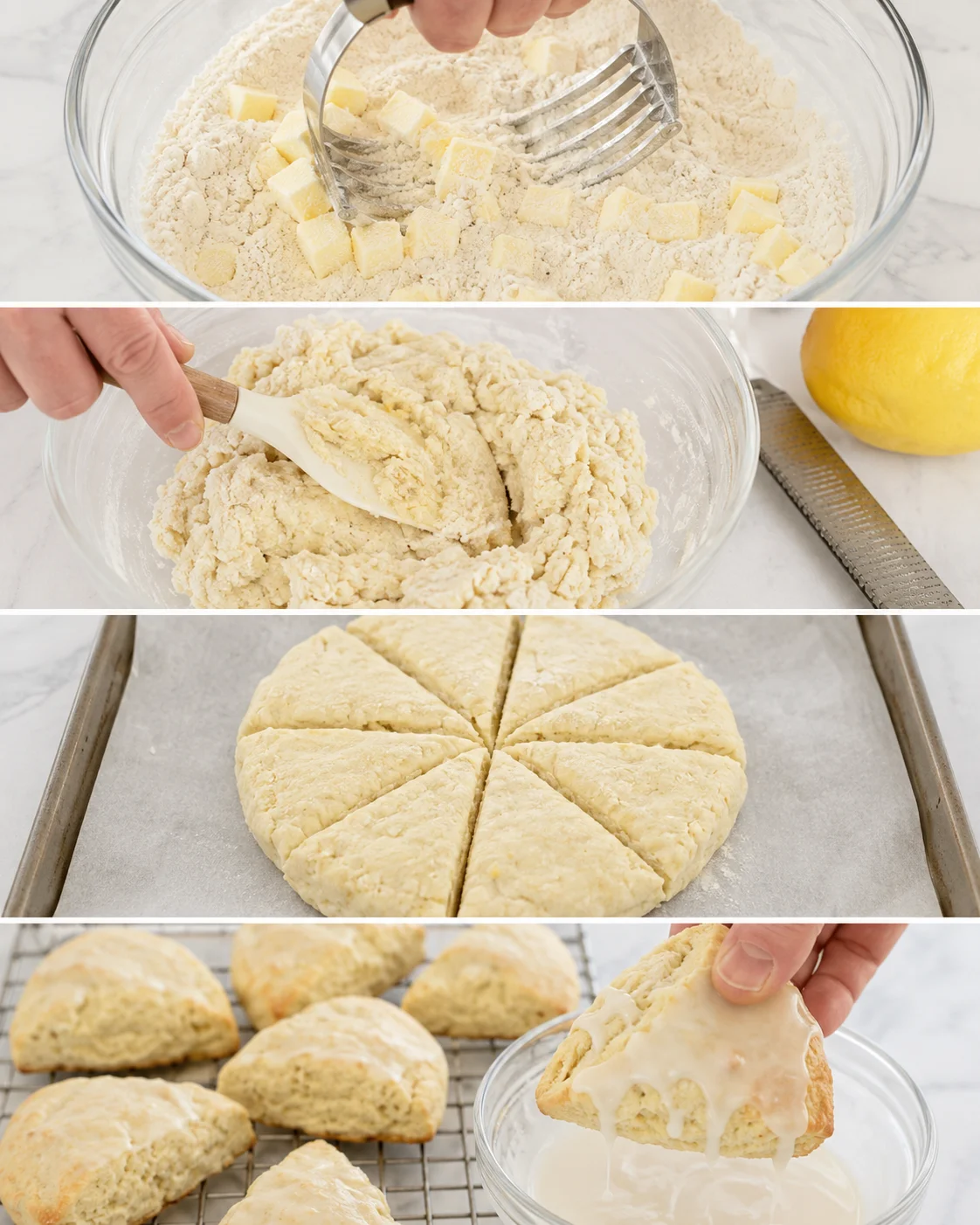
- Work in the butter. Add the chilled, cubed butter. Mix on medium speed until the mixture forms tiny balls. This crumbly appearance is the cue that the butter has been distributed through the flour mixture.
- Mix the wet ingredients. In a separate medium bowl, whisk together the egg, vanilla, whole milk, and half of the lemon zest. Add this mixture to the mixer bowl.
- Bring the dough together. Mix until the dough comes together and forms a ball. Do not keep mixing once the dough has gathered. If you are working without a stand mixer, combine the ingredients with a mixing spoon and knead the dough by hand.
- Shape the dough. Use a rubber spatula to remove the dough from the mixer and transfer it to the prepared baking sheet. Shape it into a circle about 1 inch thick.
- Cut the scones. Use a pastry wheel or large pizza cutter to divide the circle into 8 pieces. Separate the pieces slightly on the baking sheet so each has room to bake.
- Bake. Bake on the center rack for 12 to 14 minutes, or until golden-brown edges form. The stated bake time is 12 to 14 minutes; the original recipe notes that its batch took exactly 14 minutes.
- Cool before glazing. Transfer the scones to a wire baking rack and let them cool before adding the glaze.
- Make the icing. In a medium bowl, whisk the powdered sugar, the remaining lemon zest, and the fresh lemon juice together until a glaze forms.
- Glaze the scones. Dip the tops of the cooled scones into the glaze to coat them, then return them to the wire rack. Let the glaze set for about 15 minutes before serving.
Tips for Success
Keep the butter cold
Room-temperature butter is common in many baked goods, but cold butter is the better choice for these scones. Chilled, cubed butter helps create flaky, buttery layers instead of blending completely into the flour. Freezing the butter for at least 1 hour before cubing it is an optional way to keep it especially cold while you prepare the other ingredients.
Do not crowd the baking sheet
After cutting the dough into 8 pieces, move the wedges apart slightly. A large baking sheet gives the scones room to bake without the sides pressing into one another. Keep the rack centered, and use the golden-brown edges as the visual doneness cue.
Choose the mixing method that suits your kitchen
A stand mixer with a paddle attachment is a fast way to combine the dough. If you do not have one, a mixing spoon and your hands can do the job. Mix just until the dough forms a ball, then shape it on the prepared sheet.
Use fresh zest and juice for the glaze
The zest is used in both parts of the recipe, so divide it before mixing. Fresh lemon juice gives the powdered-sugar glaze its lemon flavor. Let the baked scones cool first; the glaze is meant to be added after cooling and needs about 15 minutes to set.
Variations and Substitutions
The recipe uses vanilla extract, but the flavor can be adjusted in several supported ways. Choose one of these combinations:
- Use half vanilla extract and half lemon extract.
- Use all vanilla extract for a straightforward vanilla note.
- Use all vanilla bean paste. It is described as a more premium, more expensive option.
- Use half vanilla bean paste and half lemon extract.
Vanilla bean paste can also replace vanilla extract when you want a more pronounced vanilla flavor. Keep the rest of the ingredient quantities and method the same when making a flavor choice.

Storage
At room temperature
These lemon scones are best enjoyed the same day they are baked. If you need to hold them, store them in an airtight container for up to 24 hours.
In the freezer
Freeze the scones only after they have baked and cooled completely. Do not glaze them before freezing. Arrange the cooled scones on a baking sheet and freeze for 2 hours. Once frozen, transfer them to an airtight bag or container and store them for up to 3 months.
To serve frozen scones, thaw them at room temperature. Add the glaze after thawing if you choose.
Serving Suggestions
Serve the glazed scones once the icing has set, with the crisp edges and soft centers at their best. Their fresh lemon glaze makes them a natural dessert companion for hot tea or coffee. They can also be served as a simple breakfast or afternoon bake, but the recipe classifies them as a dessert and yields 8 scones.
FAQ
How many scones does this recipe make?
The dough is shaped into a 1-inch-thick circle and cut into 8 pieces, yielding 8 scones.
Why does the recipe call for cold butter?
Cold, cubed butter helps create the flaky, buttery pockets associated with the finished scones. For an especially chilled starting point, freeze the butter for at least 1 hour before cubing it.
Can I make the dough without a stand mixer?
Yes. A stand mixer with a paddle attachment is convenient, but the ingredients can also be combined with a mixing spoon and kneaded by hand. Stop when the dough comes together into a ball.
When should I add the lemon glaze?
Cool the baked scones on a wire rack before glazing. Whisk the powdered sugar, fresh lemon juice, and remaining lemon zest, dip the scone tops into the glaze, and let it set for about 15 minutes.
Can I freeze glazed scones?
Freeze the scones after baking and cooling, before glazing. Freeze them on a baking sheet for 2 hours, then move them to an airtight bag or container for up to 3 months. Thaw at room temperature and glaze afterward if desired.
Nutrition
The supplied recipe lists these values per 1 scone: 408 calories, 54 g carbohydrates, 6 g protein, 19 g fat, 11 g saturated fat, 1 g trans fat, 70 mg cholesterol, 166 mg sodium, 233 mg potassium, 1 g fiber, 24 g sugar, 584 IU vitamin A, 2 mg vitamin C, 98 mg calcium, and 1 mg iron. Nutritional values may vary and are intended as a guide.
PrintButtery lemon-flavored scones with a crisp exterior, moist and fluffy center, and a fresh lemon glaze.
- Total Time: 1 hour 14 minutes
- Yield: 8 scones 1x
Ingredients
- 2 ½ cups unbleached flour
- ⅓ cup granulated sugar
- 1 tablespoon aluminum-free baking powder (e.g., Rumford)
- ½ teaspoon salt
- 1 large egg
- 12 tablespoons unsalted butter, chilled and cubed (freeze at least 1 hour before cubing if desired)
- ½ cup whole milk
- ½ teaspoon lemon zest (divided between dough and glaze)
- 1 tablespoon vanilla extract (or vanilla bean paste; or combinations with lemon extract)
- 1 cup powdered sugar (for glaze)
- 3 tablespoons fresh lemon juice (for glaze)
- ¼ teaspoon lemon zest (for glaze)
Instructions
- Preheat oven to 425°F and position rack in center.
- Line a large baking sheet with parchment paper or a nonstick baking mat.
- In a stand mixer fitted with a paddle attachment, combine flour, salt, baking powder, and granulated sugar on low speed until incorporated.
- Add chilled, cubed butter and mix on medium speed until mixture forms tiny balls (crumbly appearance).
- In a separate bowl, whisk together egg, vanilla extract, whole milk, and half of the lemon zest.
- Add wet ingredients to the mixer and mix until dough comes together into a ball. Do not overmix.
- Transfer dough to prepared baking sheet and shape into a 1-inch thick circle.
- Using a pastry wheel or large pizza cutter, cut dough circle into 8 equal pieces and separate slightly on the baking sheet.
- Bake for 12 to 14 minutes or until edges are golden brown.
- Transfer scones to wire rack to cool before glazing.
- Whisk powdered sugar, remaining lemon zest, and fresh lemon juice to make glaze.
- Dip tops of cooled scones into glaze and place back on wire rack.
- Let glaze set about 15 minutes before serving.
Notes
Keep butter cold to create flaky layers; freezing butter at least 1 hour before cubing is recommended., Do not crowd scones on baking sheet to allow proper baking and crisp edges., Both stand mixer and hand mixing methods are acceptable — mix only until dough forms a ball to avoid tough scones., Use fresh lemon zest and juice for best glaze flavor., Scones are best enjoyed the day they are made; can store up to 24 hours in airtight container at room temperature., Freeze baked, cooled scones (without glaze) on baking sheet for 2 hours, then transfer to airtight container; store up to 3 months., Thaw frozen scones before glazing and serving., For flavor variation, substitute some or all vanilla extract with lemon extract or vanilla bean paste as desired.
- Prep Time: 1 hour
- Cook Time: 14 minutes
- Category: Dessert
Nutrition
- Serving Size: 1 scone
- Calories: 408 calories per scone
- Fat: 19 g fat per scone
- Carbohydrates: 54 g carbohydrates per scone
- Protein: 6 g protein per scone