Pumpkin Sourdough Bread

Pumpkin Sourdough Bread
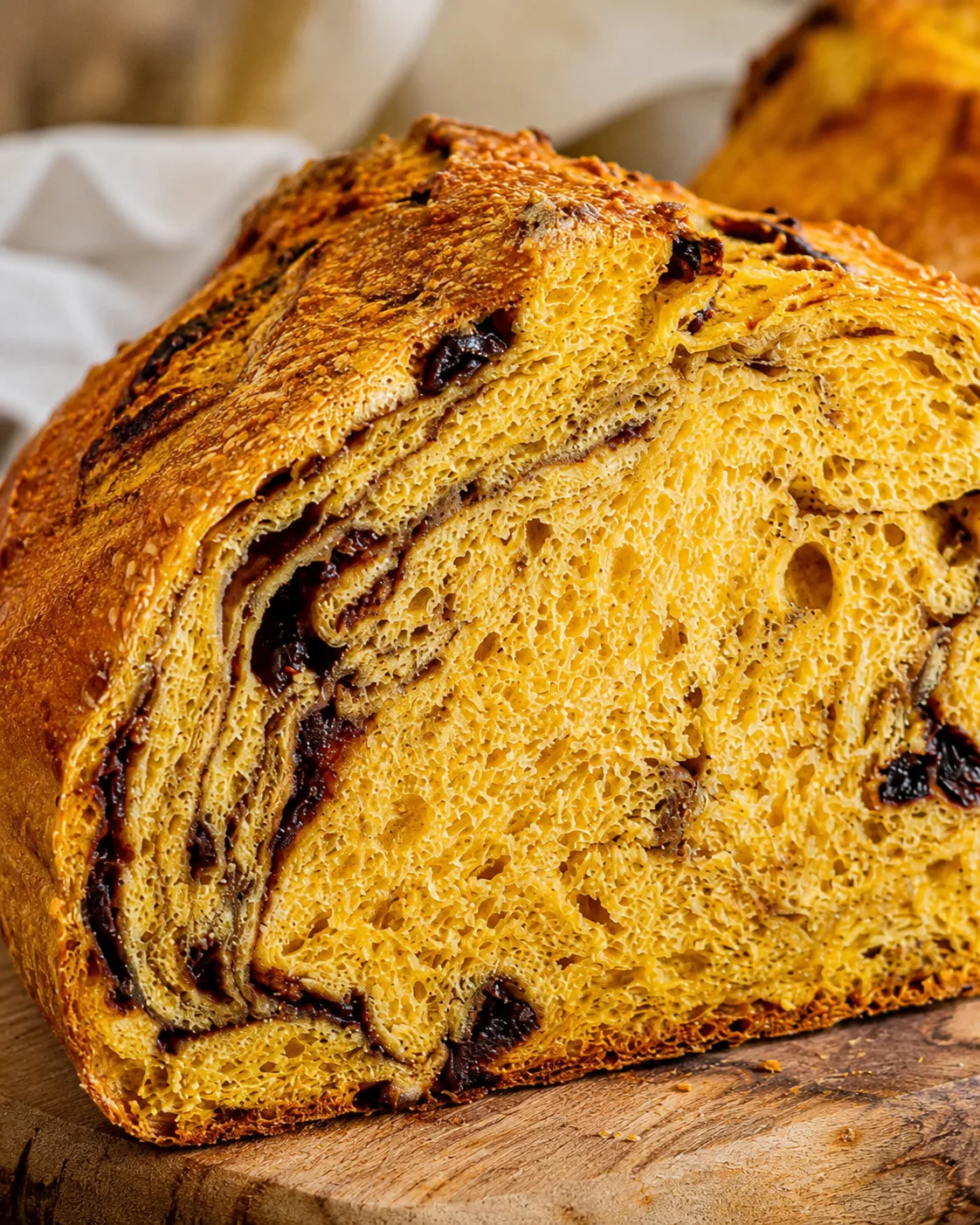
This Pumpkin Sourdough Bread is warmly spiced, lightly sweetened, and lovingly shaped to look just like a little pumpkin! It’s a fun, straightforward sourdough bread recipe that fits perfectly with the cozy vibes of fall.
Say hello to your new fall favorite: Pumpkin Sourdough Bread! Using real pumpkin purée gives this bread a beautiful golden color and a subtle hint of sweetness. Add a touch of warm spices, and your kitchen will instantly feel like autumn arrived early.
To make it even more special, we shape the sourdough to look like a pumpkin. It’s adorable and perfect for Halloween gatherings or Thanksgiving tables!
I built this recipe from my super-simple Overnight Sourdough base, adding canned pumpkin, honey, and cozy spices to create a bread that’s just lightly sweetened and beautifully fragrant. The pumpkin flavor is gentle—no overpowering tastes here.
Pumpkin Sourdough Ingredients
- Mature sourdough starter – if you don’t have your own yet, no worries! You can find sourdough starter online or at local bakeries. And hey, if you live nearby, just knock on my door!
- Canned Pumpkin Purée (make sure it’s 100% pumpkin, not pumpkin pie filling!)
- Honey, maple syrup, or sugar for a whisper of sweetness. This isn’t a dessert bread—just a subtle touch.
- Pumpkin Spice and a pinch of ground turmeric to amp up the warm autumn color. Or feel free to use a combo of cinnamon, ginger, and cloves instead.
- Flour – I used high-protein white bread flour here.
- Salt – fine sea salt works best.
- Water – filtered, bottled, or boiled and cooled tap water for clean flavor.
Essential tools
- Digital scales are super helpful for getting the measurements just right. I’ve listed cup measures too, but weighing your ingredients makes all the difference.
- A bowl or banneton basket to let the dough rise.
- A lame, razor, or sharp knife for making beautiful scores on your loaf.
- Cast iron pot – I love my trusty Greenpan Dutch Oven because it’s lighter and easy to handle.
- Dough whisk makes mixing easier!
- Food-safe cotton string to give your bread that pumpkin shape.
Welcome to making a charming, seasonal loaf that fills your kitchen with fall scents and chops into perfect slices for breakfast, toast, or a festive table. This Pumpkin Sourdough Bread uses real pumpkin purée (not the pie filling!), a gentle hint of warming spice, and your lively sourdough starter to create a golden crumb with just a touch of sweetness and a beautifully crisp crust.
The process is mostly hands-off and quite forgiving: a quick mix, a few stretch-and-folds, and then an overnight rise so the dough builds flavor while you sleep. Bake it for about 45 minutes in a preheated Dutch oven to get a wonderful oven spring and a crust that’s deep and crisp. The pumpkin shape comes from a simple string-tying trick that turns your boule into an adorable little pumpkin — perfect for sharing!
- Skill level: Great for anyone comfortable with the basics of sourdough (feeding a starter, stretch-and-fold, shaping).
- Time: About 10 minutes hands-on, an overnight ferment, plus roughly 45 minutes in the oven.
- Key tools: active starter, canned pumpkin purée, a lidded pot or Dutch oven, and food-safe cotton string.
- Result: A tender, aromatic loaf with a subtle pumpkin note, incredible toasted, and freezer-friendly.
Stick with me, and I’ll guide you through feeding your starter, mixing dough, pumpkin shaping, and baking, along with tips and swaps to make the recipe your own.
What Makes It Special
This bread works because it balances real pumpkin purée and cozy spices to give you a soft autumn flavor and a gorgeous golden crumb, without turning into a sweet bread. The overnight method means the dough develops flavor while you rest, so your hands-on time stays low. The pumpkin keeps the crumb moist and tender, and baking in a Dutch oven gives a crisp, chestnut-brown crust. Plus, shaping with string transforms the loaf into a pumpkin shape that’s perfect for fall gatherings. The slices toast beautifully, and the leftovers freeze great. You’ll want to make this pumpkin sourdough bread all season long.
Ingredients and Measurements
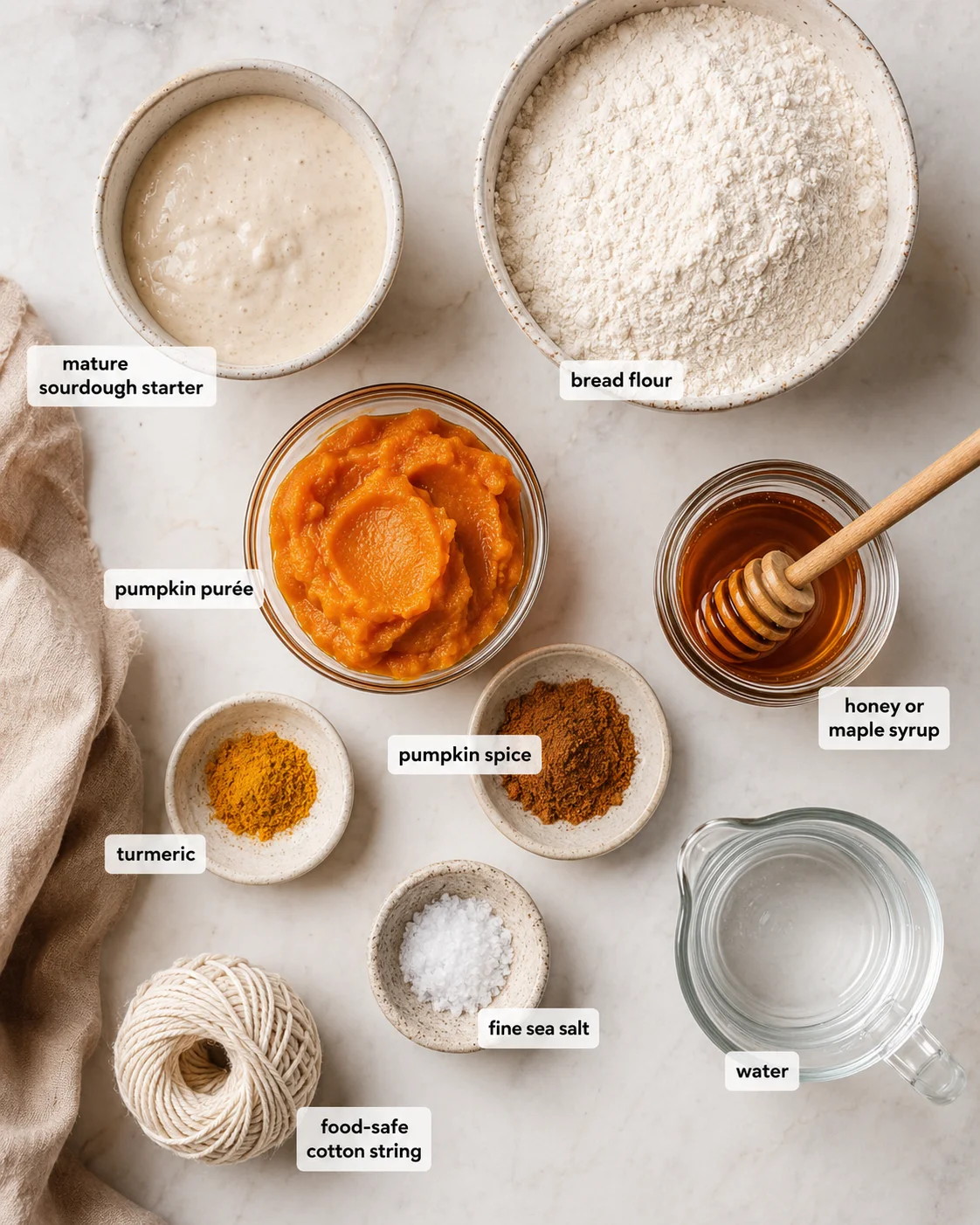
- 50 g (scant ¼ cup) mature sourdough starter at room temperature
- 50 g (scant ¼ cup) flour
- 50 g (scant ¼ cup) tepid water (filtered, bottled, or boiled and cooled)
- 100 g (3 ½ oz) active starter (most of the starter you made above)
- 300 g (1 ¼ cups) water (filtered, bottled, or boiled and cooled)
- 100 g (3 ½ oz) canned pumpkin purée (make sure it’s 100% pumpkin, not pumpkin pie filling!)
- 3 tbsp honey or maple syrup
- 1 tbsp pumpkin spice
- 2 tsp ground turmeric (for that lovely color)
- 12 g (2 scant tsp) fine sea salt
- 500 g (4 cups) white bread flour, add more if needed
- 3 tbsp olive oil for oiling your bowl
- 3 tbsp olive or vegetable oil for oiling your kitchen string
- rice flour or gluten-free flour for dusting your bowl or banneton
Make the Dough and Bake
- Feed 50 g mature sourdough starter with 50 g flour and 50 g tepid water; let sit 4–6 hours until doubled, bubbly, and passing the float test.
- Measure 100 g active starter for the dough.
- In a large bowl, mix 100 g active starter with 300 g water using a dough whisk.
- Stir in 100 g pumpkin purée, 3 tbsp honey or maple syrup, 1 tbsp pumpkin spice, 2 tsp turmeric, and 12 g salt until combined.
- Add 500 g white bread flour and mix with a dough whisk or hands until a shaggy, slightly sticky dough forms; add a tablespoon of flour at a time only if too sticky to handle.
- Cover the bowl and rest the dough for 30 minutes.
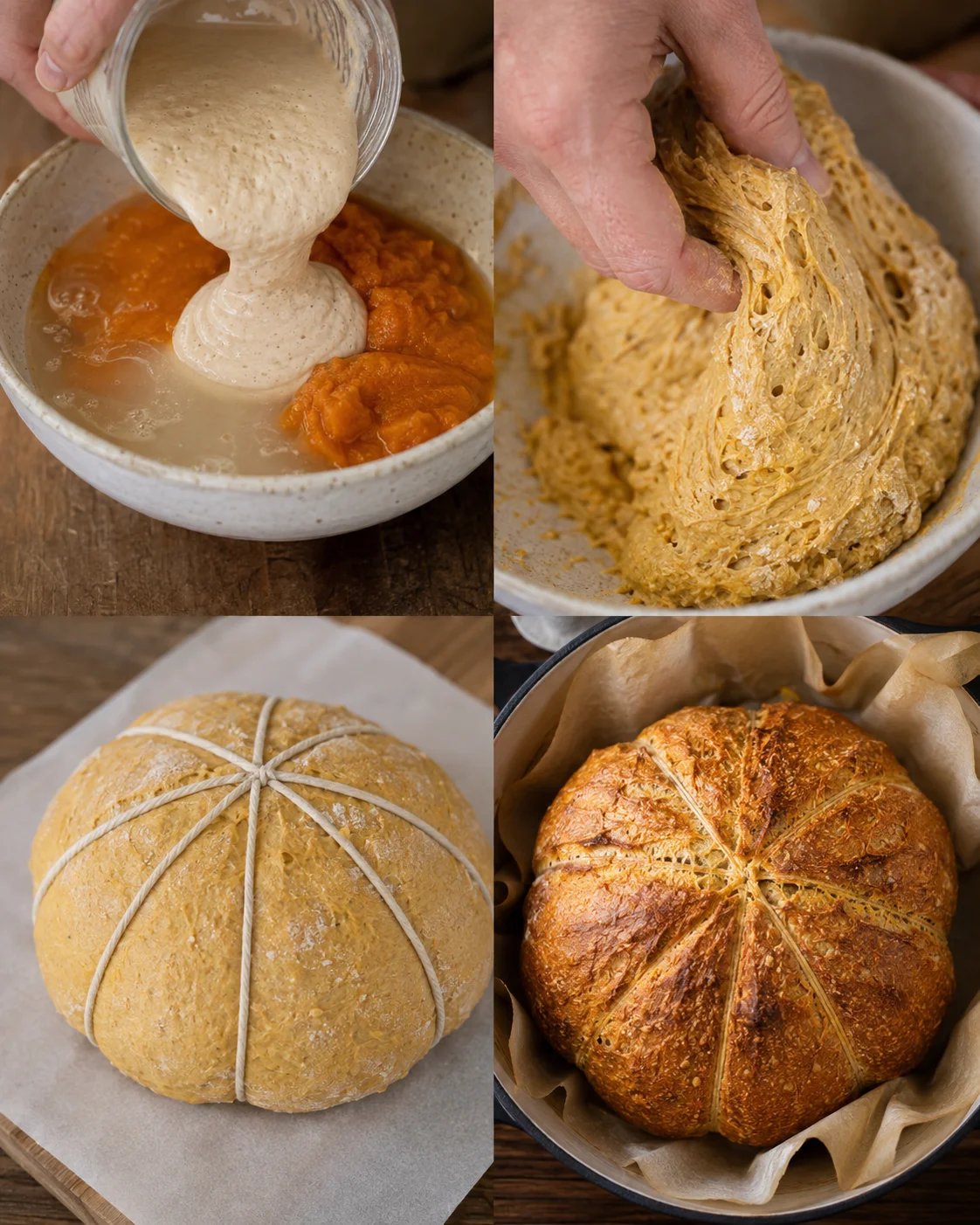
- Perform a stretch-and-fold: pull a portion of dough from underneath, stretch it upward and fold it over; rotate the bowl and repeat every 30 minutes for about 2 hours (or do one set if short on time).
- Transfer the dough to an oiled bowl, cover, and bulk ferment until nearly doubled—6–10 hours at room temperature or 10–12 hours in the fridge for a slower rise.
- Lightly mist the work surface with water and scrape the dough out without punching it down.
- Stretch the dough into a rectangle.
- Fold the rectangle into thirds like a letter.
- Roll the folded dough into a tight ball.
- Flip the ball so the seam is down and use your hands and a bench scraper to round the loaf, tucking the edges under.
- Line a bowl or banneton with parchment and dust with rice or gluten-free flour; place the loaf seam-side down into the basket or bowl, cupped gently.
-
Let the loaf rise for 30–120 minutes until it slowly springs back and leaves a small dent when poked.
- Cut four 24-inch lengths of food-safe cotton string, dip them in vegetable oil and rub between your fingers to remove excess oil.
- Lay the strings on a round piece of parchment that fits your Dutch oven and set the loaf in the center.
- Loosely tie the strings over the loaf to divide it into eight sections; trim any excess string and do not tie tightly.
- Lightly score shallow cuts into the loaf with a razor.
- Preheat the oven to 450°F (230°C) with the Dutch oven and lid inside for about 30 minutes.
- Carefully remove the hot Dutch oven, lift the loaf by the parchment, place it inside, and cover with the lid.
- Bake covered at 450°F (230°C) for 20 minutes.
- Lower the oven to 425°F (220°C), remove the lid, and bake for another 20–25 minutes.
- Optional: for an extra-crispy crust remove the bread and place it directly on the oven rack for the last 5 minutes.
- Confirm doneness by checking that the internal temperature is just above 205°F (95°C) or the loaf sounds hollow when tapped.
- Cool the loaf uncovered on a rack for at least 1 hour until cool to the touch.
- Cut and remove the strings in sections after the loaf has cooled.
Baker’s Tips and Troubleshooting
- Starter: Make sure your starter is bubbly and has doubled after feeding. The float test (dropping a spoonful in water) confirms it’s ready. If you have extra discard after feedings, put it to good use in Pumpkin Spice Sourdough Granola.
- If you’re using homemade pumpkin purée, it’s usually wetter than canned. Strain or cook it down to avoid making the dough too sticky, or hold back some water and add as needed to get the right dough texture.
- When tying the string, oil it lightly so it glides easily over the crust, but don’t tie too tight—give the bread room to grow during baking.
- Shallow scores work best with the string-tied pumpkin loaf to avoid tearing the crust or uneven bloom.
- Always preheat your Dutch oven for 20–30 minutes before baking so it’s hot enough to produce great oven spring.
- For doneness, your loaf should register over 205°F (95°C) inside and sound hollow when tapped. Let it cool fully to finish setting the crumb.
- Store your pumpkin sourdough bread wrapped in a clean towel at room temp for 2–3 days. Slice and freeze for longer storage, then toast straight from frozen.
Mix-Ins and Substitutions
- Swap the pumpkin spice for your own blend: 1 tsp cinnamon, ½ tsp ginger, and a pinch of cloves works beautifully. Skip the turmeric if you prefer less color.
- Use maple syrup in place of honey for a vegan-friendly twist and a different nuance of sweetness; for maple-forward inspiration, try Maple Pumpkin Bread.
- Try swapping up to 30% of white bread flour with whole wheat or spelt flour for nuttier, heartier bread. Keep in mind hydration and texture will change slightly.
- For some extra texture, fold in 50–75 g of toasted pepitas, chopped pecans, or dried cranberries after the first couple of stretches and folds. Craving a savory mix-in example and fold-in guidance? See our jalapeño cheddar sourdough bread.
- Feeling festive? Divide your dough into smaller portions and bake mini pumpkin-shaped rolls using a muffin tin or small pots. Adjust baking time accordingly.
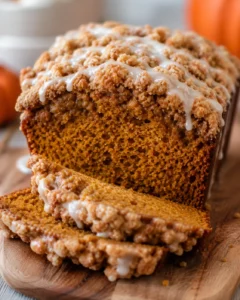
- For another seasonal pumpkin loaf, see our Pumpkin Streusel Bread.
Storage and Serving Suggestions
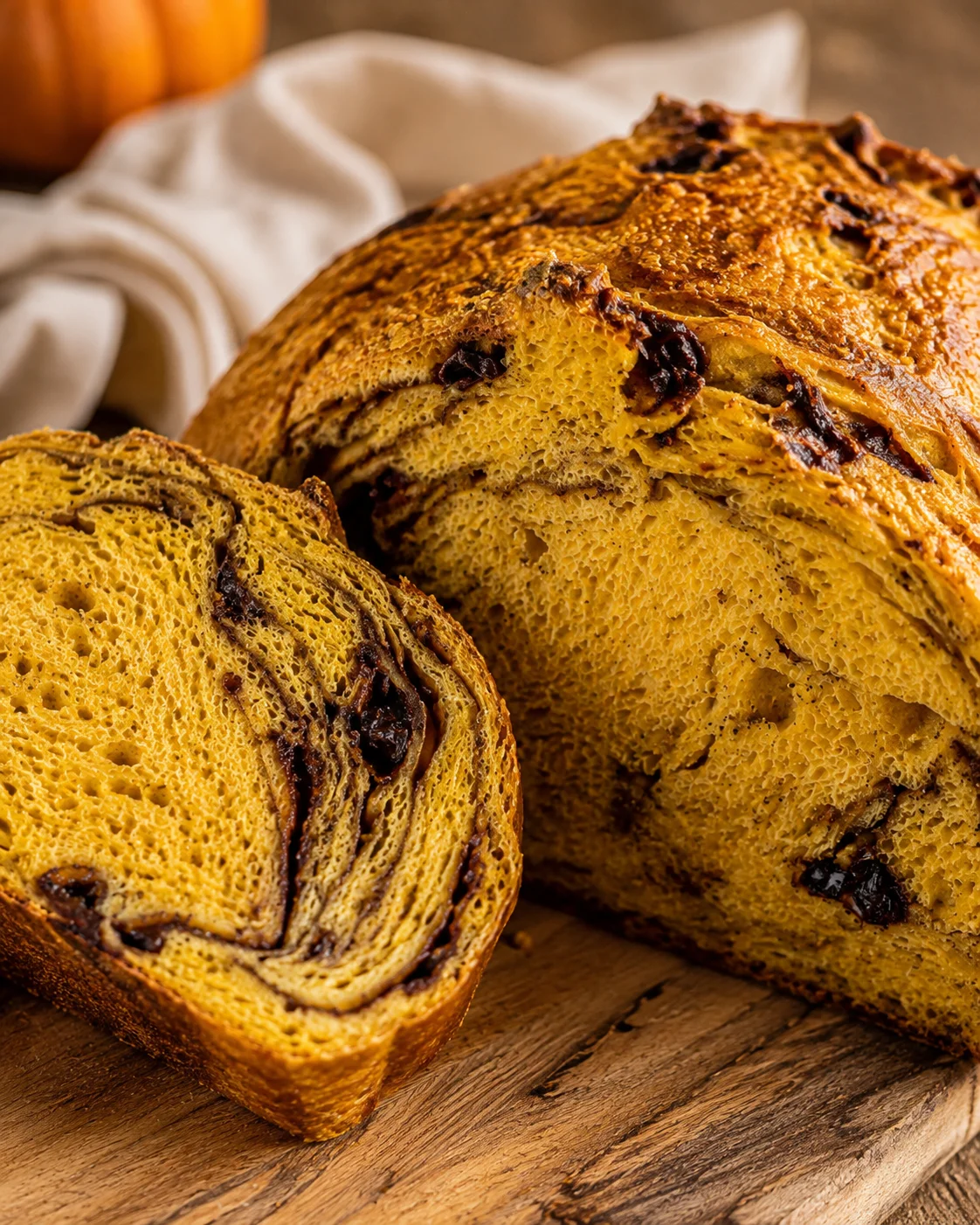
This pumpkin sourdough bread boasts a crisp crust that’s wonderful toasted with salted butter and maybe a dab of apple butter. It’s also fantastic for dunking into a cozy bowl of pumpkin chili.
I like to slice the whole loaf and freeze the slices so I can pop them directly into the toaster for a quick, cozy morning treat any day of the week.
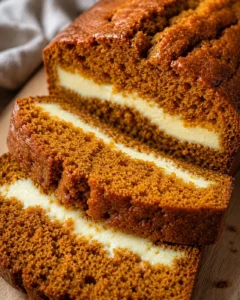
For another pumpkin bread variation, see our Cream Cheese-Filled Pumpkin Bread.
How do I know my starter is ready to bake with?
Your starter should double in size and be bubbly a few hours after feeding. The float test is the easiest check: spoon some active starter into tepid water, and if it floats, it’s ready. If it sinks, give it a little more time.
What kind of pumpkin should I use?
Be sure to use pure pumpkin purée—look for cans that say 100% pumpkin. Avoid pumpkin pie filling because it has added spices and sugar that can throw off your bread.
Can I use homemade pumpkin purée?
Yes! Just be mindful that homemade purée is often wetter, which can change your dough’s hydration. You might need to cook it down or strain excess water. If unsure, hold back some water in the recipe and add it gradually to get the right dough consistency.
Do I need a Dutch oven?
While a Dutch oven is ideal because it traps steam and helps your loaf rise high with a crisp crust, you can bake on a hot pizza stone covered with an inverted oven-safe pan for the first 15–20 minutes if you don’t have one.
Common Questions Answered
- How do I know my starter is ready to bake with? — Your starter should be bubbly and about double in size after feeding. To be sure, do the float test by spooning the starter into tepid water; it should float if ready.
- Can I use homemade pumpkin purée? — Yes, but if it’s too watery, strain or cook it down. If unsure, reduce the water called for in the recipe and add as needed until the dough feels slightly sticky but workable.
- Do I need a Dutch oven? — It’s best, as it traps steam and creates a great crust and rise. If you don’t have one, bake on a preheated pizza stone covered with an inverted oven-safe pan for the first 15–20 minutes.
- What if my dough doesn’t rise much? — First, make sure your starter is active. Also, fermentation slows in cooler kitchens, so move the dough to a warmer spot or extend the bulk fermentation time. Double-check your ingredient amounts too.
- How do I tell when the bread is done? — Use an instant-read thermometer; the center should be just over 205°F (95°C). A deep golden crust that sounds hollow when tapped is also a good sign.
- Can I use instant yeast instead of sourdough starter? — You can, but the process and timing will be different. Yeasted bread rises faster and won’t have that classic sourdough flavor. If you’d prefer a quick pumpkin loaf without starter, try this Easy Pumpkin Bread recipe that uses a whole can of pumpkin.
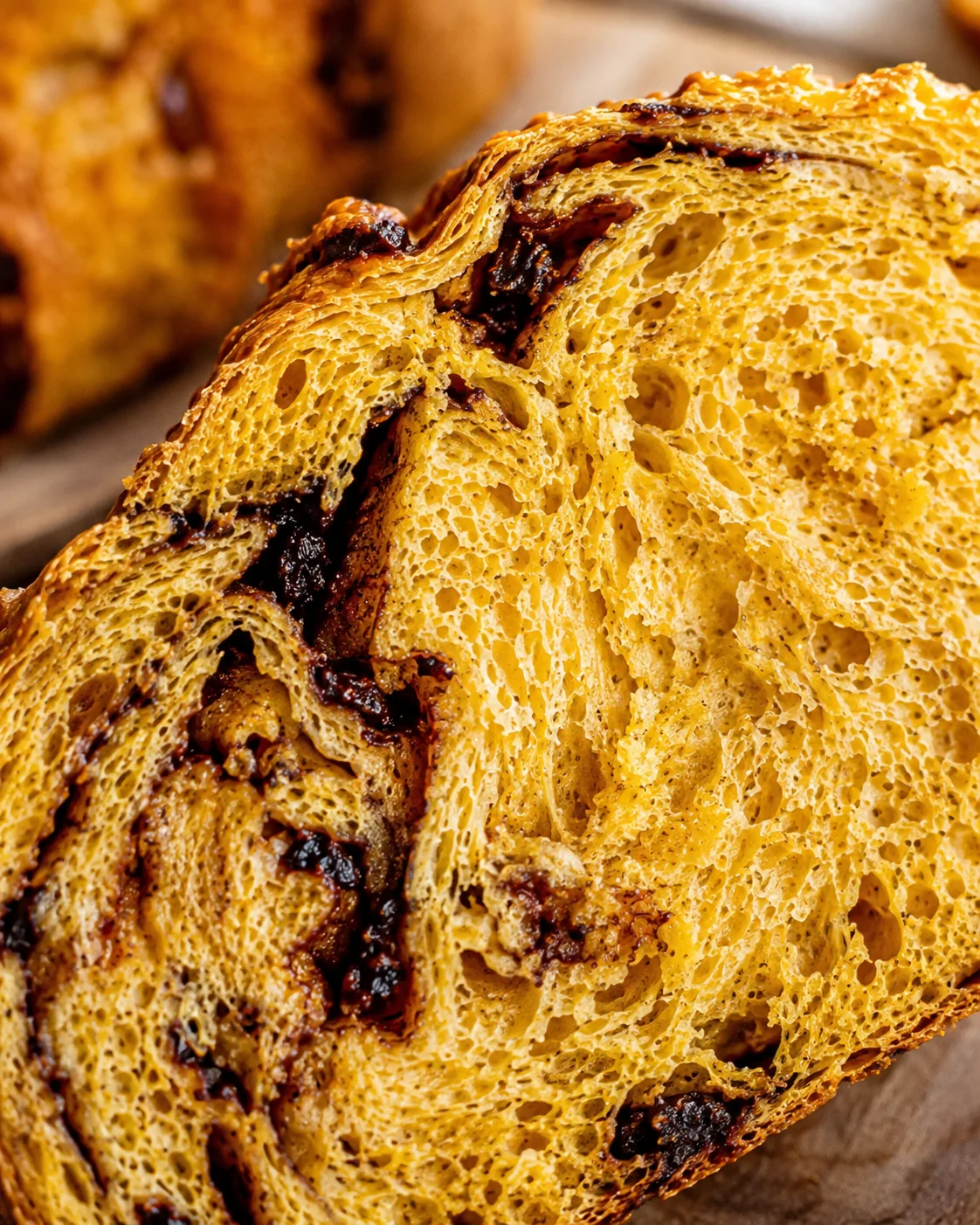
Warmly spiced and lightly sweetened sourdough bread shaped like a pumpkin, with real pumpkin purée giving a golden color and subtle sweetness. Perfect for fall with a crisp crust and tender crumb.
Total Time: Overnight ferment (about 10–12 hours) plus 10 minutes hands-on and 45–50 minutes baking
Yield: 1 loaf 1x
Ingredients
Scale
- 50 g (scant ¼ cup) mature sourdough starter at room temperature
- 50 g (scant ¼ cup) flour
- 50 g (scant ¼ cup) tepid water (filtered, bottled, or boiled and cooled)
- 100 g (3 ½ oz) active sourdough starter
- 300 g (1 ¼ cups) water (filtered, bottled, or boiled and cooled)
- 100 g (3 ½ oz) canned pumpkin purée (100% pumpkin, not pumpkin pie filling)
- 3 tbsp honey or maple syrup
- 1 tbsp pumpkin spice
- 2 tsp ground turmeric
- 12 g (2 scant tsp) fine sea salt
- 500 g (4 cups) white bread flour, add more if needed
- 3 tbsp olive oil for oiling your bowl
- 3 tbsp olive or vegetable oil for oiling kitchen string
- Rice flour or gluten-free flour (for dusting bowl or banneton)
Instructions
- Feed 50 g mature sourdough starter with 50 g flour and 50 g tepid water; let sit 4–6 hours until doubled, bubbly, and passing the float test.
- Measure 100 g active starter for the dough.
- In a large bowl, mix 100 g active starter with 300 g water using a dough whisk.
- Stir in 100 g pumpkin purée, 3 tbsp honey or maple syrup, 1 tbsp pumpkin spice, 2 tsp turmeric, and 12 g salt until combined.
- Add 500 g white bread flour and mix with a dough whisk or hands until a shaggy, slightly sticky dough forms; add flour by tablespoon if too sticky to handle.
- Cover the bowl and rest the dough for 30 minutes.
- Perform stretch-and-fold every 30 minutes for about 2 hours (or at least one set if short on time).
- Transfer dough to an oiled bowl, cover, and bulk ferment 6–10 hours at room temperature or 10–12 hours in the fridge until nearly doubled.
- Lightly mist work surface with water, scrape dough out gently without punching down.
- Stretch dough into a rectangle.
- Fold rectangle into thirds like a letter.
- Roll folded dough into a tight ball.
- Flip ball so seam is down and round loaf, tucking edges under using hands and bench scraper.
- Line bowl or banneton with parchment and dust with rice or gluten-free flour; place loaf seam-side down.
- Let loaf rise 30–120 minutes until it slowly springs back and leaves a small dent when poked.
- Cut four 24-inch lengths of food-safe cotton string, dip and rub with vegetable oil to remove excess oil.
- Lay strings on parchment fitting Dutch oven, place loaf in center.
- Loosely tie strings over loaf to form eight sections; trim excess string; do not tie tightly.
- Lightly score shallow cuts into loaf with a razor blade.
- Preheat oven to 450°F (230°C) with Dutch oven and lid inside for 30 minutes.
- Remove hot Dutch oven carefully, lift loaf by parchment, place inside, cover with lid.
- Bake covered at 450°F (230°C) for 20 minutes.
- Lower oven to 425°F (220°C), remove lid, bake uncovered for another 20–25 minutes.
- Optionally, remove bread and place directly on oven rack for last 5 minutes for extra crispness.
- Check doneness with internal temperature above 205°F (95°C) or hollow sound when tapped.
- Cool loaf uncovered on rack at least 1 hour until cool to touch.
- Cut and remove strings after loaf has cooled.
Notes
Use pure pumpkin purée, not pumpkin pie filling, to avoid unwanted spices and sugars., Homemade pumpkin purée may be wetter than canned; strain or cook down to avoid sticky dough or adjust water amount accordingly., Oil cotton string lightly for tying shapes but do not tie too tightly to allow oven spring., Preheat Dutch oven sufficiently to get good crust and oven spring., Loaf keeps fresh 2–3 days at room temperature wrapped in a towel; slices freeze well for quick toasting later., Substitute maple syrup for honey for a vegan option., Mix-ins like toasted pepitas, chopped pecans, or dried cranberries can be folded in after initial stretch-and-folds., Use gluten-free or rice flour for dusting to prevent sticking., Mini pumpkin-shaped rolls can be made in muffin tins or small pots, baking time needs adjusting.
- Prep Time: 10 minutes (hands-on) plus 4–6 hours starter feeding and 30 minutes initial dough rest
- Cook Time: 45–50 minutes
- Category: Bread
Nutrition
- Serving Size: 1 slice
- Calories: Approximately 190 kcal per slice (estimate, actual may vary)
- Fat: Around 2 g per slice
- Carbohydrates: Approximately 35 g per slice
- Protein: About 6 g per slice