The Best Vanilla Cake Recipe (Reader Favorite!)

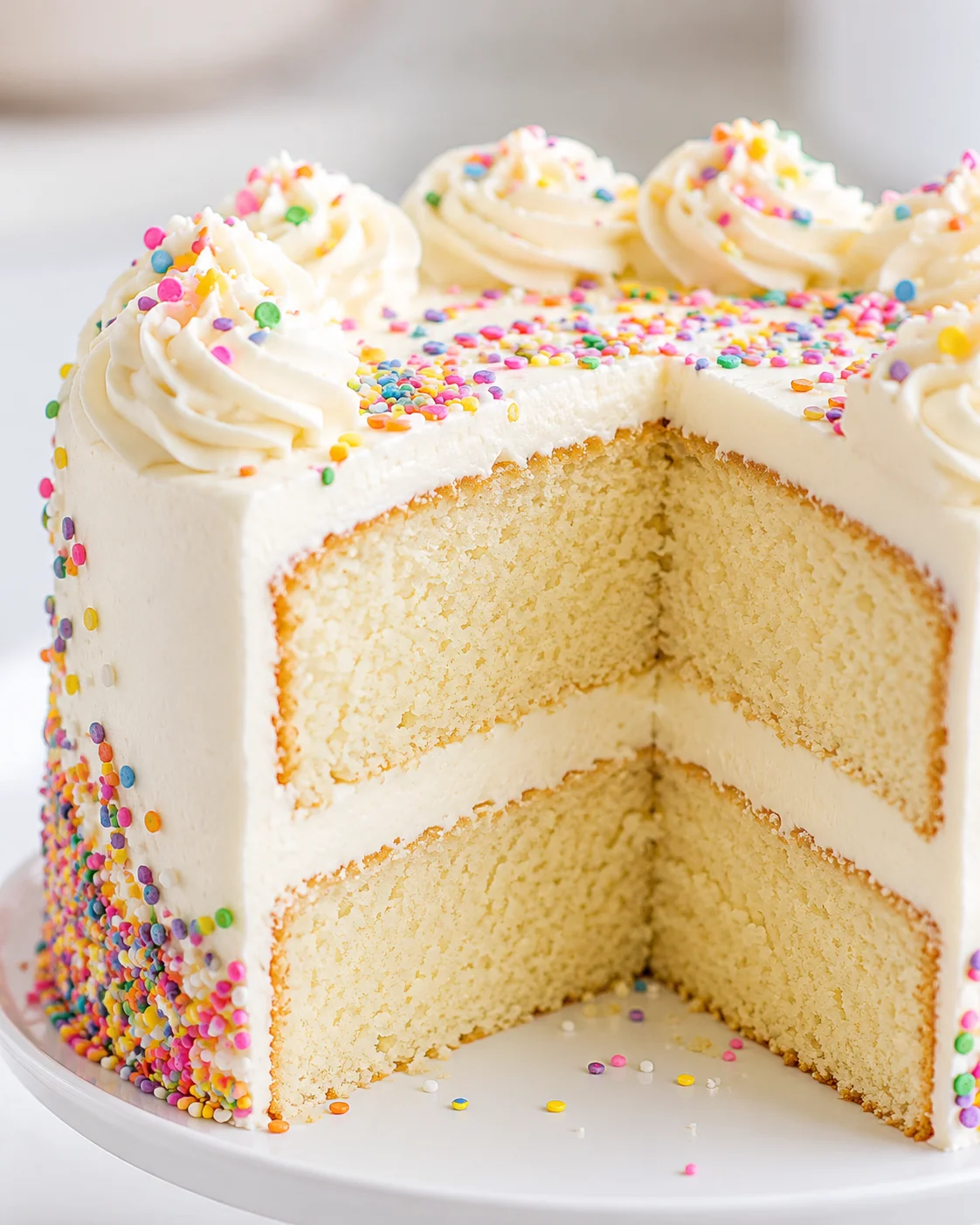
This classic vanilla cake recipe brings together fluffy, tender layers with a silky smooth vanilla buttercream. It’s the perfect cake for birthdays, weddings, holidays, or any special celebration that calls for a timeless treat!
Vanilla cake is such a beloved classic here at Liv for Cake, and honestly, it’s been a favorite of mine for years.
At first, I thought I’d focus on more adventurous or unique recipes, but this vanilla cake recipe just keeps calling me back. It’s simple, comforting, and truly delicious.
Most of the cakes I bake actually start with this vanilla cake base, but surprisingly, I hadn’t paired it with a vanilla buttercream until now.
Sure, some cooks like to mix a cake recipe from one place and frosting from another. But for those of us who prefer one fail-safe, easy-to-follow recipe that delivers a stunning result every time, I’m here with all the details wrapped up together for you!
The Ultimate Cake Collection
Check out over 50 of my top cake recipes all in one place! From timeless classics to festive holiday favorites and everything in between.
This vanilla cake recipe is my go-to base for any white or yellow cake. I’ve experimented with swaps for the liquids, like in my Pink Champagne Cake, or changed up the butter in my Brown Butter Cake. I also play with the sugar combinations, like in my Chocolate Chip Cookie Cake, and even take on new challenges like the Coconut Cake.
Cake Tip!
Keep in mind that tweaking cake recipes takes some skill and testing, so only switch things up if you’re sure it’ll work out. And if you’re unsure, just ask—I’m happy to help!
For this vanilla cake recipe, I use the creaming method, which involves:
- Beating the butter and sugar together until fluffy
- Adding eggs one at a time to incorporate fully
- Alternating the dry flour and wet liquid ingredients into the batter
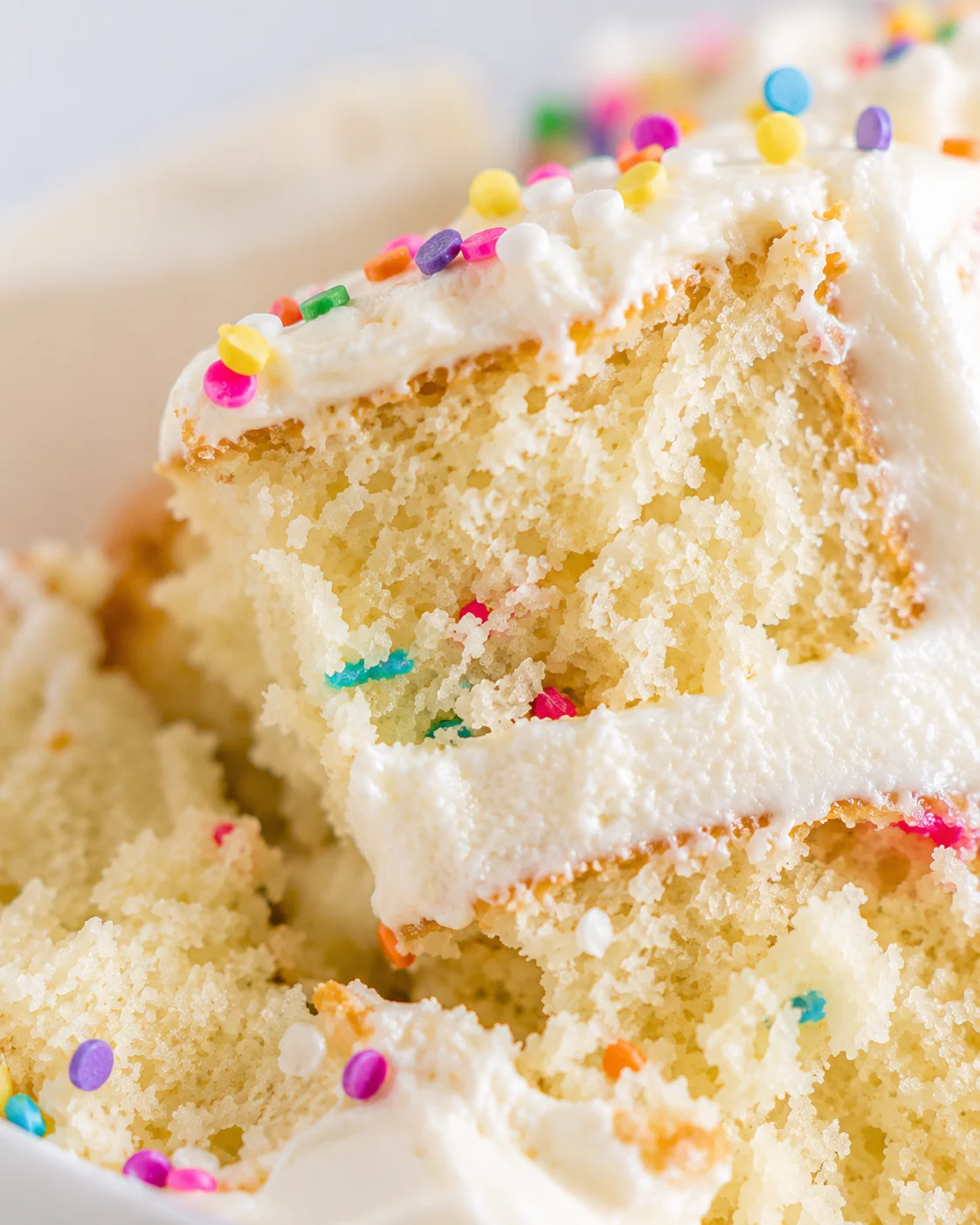
I love using buttermilk here because it gives the cake a tender crumb and balanced flavor without it being overly sweet – it pairs beautifully with any frosting.
If you don’t have buttermilk, no worries! You can make your own right at home:
- Just stir 1 tablespoon of fresh lemon juice or vinegar into 1 cup of milk. Let it sit about 10 minutes, and it will curdle into a perfect buttermilk substitute.
That said, if you prefer your cake a little sweeter or don’t have buttermilk on hand, regular whole milk works just fine (I usually use 1% and it still turns out great).
Feel free to try milk alternatives like almond or coconut milk too—they’re fine here.
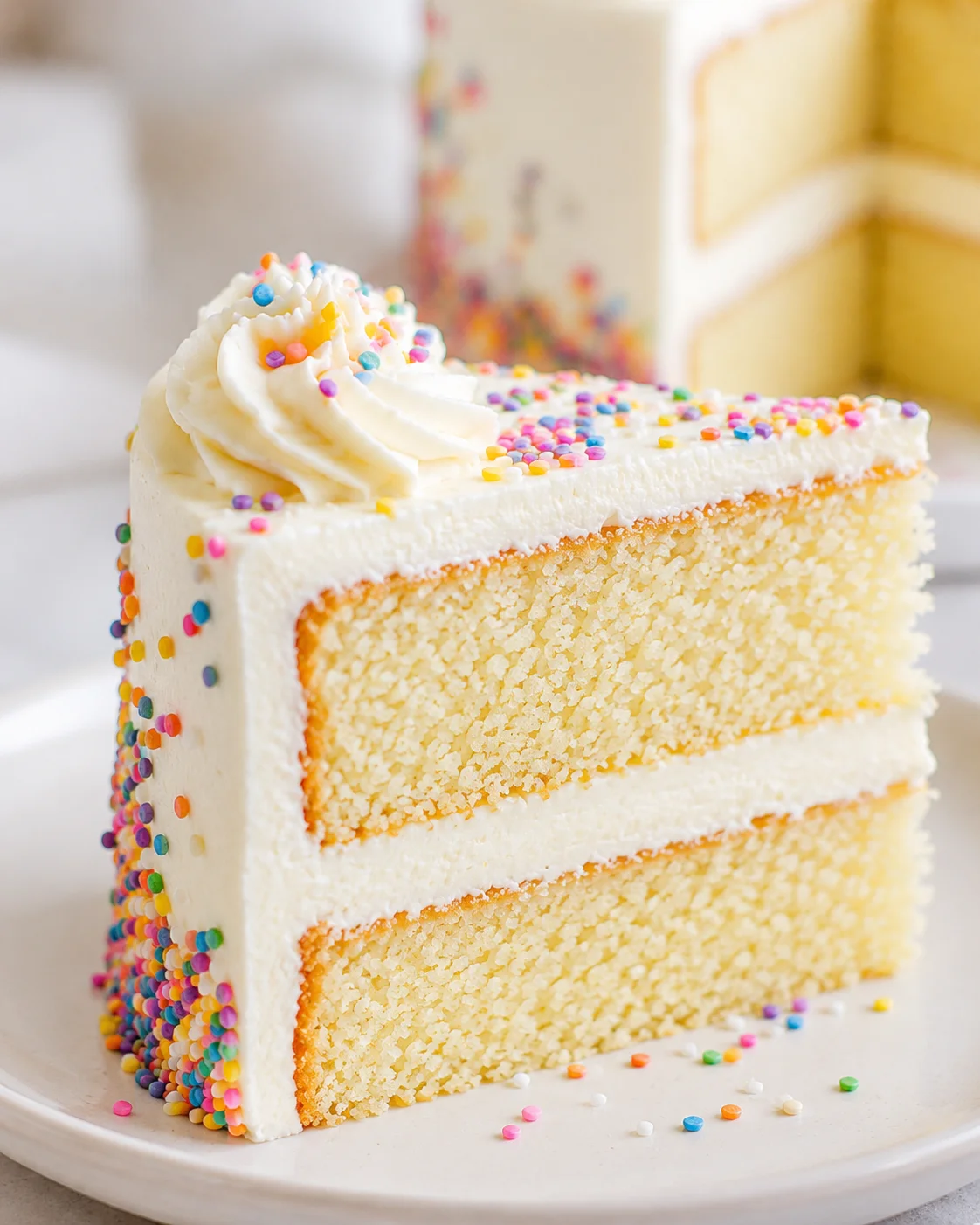
This vanilla cake recipe is my spin on a true classic: two tender, fluffy cake layers loaded with vanilla flavor, topped with a silky Swiss meringue vanilla buttercream. It’s straightforward, reliable, and always hits the sweet spot—perfect for birthdays, weddings, or any celebration you want to impress without stress.
You’ll get two 8” layers from this recipe, enough to serve about a dozen people. Prep takes roughly 2 hours, and baking is about 35 minutes—total time around 2 hours and 35 minutes. The creaming method and buttermilk make the crumb moist and tender, and the Swiss meringue buttercream adds a smooth, less-sweet finish that’s just right.
I recommend using a stand mixer with paddle and whisk attachments for best results. I’ve included notes on substitutions and troubleshooting throughout the recipe, so you feel confident along the way.
Scroll down for a detailed ingredient list, clear, step-by-step directions for the cake, buttercream, and assembly. Plus, expert tips, make-ahead tricks, storage ideas, and flavor variations to make this cake your own for any occasion.
Why You’ll Love This Cake
This vanilla cake recipe nails a perfectly tender, classic vanilla layer cake, finished with a silky Swiss meringue buttercream. The creaming method combined with buttermilk keeps the crumb moist, while the buttercream offers a beautifully smooth and not-too-sweet frosting. Plus, it’s easy to double or halve, freezes well, and makes a fabulous base you can adapt for any celebration—from birthdays to weddings and beyond.
- Reliable texture: Using room temperature ingredients, creaming butter and sugar well, and adding flour and liquid alternately creates an even rise and soft crumb every time.
- Balanced sweetness: Buttermilk in the batter and the lightness of Swiss meringue buttercream keep the sweetness in check.
- Great for decorating: The frosting spreads smoothly for a polished look and holds beautiful rosettes and sprinkles perfectly.
- Make-ahead friendly: Both cake layers and buttercream freeze well, helping you get ahead on party prep.
Cake and Frosting Ingredients
- 2 1/4 cups all-purpose flour
- 2 1/4 tsp baking powder
- 3/4 tsp salt
- 3/4 cup unsalted butter, softened to room temperature
- 1 1/2 cups granulated sugar
- 3 large eggs, room temperature
- 1 1/2 tsp vanilla extract
- 1 cup buttermilk or whole milk, room temperature
- 6 large egg whites
- 1 1/2 cups granulated sugar
- 2 cups unsalted butter, room temperature
- 2 tsp vanilla extract
- confetti sprinkles
- nonpareils
How to Make the Cake
- Preheat oven to 350°F (175°C); grease and flour two 8-inch cake pans and line the bottoms with parchment paper.
- Use room-temperature ingredients (butter, eggs, milk/buttermilk).
- Whisk together 2 1/4 cups all-purpose flour, 2 1/4 tsp baking powder, and 3/4 tsp salt in a medium bowl and set aside.
- If you don’t have buttermilk, make a substitute by stirring 1 tbsp lemon juice or vinegar into 1 cup milk and letting it sit 10 minutes.
- In a stand mixer fitted with the paddle attachment, beat 3/4 cup softened unsalted butter and 1 1/2 cups granulated sugar on medium-high until pale and fluffy (about 2–3 minutes).
- Turn mixer to low and add 3 large eggs one at a time, mixing fully after each addition; stir in 1 1/2 tsp vanilla extract.
- With the mixer on low, alternately add the flour mixture and 1 cup buttermilk (begin and end with flour—three flour additions and two liquid additions), mixing just until incorporated after each addition.
- Divide the batter evenly between the prepared pans and smooth the tops.
- Bake the cakes 30–35 minutes, or until a toothpick inserted into the center comes out mostly clean.
- Cool the cakes in the pans on a wire rack for 10 minutes, then remove from pans and cool completely on the rack before frosting.
- Combine 6 large egg whites and 1 1/2 cups granulated sugar in a heatproof bowl and whisk to combine.
- Place the bowl over simmering water and whisk constantly until the sugar dissolves and the mixture reaches 160°F or is no longer grainy (about 3 minutes).
- Ensure there is no egg yolk in the whites and that your bowl and whisk are completely clean and grease-free.
- Transfer the warm mixture to a stand mixer fitted with the whisk attachment and whip on medium-high until stiff, glossy peaks form and the bowl feels cool (about 5–10 minutes).
-
Switch to the paddle attachment and, with the mixer on low, add 2 cups softened unsalted butter cubed a few pieces at a time; continue beating until the buttercream is smooth and silky (it may look curdled at first).
- Stir in 2 tsp vanilla extract and whip until the buttercream is fully combined and spreadable.
- Place one cake layer on a serving plate or cake board and spread about 1 cup of buttercream evenly over the top.
- Top with the second layer, apply a thin crumb coat over the entire cake, and chill the cake for 20 minutes to set the crumb coat.
- Finish frosting the top and sides smoothly with the remaining buttercream; optionally use a decorating comb to add texture to the sides.
- Mix confetti sprinkles and nonpareils in a small bowl, press sprinkles around the bottom edge of the cake, and scatter more over the top and sides for a confetti effect.
- Pipe rosettes on top using remaining buttercream and a 1M piping tip.
Baker’s Tips for Success
Follow these tips for the best outcome with this vanilla cake recipe (and really, any cake you bake). Baking cakes well means skipping shortcuts and sticking to the recipe—especially if you want a flawless finish.
Here are some key things to remember:
- Use room temperature ingredients. This helps everything mix smoothly, avoiding lumps or poorly combined batter.
- Measure your flour correctly. Don’t scoop directly with the measuring cup—spoon flour into the cup and level it off with a knife. This keeps your cake tender, not dense or dry.
- Cream butter and sugar well. Beat until the mixture is light and fluffy, usually 2-3 minutes depending on your mixer.
- Add eggs one at a time. Fully mix each egg in before adding the next to get a smooth batter.
- Avoid overmixing once flour is added. Mix just until blended to keep the crumb light and soft.
- Grease and flour pans, and line with parchment. This helps the cake release cleanly once baked.
- Baking times are a guide. Oven temperatures and heat distribution vary, so check your cakes 5 minutes before the minimum baking time.
- Cool cakes in pans for 10 minutes. Then turn out carefully onto a wire rack—too long and they stick, too soon and they might break.
- Completely cool cakes before frosting. This avoids melting your buttercream and keeps the frosting smooth.
Stick to these tips, and I promise you’ll find baking this vanilla cake recipe easier and way less stressful!
If you’ve been hunting for a go-to vanilla cake recipe to tackle birthdays, anniversaries, or just because you deserve something sweet, this one will become your trusted favorite.
Frequently Asked Questions
How can I convert this recipe?
- Use three 6″ pans with the recipe as written. For three 8″ pans, multiply by 1.5. Adjust baking times as needed.
- You can bake two 9″ pans, but the layers will be thinner and baking time shorter.
- To make cupcakes, reduce baking time—start checking at 15 minutes or so. Expect about 18-24 cupcakes depending on size.
- A 9×13″ pan works too, with a shorter bake time.
- For Bundt pans, increase baking time and check doneness carefully.
- Baking times vary by pan size and oven, so keep an eye on your cake.
Can I make it in advance?
- Cool cake layers can be frozen, double wrapped in plastic wrap, for up to 3 months. Thaw in the fridge overnight and bring to room temperature before assembling.
- Buttercream stores in an airtight container in the fridge for up to 1 week or freezes for 3 months. Bring to room temperature and rewhip before using.
- Finished cakes, whole or sliced, freeze well for up to 3 months. Thaw in the fridge and bring to room temp before serving.
Can I get grams/weight measurements?
- There’s a metric toggle in the recipe card that converts measurements to grams automatically. While I can’t guarantee 100% accuracy, many readers find it reliable.
What if I don’t have buttermilk?
- For best flavor and texture, use buttermilk. If unavailable, make your own by stirring 1 Tbsp lemon juice or vinegar into 1 cup milk and letting it sit for 10 minutes.
Tips for this Vanilla Cake recipe:
- If you don’t have buttermilk, homemade substitute or regular milk/milk alternatives work well here.
- If you prefer classic American buttercream, swap out the Swiss meringue for my Simple Vanilla Buttercream recipe.
- For a chocolate frosting twist, check out my Classic Birthday Cake recipe.
- Want a pure white cake? Try my white cake recipe instead.
- I used a decorating comb to add texture to the sides—left side of the comb in the picture above is my favorite.
- I prepare pans with Homemade Cake Release and line with parchment to help cakes come out cleanly every time.
- Don’t forget to check my Swiss Meringue Buttercream post for extra tips and troubleshooting.
- Keep cakes moist with Simple Syrup—my post explains how.
- For perfectly flat cake layers, see my How to Bake Flat Cakes guide—it seriously makes a difference!
Flavor Swaps and Substitutions
While I love Swiss meringue buttercream for its silky texture and less-sweet finish, you can absolutely use an American-style buttercream if that’s what you prefer.
If you’re new to Swiss meringue buttercream, take a look at my detailed tutorial. I walk you through step-by-step and share troubleshooting tips to make sure you succeed and feel confident.
For decorating, I kept it simple here with classic rosettes and sprinkles. I used a decorating comb on the sides to add those clean, straight lines, which I absolutely adore.
I’m usually a bit wary of combs because they remind me of grocery store cakes, but this one lends such a fresh, modern look that I’m definitely going to experiment with the other patterns in the set soon.
Storage and Make-Ahead Tips
- Unfrosted cake layers: Let cool completely, wrap tightly twice in plastic wrap, and store in an airtight container or freezer bag. Keep in the fridge for up to 3 days or freeze for 3 months. Thaw in the fridge overnight, then bring to room temp for 1-3 hours before assembling.
- Swiss meringue buttercream: Store in an airtight container in the fridge for up to a week or freeze for 3 months. When ready to use, bring to room temperature and rewhip until creamy and spreadable.
- Finished cake: If serving within 24 hours in a cool space, it can sit at room temperature. For longer storage or warm climates, refrigerate for up to 4-5 days. Let come to room temp about 1-2 hours before serving for the best texture.
- Frozen finished cake or slices: Wrap tightly and freeze for up to 3 months. Thaw in the fridge overnight and then bring to room temperature before serving. Don’t try to reheat; just thaw and enjoy.
Answers to Common Questions
- Can I use regular milk instead of buttermilk? Yes! Add 1 tablespoon of lemon juice or vinegar to 1 cup of milk and let it sit for 10 minutes for an easy buttermilk substitute. Whole milk is best, but 1% works perfectly fine.
- Can I use American buttercream instead of Swiss meringue? Definitely. American buttercream is sweeter and easier for beginners. Substitute my Simple Vanilla Buttercream recipe in place of the Swiss meringue if you prefer.
- My buttercream looks curdled. What do I do? Keep mixing! Sometimes Swiss meringue buttercream looks separated or curdled while adding butter. Continue beating, and if it gets too warm, chill briefly before mixing again. Make sure the meringue is fully cooled and butter is room temp.
- My meringue won’t stiffen. Why? Ensure there’s no egg yolk or grease in your bowl or on whisk. The bowl must be clean and dry. Warm egg whites whip better, and heating to 160°F before whipping helps create a stable meringue.
- Can I change pan sizes or turn this into cupcakes? The recipe works great as two 8” layers or three 6” pans. For cupcakes, reduce bake time—start checking around 15 minutes. Adjust time if using other pan sizes, and keep a close eye to prevent overbaking.
- How do I fix a dense cake? Dense cakes often come from too much flour, cold ingredients, not creaming enough, or overmixing after adding flour. Measure flour correctly by spooning and leveling, keep ingredients room temp, cream butter and sugar until fluffy, and mix flour just until combined.
- How do I get flat cake layers? Distribute batter evenly, don’t overfill pans, cool layers in pans for 10 minutes before turning out, and consider using cake strips or an oven thermometer to help bake evenly. Check my How to Bake Flat Cakes post for detailed tips.